
Blog
What Shirt To Wear With a Kilt? The Complete Guide to Perfect Pairings
Choosing the right shirt to complement your kilt can completely transform your Highland outfit from ordinary to extraordinary. Whether you’re preparing for a formal wedding, attending a casual festival, or simply embracing Scottish tradition, the shirt you select plays a crucial role in defining your overall appearance and comfort level. The wrong choice can make even the finest kilt look mismatched, while the perfect shirt creates a harmonious ensemble that turns heads for all the right reasons.
The beauty of kilt styling lies in its remarkable versatility, allowing you to dress up or down depending on the occasion. Understanding which shirt works best with your kilt helps you honor tradition while expressing your personal style. At Scotland Kilt Collection, we believe that from crisp formal dress shirts to relaxed casual tees, each option serves a specific purpose and creates a distinct aesthetic that can suit weddings, Highland games, business events, or everyday wear. Modern kilt fashion has evolved beyond rigid rules, giving you creative freedom while maintaining respect for Scottish heritage.
Understanding Different Kilt Shirt Styles
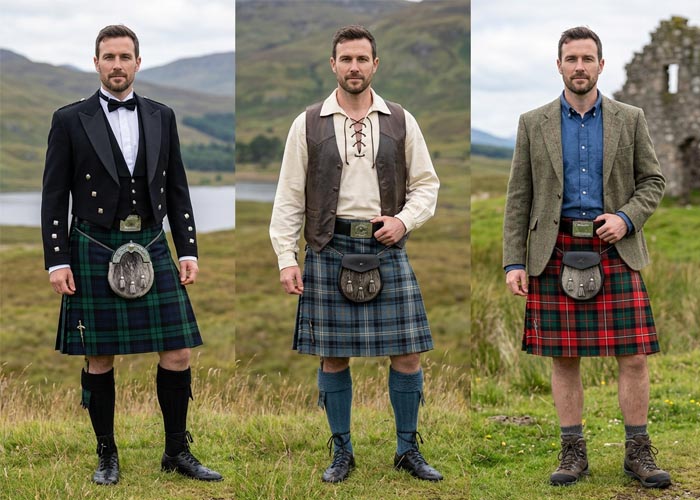
Traditional kilt wear has evolved significantly over the centuries, and modern fashion has introduced numerous shirt options that pair beautifully with kilts. The key is understanding which style matches your event’s formality level and complements your kilt’s tartan pattern and color scheme. Each shirt style carries its own history and cultural significance within Scottish dress traditions.
Different occasions call for different approaches to kilt styling. A formal wedding demands elegance and sophistication, while a summer music festival allows for creative freedom and comfort-focused choices. The fabric, cut, collar style, and color of your shirt all contribute to creating a cohesive look that feels intentional rather than accidental. Learning to match your shirt choice to the occasion demonstrates cultural awareness and personal style confidence that others will notice and appreciate.
Formal Shirt Options for Traditional Events
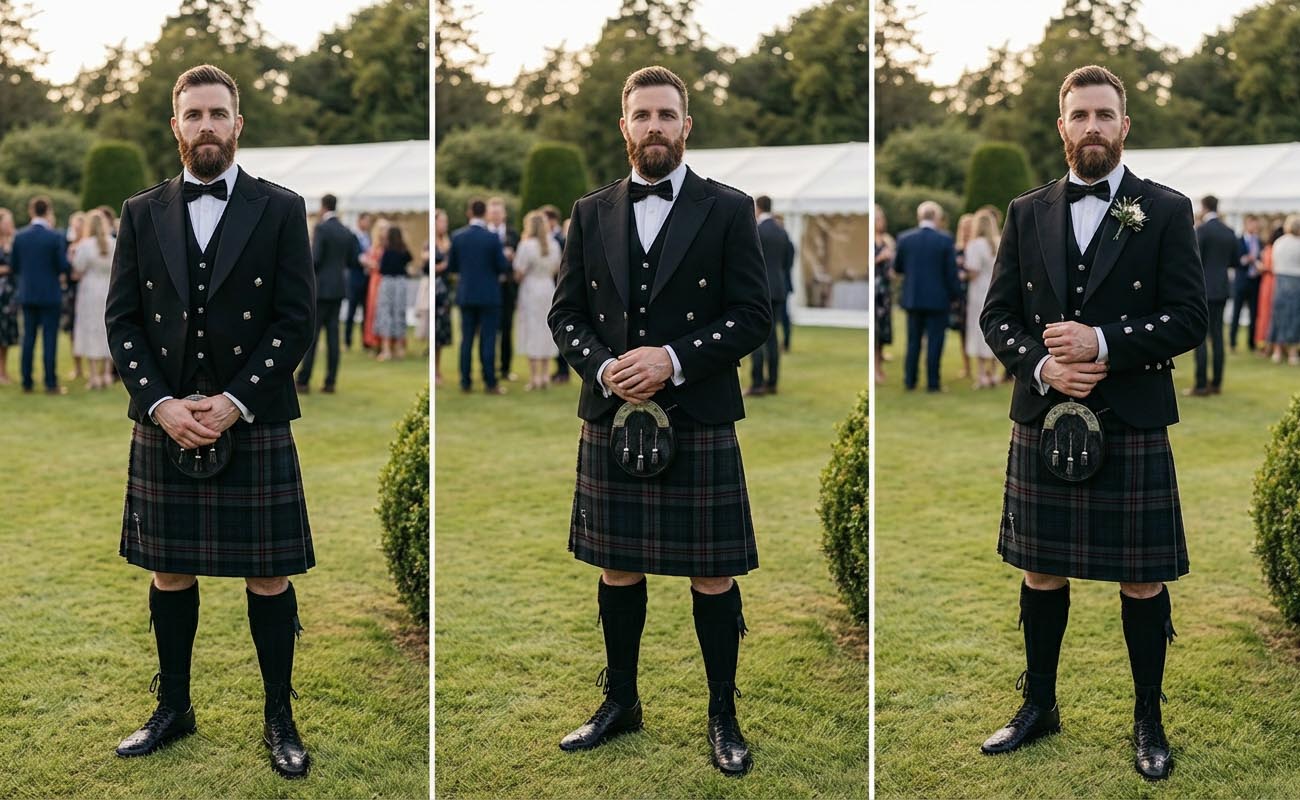
When attending weddings, graduation ceremonies, corporate galas, or black-tie events, your shirt choice should reflect the occasion’s elegance and importance. A crisp white dress shirt remains the gold standard for formal kilt attire, offering timeless sophistication that never goes out of style. This classic choice pairs exceptionally well with Prince Charlie jackets, Argyle jackets, and formal waistcoats, creating a polished Highland dress ensemble that commands respect and admiration from fellow guests.
White dress shirts feature stiff collars and long sleeves that provide proper structure beneath formal kilt jackets. The clean, neutral appearance allows your tartan pattern to remain the focal point while maintaining refined elegance throughout the event. For evening celebrations and dinner events, you might consider a wing collar shirt paired with a bow tie, which adds an extra touch of formality and creates a distinguished gentleman’s appearance that photographs beautifully. The crisp white fabric catches light elegantly and provides the perfect canvas for your kilt’s colors to shine.
Black dress shirts offer a slightly more contemporary alternative, particularly suitable for evening celebrations or modern formal settings where traditional white might feel too conventional. While traditionally considered less formal than white, black shirts have gained acceptance at semi-formal events and add a sleek, modern edge to your Highland outfit. Pairing a black shirt with matching accessories creates a cohesive, sophisticated look that stands out without overshadowing the kilt’s tartan. This contemporary approach works especially well for younger wearers or events with a more modern aesthetic.
For the most formal occasions and traditional Scottish ceremonies, consider Victorian-style shirts with ruche ties or cravats. These historically-inspired choices add authenticity and gravitas to your outfit, making them perfect for traditional Scottish weddings, Burns Night celebrations, St. Andrew’s Day events, or heritage gatherings where historical accuracy matters greatly. The elaborate collar styles and decorative elements transport your look back to the romantic era of Highland dress, showing deep respect for Scottish traditions and cultural heritage.
Semi-Formal Ghillie Shirts for Traditional Gatherings
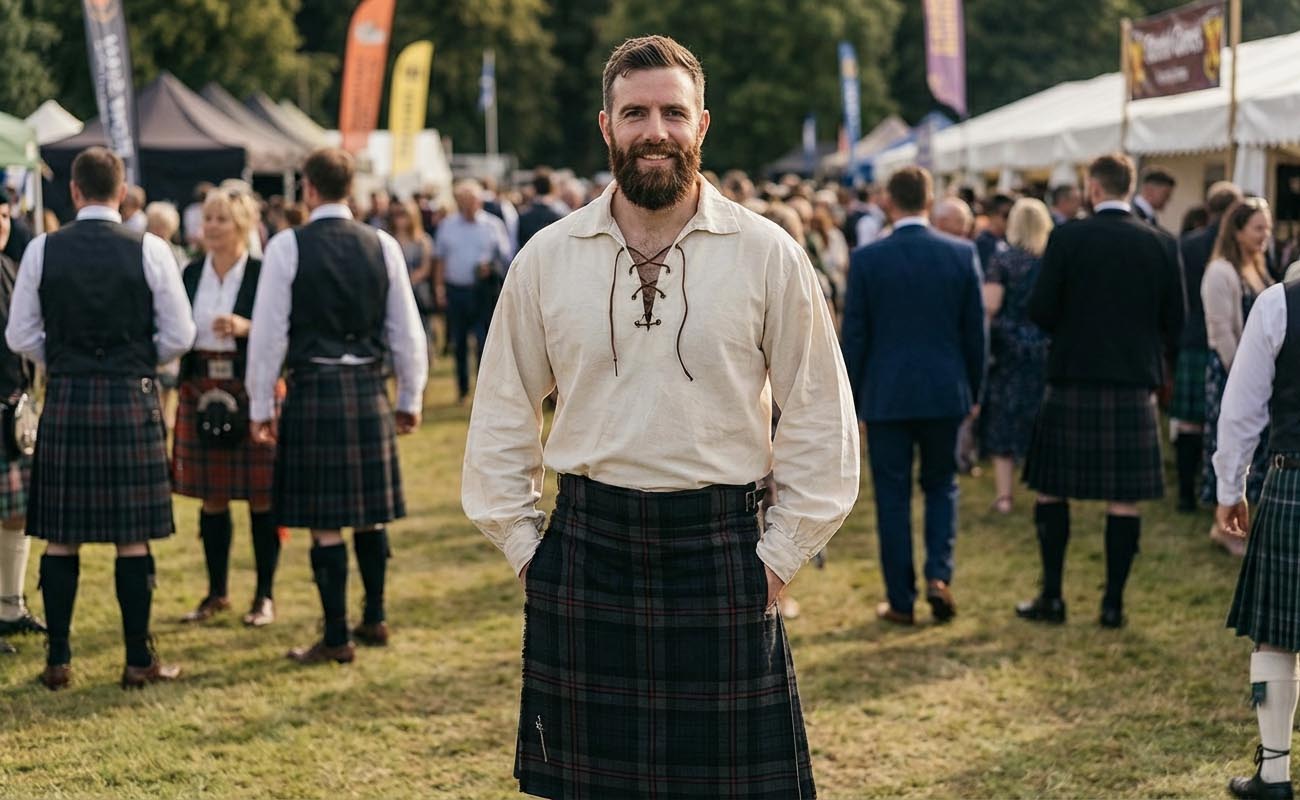
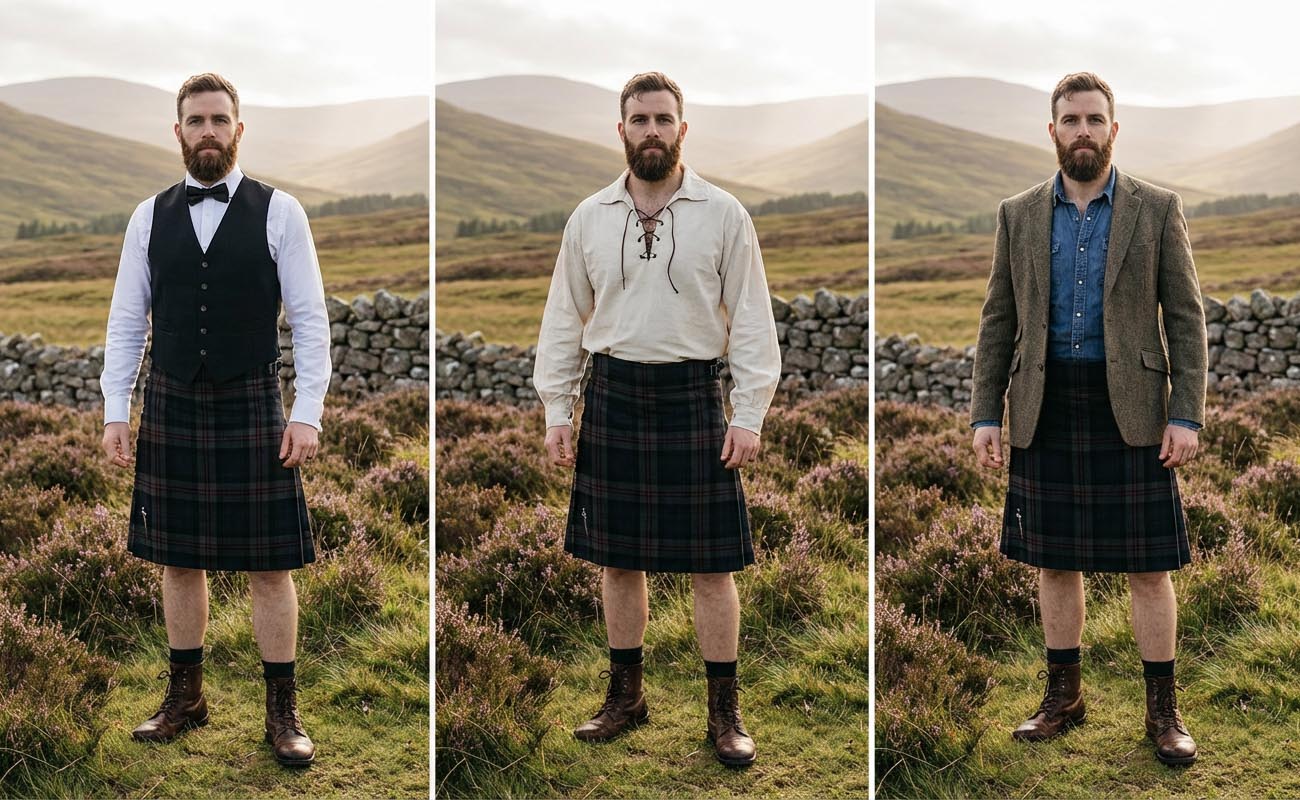
The Ghillie shirt, also known as a Jacobite or Jacobean shirt, represents one of the most iconic traditional options for kilt wear. These distinctive shirts feature loose-fitting designs with lace-up fronts instead of buttons, creating a relaxed yet historically rooted appearance that captures the essence of Scottish Highland tradition. The open collar and flowing sleeves provide comfortable movement while maintaining cultural authenticity, making them favorites among Highland dancers and traditional musicians.
Ghillie shirts work beautifully for semi-formal occasions, including Highland games, ceilidhs, Scottish festivals, charity events, and traditional gatherings where you want to embrace heritage without requiring a full formal jacket. Available in classic colors like white, cream, black, burgundy, and earth tones, these versatile shirts transition seamlessly from daytime events to evening celebrations. The lace-up detail adds visual interest and can be adjusted throughout the day for comfort as temperatures change or activity levels increase.
The beauty of Ghillie shirts lies in their ability to stand alone without requiring additional layers or accessories. Unlike formal dress shirts that typically need jackets and waistcoats to look complete, Ghillie shirts create a finished look on their own. The lace-up front adds visual interest and traditional character, while the breathable fabric keeps you comfortable during active events like dancing, playing instruments, or participating in Highland games. This makes them ideal for outdoor summer festivals where formal jackets would be impractical.
When choosing a Ghillie shirt, consider the fabric weight based on your climate and activity level. Lightweight cotton or poly-cotton blends work well for summer festivals and warm-weather events, preventing overheating during physical activities. Heavier materials provide warmth for cooler seasons and autumn gatherings when temperatures drop. The loose fit accommodates various body types comfortably and allows freedom of movement, making Ghillie shirts practical choices for events involving physical activity or extended wear throughout the day and into the evening.
Casual Shirt Options for Everyday Wear
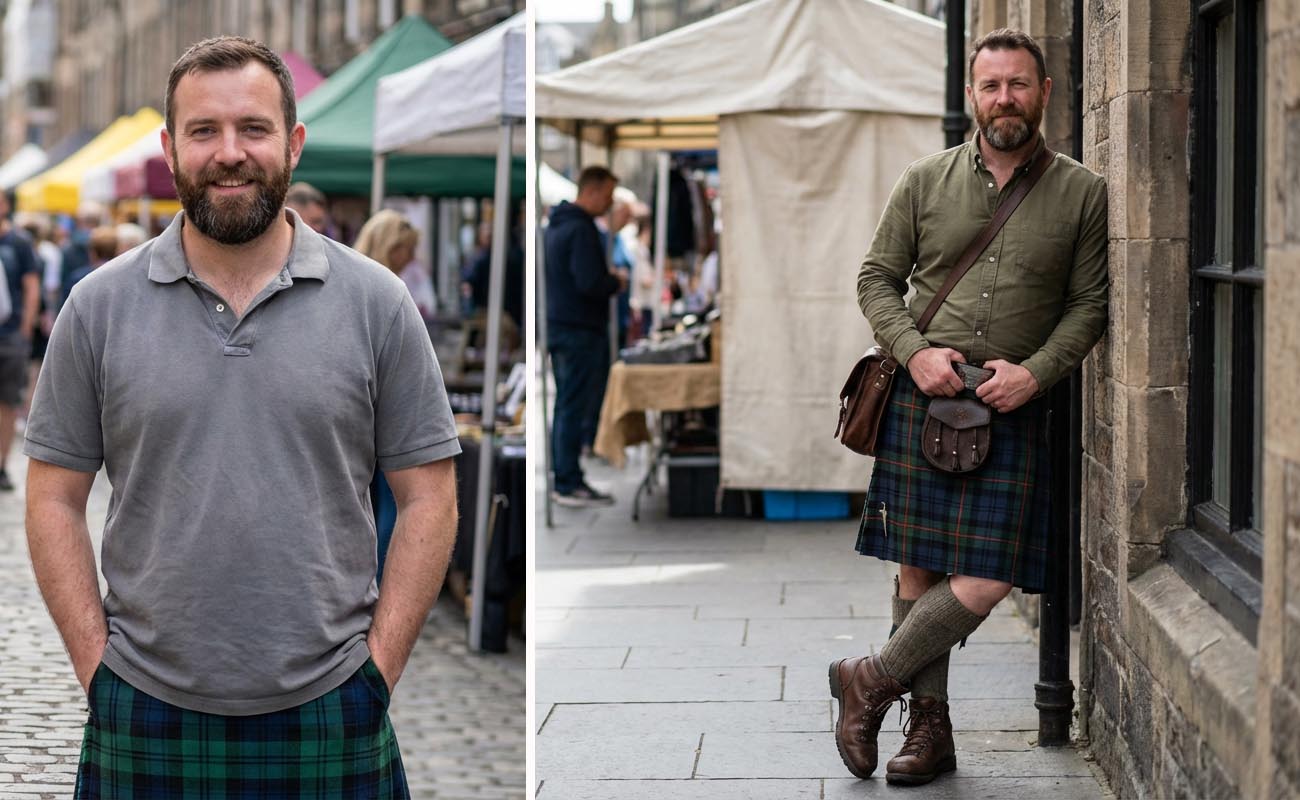
Modern kilt styling embraces casual versatility, allowing you to incorporate kilts into everyday life without excessive formality or feeling like you’re wearing a costume. For relaxed occasions like sports events, casual parties, outdoor festivals, pub gatherings, or daily wear, comfortable shirt options let you enjoy your kilt while maintaining a laid-back aesthetic that feels natural and approachable. This everyday approach to kilt-wearing helps keep Scottish traditions alive in contemporary contexts.
Button-down shirts in cotton or linen provide an excellent middle ground between casual and presentable, working for situations where you want to look put-together without formal stiffness. Choose solid colors or subtle patterns that complement your kilt’s tartan without competing for attention or creating visual chaos. Fitted button-downs can be tucked in for a slightly more polished appearance at casual restaurants or social gatherings, or left untucked for maximum comfort during outdoor activities, concerts, or casual outings with friends. This versatility makes them perfect for situations where you’re unsure about the exact dress code or when plans might change throughout the day.
Polo shirts offer a smart-casual option that combines comfort with a touch of refinement, making them popular choices for golf outings and country club events. The collar adds structure without formality, and the breathable fabric keeps you cool during warm-weather activities without sacrificing a neat appearance. Solid-colored polos in navy, black, grey, burgundy, or colors that echo tones within your tartan create balanced, cohesive outfits suitable for golf, picnics, casual business meetings, casual gatherings, or weekend errands when you want to look respectable without being overdressed.
For truly casual settings like music festivals, sports games, or backyard barbecues, fitted t-shirts provide ultimate comfort without sacrificing style or looking sloppy. Choose well-fitted tees rather than baggy styles to maintain an intentional, put-together appearance that shows you care about your presentation. Plain shirts in neutral colors work universally with any tartan pattern, while graphic tees featuring Celtic designs, Scottish symbols, band logos, or humorous Scottish phrases add personality and create conversation starters at festivals, concerts, or casual social events where creativity is welcomed.
Linen shirts deserve special mention for summer wear and outdoor events in hot climates or tropical settings. These lightweight, breathable natural-fiber shirts keep you cool and comfortable during hot weather while maintaining a refined appearance that works for casual lunches or beach events. The slightly relaxed texture of linen complements the structured pleats of kilts beautifully, and the fabric’s natural wrinkle pattern adds character rather than appearing sloppy or unkempt. Linen’s casual elegance bridges the gap between dressed-up and relaxed perfectly.
Color Coordination and Pattern Matching
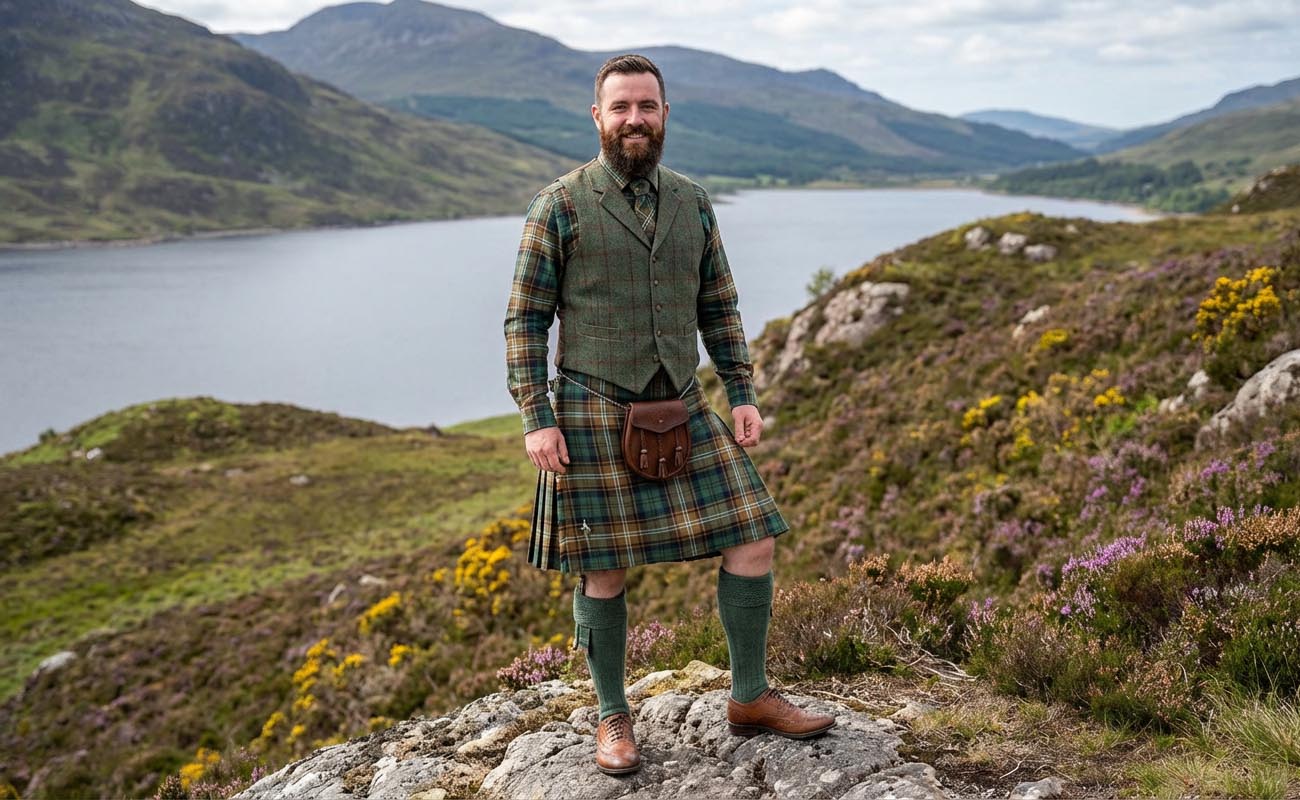
Successfully pairing your shirt with your kilt requires understanding color relationships and how patterns interact visually to create pleasing combinations. The fundamental principle involves creating balance so that both pieces complement each other without overwhelming the overall aesthetic or creating visual confusion. Your kilt’s tartan pattern contains multiple colors woven together, and selecting shirt colors that echo or contrast with these tones creates harmonious combinations that appear intentional and well-considered.
Essential Color Pairing Guidelines:
- White shirts work universally with any tartan pattern
- Black provides a dramatic contrast for lighter tartans
- Navy and grey offer neutral versatility
- Earth tones complement traditional tartan colors
- Pick one accent color from your tartan for cohesion
For busy tartan patterns with multiple colors and complex designs, solid-colored shirts generally work best by providing visual rest and allowing the intricate pattern to shine as the outfit’s focal point. White shirts offer universal compatibility with any tartan, creating clean, crisp pairings that never fail regardless of your tartan’s colors or complexity. Black shirts provide dramatic contrast, particularly effective with lighter or brighter tartans, while grey offers neutral sophistication that works across the formality spectrum from casual to formal events.
When your kilt features earth tones like greens, browns, or blues, consider shirts in complementary natural colors that enhance these tones. Forest green pairs beautifully with brown-based tartans, while navy complements blue-dominant patterns without clashing. Cream or off-white shirts create softer, more relaxed combinations than stark white, particularly appropriate for daytime events and casual settings where brightness might feel too formal or too stark against outdoor lighting.
For modern, creative approaches, you might select shirts that pick up accent colors from your tartan pattern’s less dominant threads. If your tartan includes threads of burgundy, rust, gold, or purple, choosing a shirt in one of these colors creates intentional coordination that demonstrates attention to detail and color awareness. However, exercise restraint with this approach, ensuring the colors genuinely harmonize rather than creating jarring combinations that fight for attention. Test your combination in natural light before committing to an outfit.
Avoid wearing patterned shirts with heavily patterned tartans unless you have strong confidence in pattern mixing and understand design principles. Stripes, checks, or prints typically compete visually with tartan patterns, creating busy, confusing appearances that lack cohesion and make your outfit look chaotic. If you do choose patterned shirts, ensure they’re subtle and considerably smaller in scale than your tartan pattern to maintain visual hierarchy and prevent pattern clash.
Fabric Considerations for Different Seasons
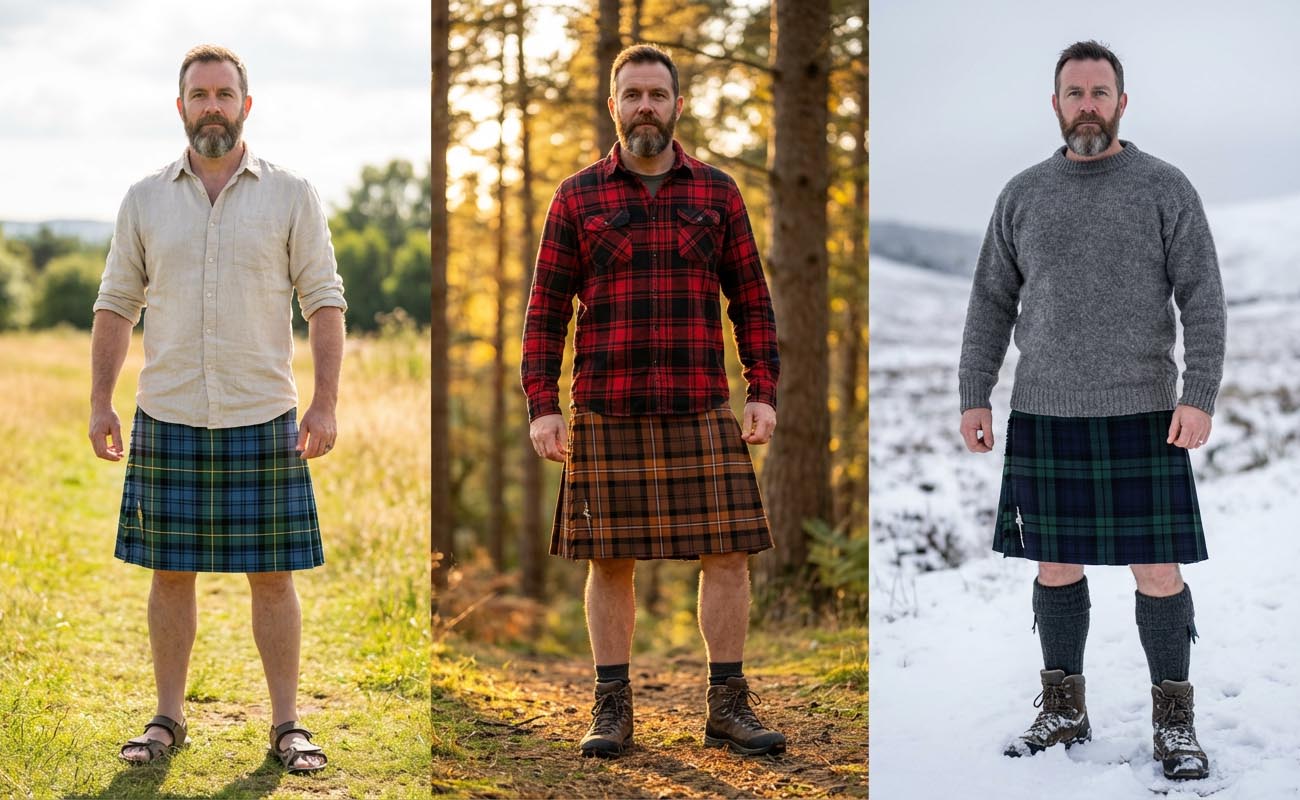
Selecting appropriate fabric weights and materials ensures comfort throughout the year while maintaining the aesthetic you desire for specific occasions. Seasonal considerations affect both your comfort level and the overall appropriateness of your outfit for specific events and weather conditions. Understanding fabric properties helps you make informed choices that keep you comfortable regardless of temperature or activity level.
During warmer months, prioritize breathable natural fibers that allow air circulation and moisture wicking to prevent overheating. Cotton shirts remain the most popular choice for their comfort, easy care, and versatility across formality levels from casual to dressy. Lightweight cotton works beautifully for summer weddings, outdoor festivals, and warm-weather gatherings, keeping you comfortable without sacrificing appearance or looking wilted. Linen shirts excel in heat, though their tendency to wrinkle naturally suits casual events better than ultra-formal occasions where crisp appearance matters most.
Poly-cotton blends offer practical advantages, including wrinkle resistance and durability, making them excellent choices for traveling to events or extended wear situations. These blends maintain their appearance throughout long days and require minimal maintenance or ironing, though they may not breathe quite as well as pure natural fibers during extreme heat or high humidity. For most occasions, the trade-off between breathability and easy care makes blends a worthwhile consideration.
For cooler seasons, consider layering options that add warmth without bulk or restricting movement. Long-sleeved dress shirts in heavier cotton weights provide warmth for formal events during autumn and winter months, while casual button-downs in flannel or chambray offer comfort for relaxed occasions. Layering a lightweight vest or sweater over your shirt adds versatility, allowing you to adjust your warmth level throughout events as temperatures change from day to evening or as you move between indoor and outdoor spaces.
Shirt Fit and Styling Tips
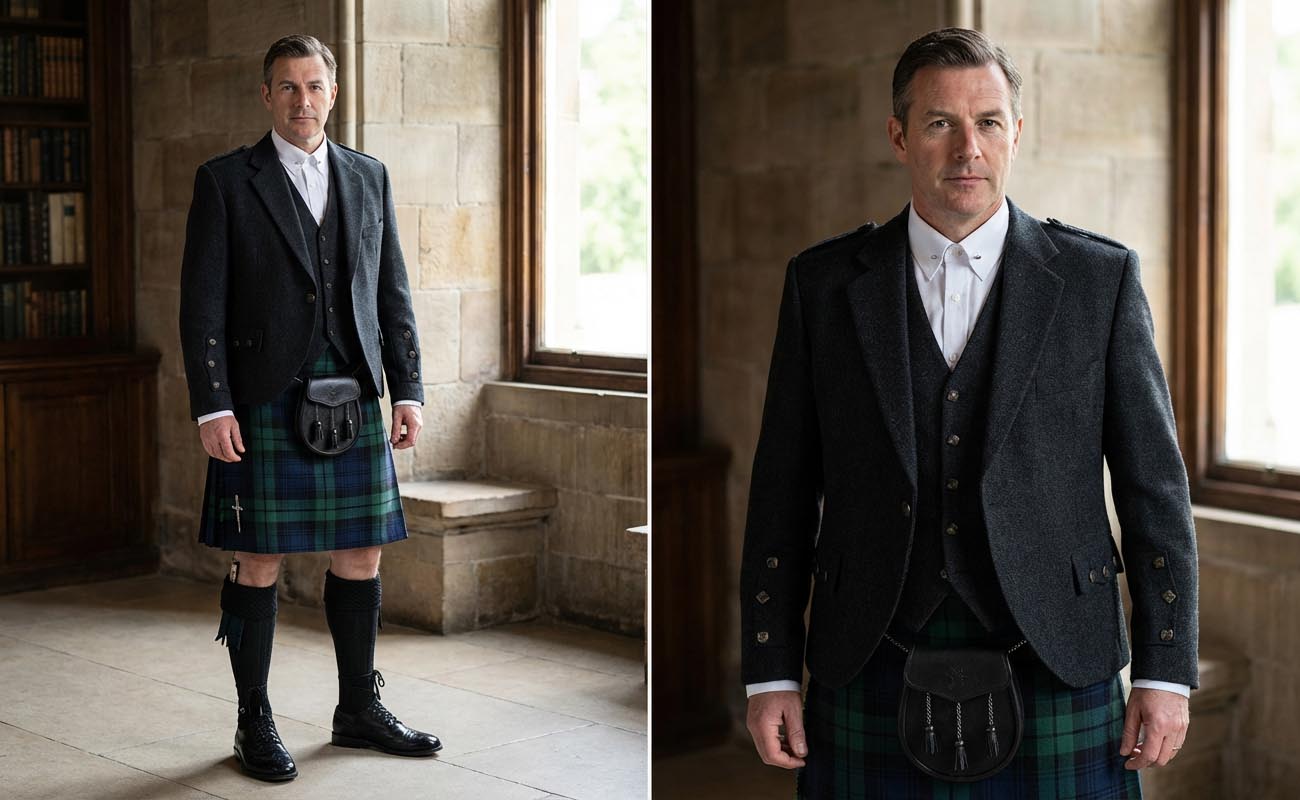
Proper fit transforms an adequate outfit into an exceptional one, and understanding how your shirt should fit with a kilt ensures a polished, intentional appearance that looks professional. Unlike standard trousers that sit at the natural waist or hips, kilts sit higher, typically at the belly button level, which affects how your shirt interfaces with the garment and overall proportions. This higher waistline requires consideration when selecting shirt lengths and determining tucking methods.
For formal occasions, always tuck your shirt in completely, ensuring it remains smooth and wrinkle-free beneath your kilt’s waistband without bunching or bulging. A properly tucked shirt creates clean lines and maintains the refined silhouette expected at formal events like weddings, graduations, or business functions. Consider using shirt stays or garters if you’ll be particularly active throughout the event, as these prevent your shirt from becoming untucked during movement, dancing, or extended sitting and standing cycles.
Casual shirt styling allows more flexibility depending on the shirt style and overall aesthetic you’re creating for relaxed situations. Fitted button-downs can be partially tucked in front while remaining loose in back for a contemporary, relaxed appearance popular in modern casual fashion. Polo shirts typically look best untucked, allowing their designed hem length to show properly, while t-shirts can go either way depending on their length and your preference for the specific occasion.
Pay attention to sleeve length, particularly with formal and button-down shirts, where improper length looks sloppy. Long sleeves should end at your wrist bone, with cuffs extending slightly beyond jacket sleeves when worn together for proper proportion. For casual short-sleeved options, sleeves should hit mid-bicep rather than hanging loosely or cutting into your arm uncomfortably, creating balanced proportions with the kilt’s knee-length hemline and maintaining visual harmony.
Collar styles significantly impact your overall appearance and formality level in ways many people overlook. Standard collars work across most situations and pair well with ties when needed for business or formal settings. Wing collars specifically suit formal bow tie combinations, creating traditional Highland dress aesthetics perfect for weddings. Ghillie shirts‘ open collars eliminate this concern, while polo collars add casual structure without formality, making them ideal for situations where you want to look presentable without appearing overdressed.
Essential Accessories for Complete Styling
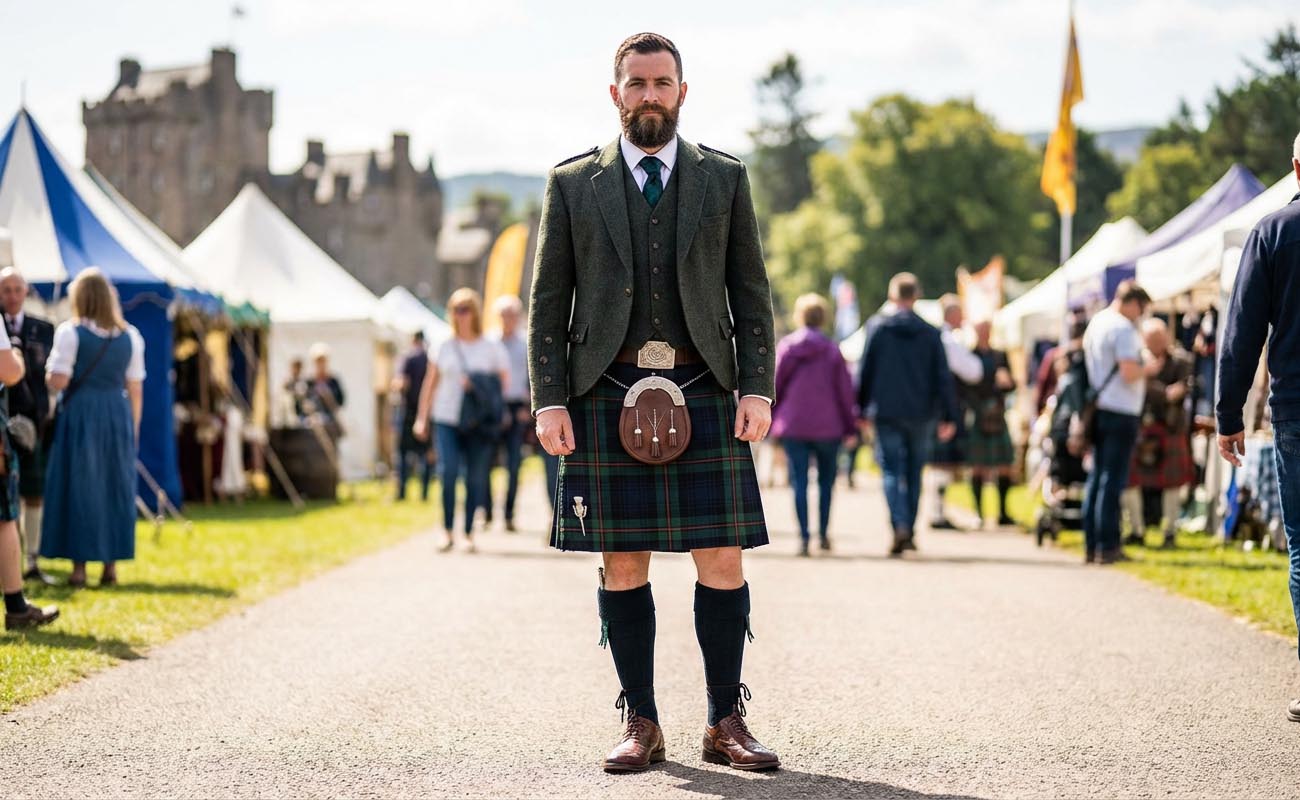
- Sporran (leather pouch worn at the waist)
- Kilt pin (decorative and functional)
- Belt with Celtic buckle
- Sgian dubh (traditional knife in sock)
- Dress shoes or brogues
Common Mistakes to Avoid When Styling Kilt Shirts
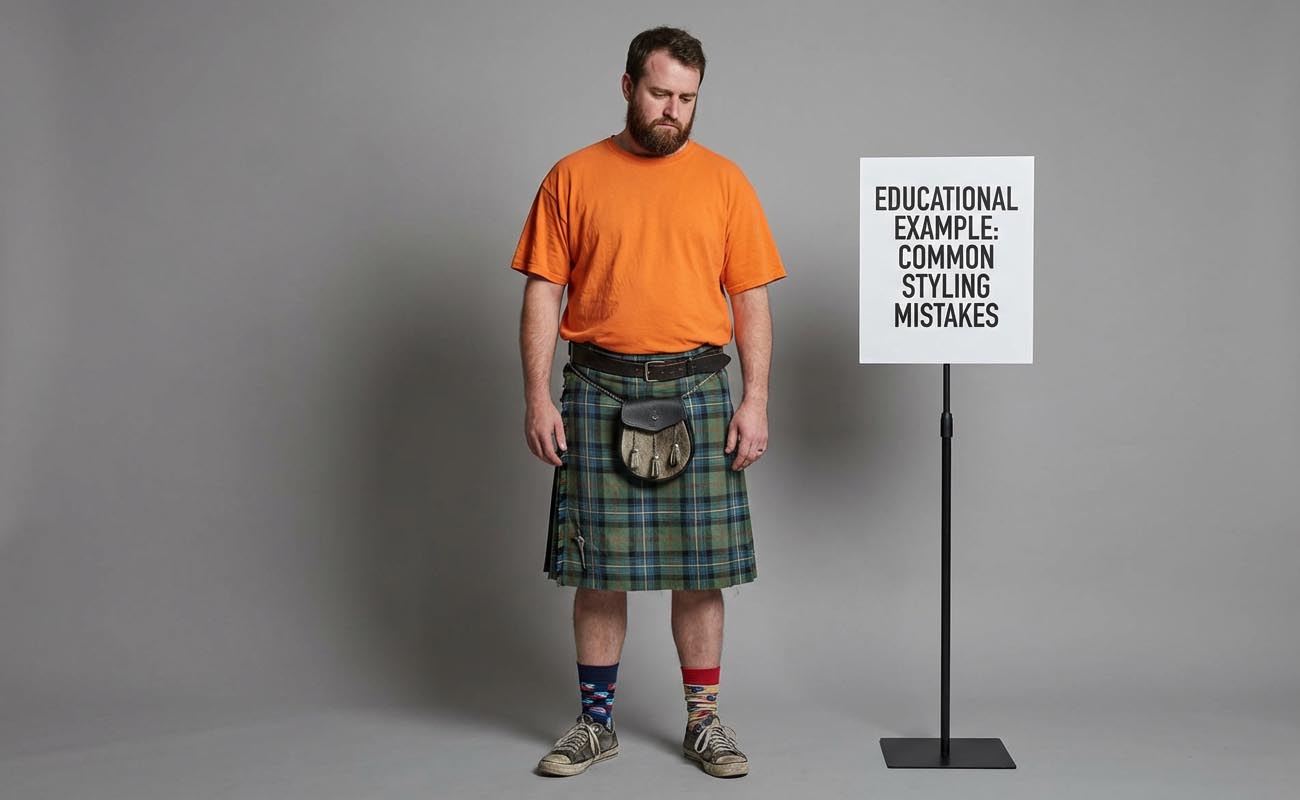
Understanding what doesn’t work helps you avoid fashion missteps that undermine your carefully planned outfit and waste money on unsuitable pieces. One of the most common errors involves choosing shirts that compete with your tartan rather than complementing it through poor color or pattern choices. Heavily patterned shirts clash visually with busy tartans, creating confusing, overwhelming aesthetics that lack cohesion and intentionality, making you appear as though you dressed in the dark.
Poor fit ranks among the most detrimental mistakes, as ill-fitting shirts immediately signal a lack of care regardless of garment quality or price. Shirts that are too tight restrict movement and create unflattering pulling across the chest and shoulders, while overly loose shirts appear sloppy and undermine formal occasions’ dignity. Invest time in finding proper sizes or having shirts tailored to your measurements for truly exceptional results that make your outfit look custom-made.
Ignoring formality levels creates jarring mismatches between your shirt and the occasion that show disrespect. Wearing casual t-shirts to formal weddings disrespects the event and hosts’ efforts, while overdressing casual gatherings with stiff formal shirts makes you appear out of touch with social norms. Consider the invitation’s dress code, venue formality, and time of day when selecting your shirt to ensure appropriate choices that fit the occasion.
Neglecting color harmony produces disconnected outfits that lack visual flow and appear randomly assembled. While you don’t need perfect color matching, your shirt should relate somehow to your kilt’s colors, either through complementary tones or neutral choices that enhance rather than distract. Wildly contrasting colors that appear nowhere in your tartan create disjointed appearances, suggesting random selection rather than intentional styling decisions.
Building Your Kilt Shirt Wardrobe
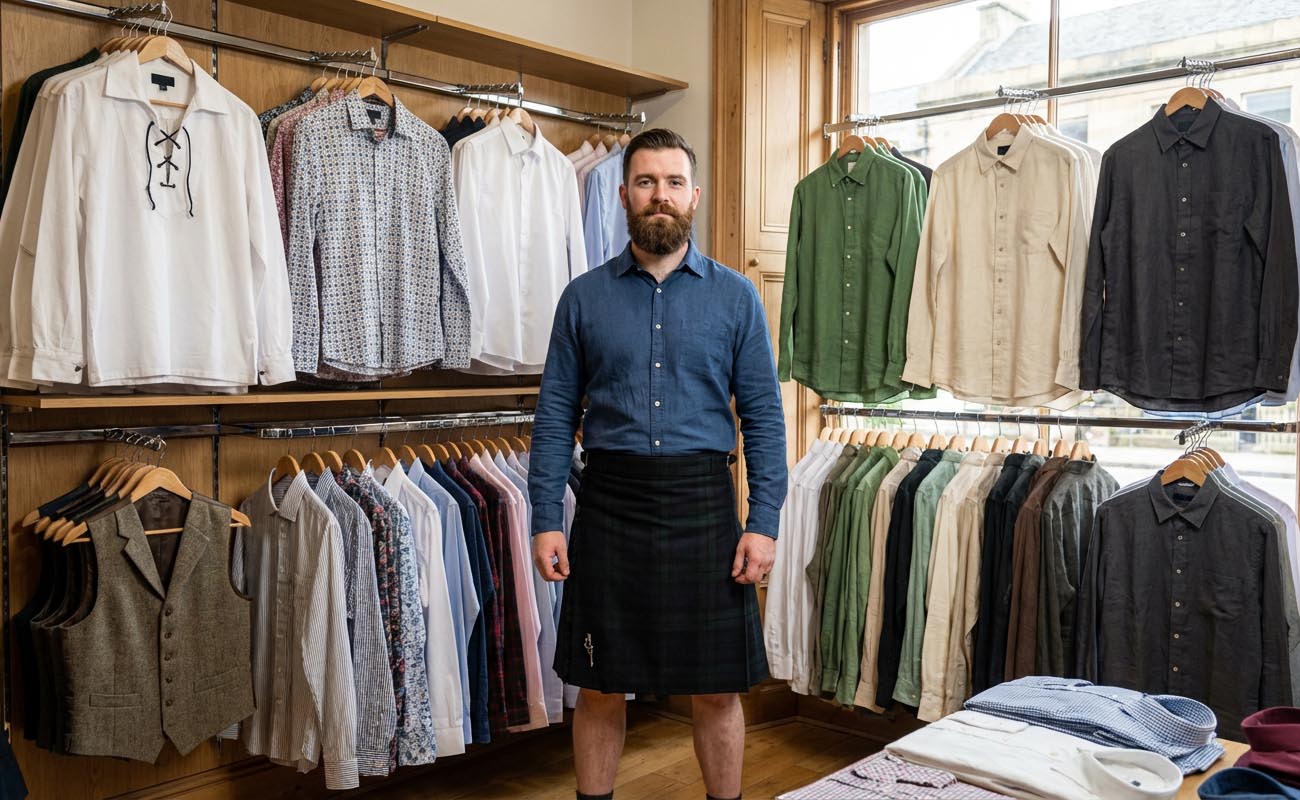
Creating a versatile collection of shirts that work with your kilts ensures you’re prepared for any occasion without requiring extensive planning or last-minute shopping. Start with foundational pieces that offer maximum versatility across different events, then expand with specialized options for specific events as your needs and budget allow. Quality over quantity remains the guiding principle for building a functional wardrobe.
Your essential basics should include one high-quality white dress shirt with a standard collar for formal occasions like weddings and business events, one black or navy dress shirt for evening events and contemporary formal settings, and one classic Ghillie shirt in white or cream for traditional gatherings and Highland games. These three pieces handle the majority of formal and semi-formal situations you’ll encounter throughout the year.
For casual wear, add two to three button-down shirts in solid colors that complement your most-worn tartans, two polo shirts in neutral tones for smart-casual situations, and several well-fitted t-shirts in black, white, grey, and colors that work with your kilts for everyday wear. This casual foundation covers everyday wear, sports events, festivals, and relaxed social occasions without requiring significant investment.
As your collection grows, consider adding specialized pieces like Victorian-style formal shirts for ultra-traditional events, linen shirts for summer occasions and beach weddings, flannel button-downs for autumn and winter casual wear, and perhaps graphic tees featuring Celtic or Scottish designs for festival wear and concerts. Building gradually ensures you invest in pieces you’ll actually wear rather than accumulating unused garments that clutter your closet.
Maintaining Your Kilt Shirts Properly
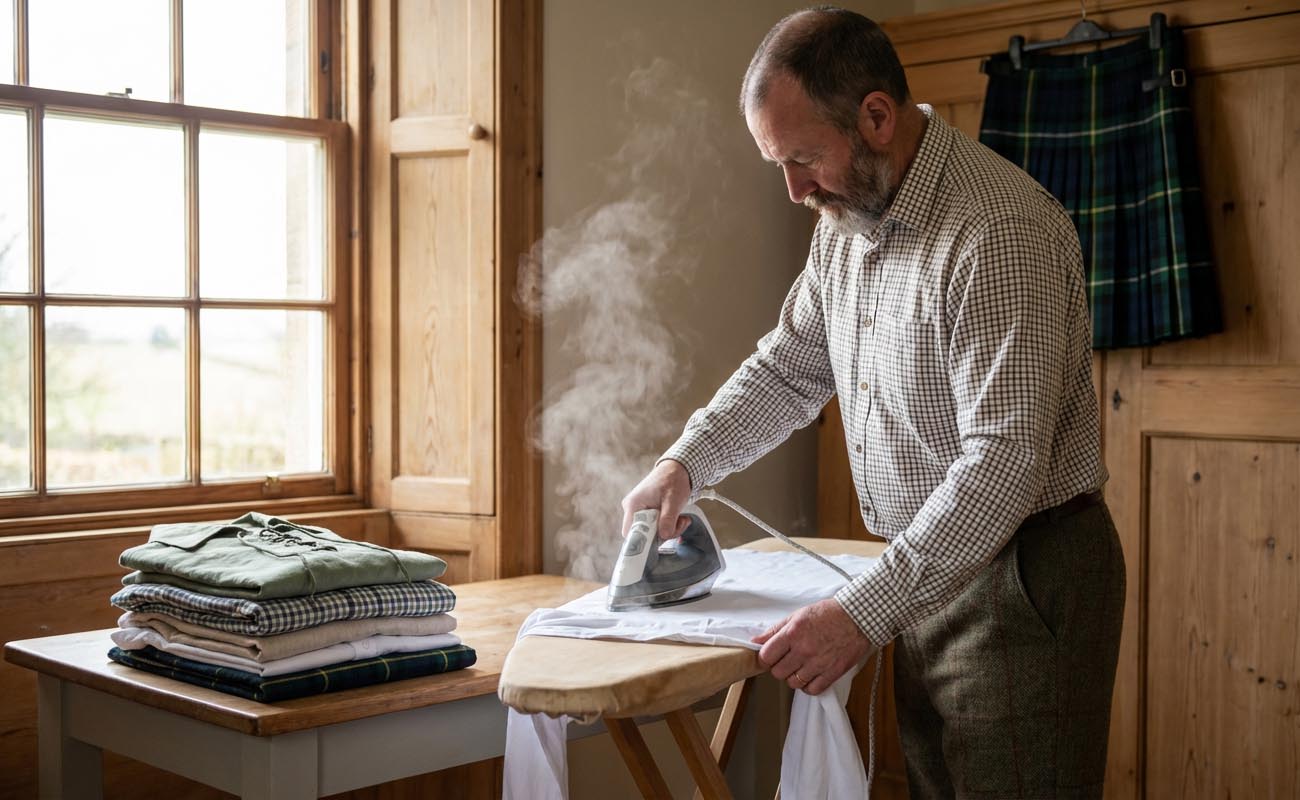
Proper care extends the life of your shirts and ensures they always look fresh and presentable when needed. White dress shirts require careful washing to prevent yellowing over time, using quality detergent and avoiding excessive heat during drying. Store formal shirts on proper hangers to prevent wrinkles and maintain collar shape between wearings.
Ghillie shirts benefit from gentle washing to preserve their lace-up grommets and prevent fabric stretching. Hang dry when possible to maintain the loose, flowing fit that makes these shirts comfortable. Iron on medium heat if needed, paying special attention to the collar and lace-up area for a crisp appearance.
Casual shirts like polos and button-downs should be folded or hung according to fabric type and personal preference. Cotton shirts may need light ironing, while poly-cotton blends often require minimal care. Rotate your shirts regularly to prevent excessive wear on favorite pieces, extending the life of your entire wardrobe.
Conclusion: Confidence in Your Kilt Outfit Choice
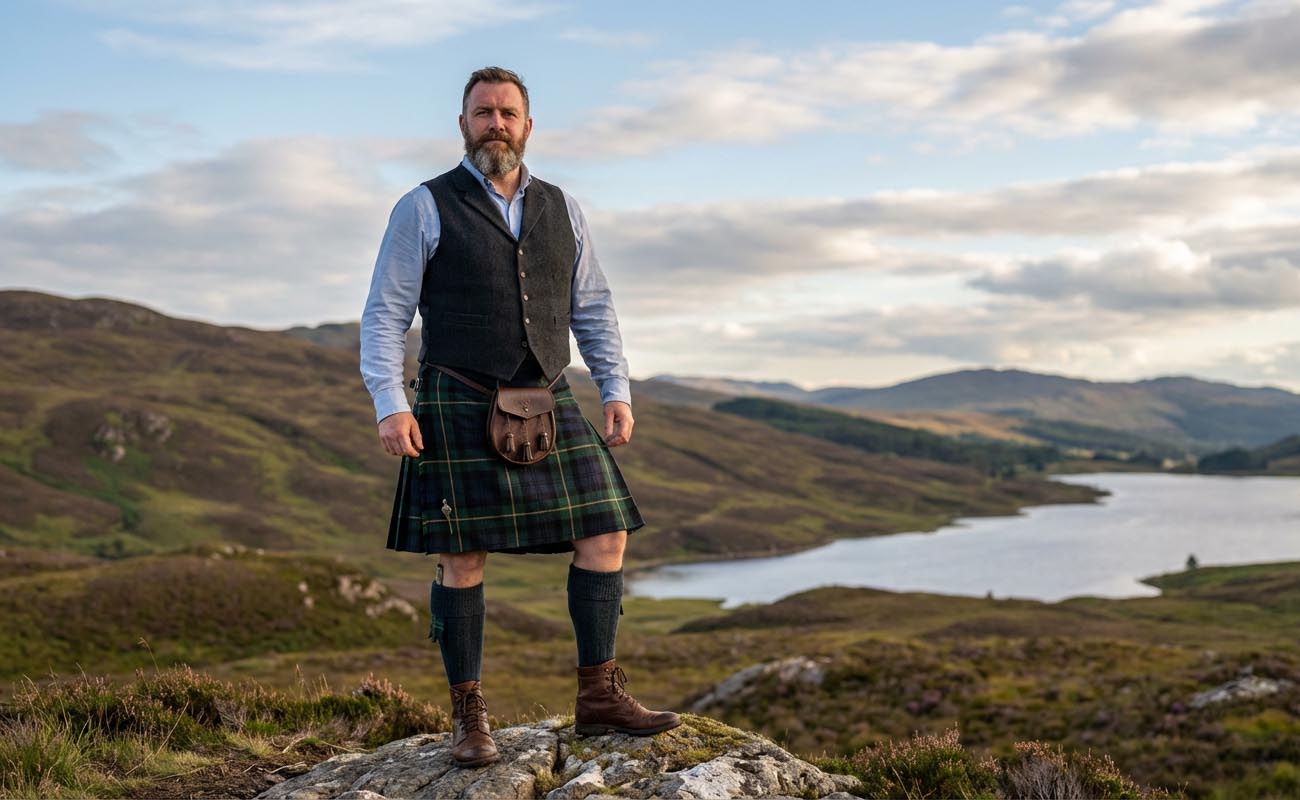
Selecting the perfect shirt to wear with your kilt ultimately comes down to understanding the occasion’s requirements, respecting tradition while expressing personal style, and ensuring a comfortable fit that allows confident movement throughout your event. Whether you choose formal elegance, traditional authenticity, or casual comfort, the right shirt elevates your kilt from a costume into a genuine expression of heritage and personal taste that honors Scottish culture.
Remember that confidence matters more than following rigid rules perfectly or matching every color exactly. Kilts represent centuries of tradition, but they’ve also evolved continuously to remain relevant in modern contexts and contemporary fashion. Your comfort and confidence in your chosen combination will shine through more powerfully than any theoretical perfection in styling rules, making you look and feel great regardless of the specific combination.
Start with the guidelines provided here, experiment with different combinations to discover what works for your body type and personal aesthetic, and pay attention to how different shirts make you feel during various activities. Over time, you’ll develop an intuitive understanding of which shirts serve specific occasions best, building a wardrobe that supports your kilt-wearing lifestyle across all contexts from everyday casual to once-in-a-lifetime formal celebrations. At Scotland Kilt Collection, we encourage you to trust your instincts, embrace Scottish tradition, and wear your kilt with pride, knowing you’ve made thoughtful choices about every element of your outfit.
Frequently Asked Questions About Kilt Shirts
White shirts are the most versatile choice and work with any tartan pattern. For formal events, stick with white or black dress shirts. For casual wear, choose colors that appear in your tartan’s threads – navy, forest green, burgundy, or grey all work beautifully. Avoid colors that clash with your tartan’s dominant tones.
Yes, absolutely! T-shirts work great for casual occasions like festivals, sports events, or everyday wear. Choose well-fitted tees in solid colors rather than baggy styles. Plain black, white, or grey t-shirts are the safest choices, but you can also wear graphic tees with Celtic designs for a fun, relaxed look.
For formal events, always tuck your shirt in completely for a polished appearance. For casual occasions, you have more flexibility – button-downs can be partially tucked or untucked, polo shirts typically stay untucked, and t-shirts can go either way depending on their length and the overall look you want.
A Ghillie shirt (also called a Jacobite shirt) is a traditional Scottish shirt with a lace-up front instead of buttons and an open collar. It’s perfect for semi-formal occasions like Highland games, ceilidhs, Scottish festivals, and traditional gatherings. Ghillie shirts can be worn without a jacket and provide comfortable, authentic Highland style.
Generally, it’s best to avoid patterned shirts with tartan kilts as they compete visually and create a busy, chaotic look. Solid-colored shirts let your tartan shine as the focal point. If you must wear a pattern, choose something very subtle and much smaller in scale than your tartan pattern.
For Scottish weddings, wear a crisp white or black dress shirt with a formal collar. Pair it with a Prince Charlie jacket, formal waistcoat, and bow tie for ultra-formal evening weddings. For daytime weddings, a white dress shirt with an Argyle jacket works perfectly. Always tuck your shirt in completely.
Black shirts work best with lighter or brighter tartans, where they provide dramatic contrast. They’re excellent for evening events and modern formal settings. However, black may overpower very dark tartans. Test your combination in natural light – if your kilt gets lost visually, choose a lighter shirt color instead.