
Blog
What Shoes To Wear With A Kilt? A Complete Guide to Traditional and Modern Footwear
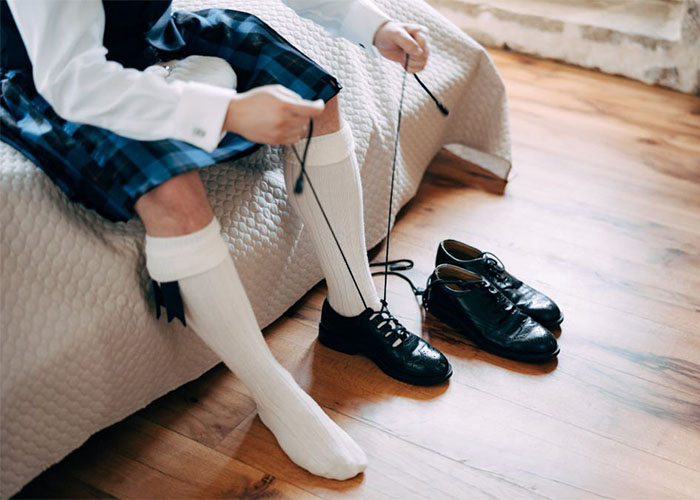
Choosing the right shoes to wear with a kilt can transform your entire outfit from ordinary to exceptional. Whether you’re attending a Scottish wedding, a Highland gathering, or simply embracing Celtic heritage, your footwear choice plays a crucial role in completing your traditional or contemporary kilt ensemble. The right pair of shoes not only enhances your appearance but also reflects the formality of the occasion and your personal style preferences.
Understanding which shoes to wear with a kilt involves considering several factors, including the type of event, weather conditions, and whether you prefer traditional Scottish footwear or modern alternatives. From classic ghillie brogues to contemporary dress shoes, each option offers unique benefits and aesthetic appeal. This comprehensive guide will walk you through all the best footwear options, helping you make an informed decision that suits your needs and ensures you look distinguished at any occasion.
Traditional Scottish Footwear for Kilts
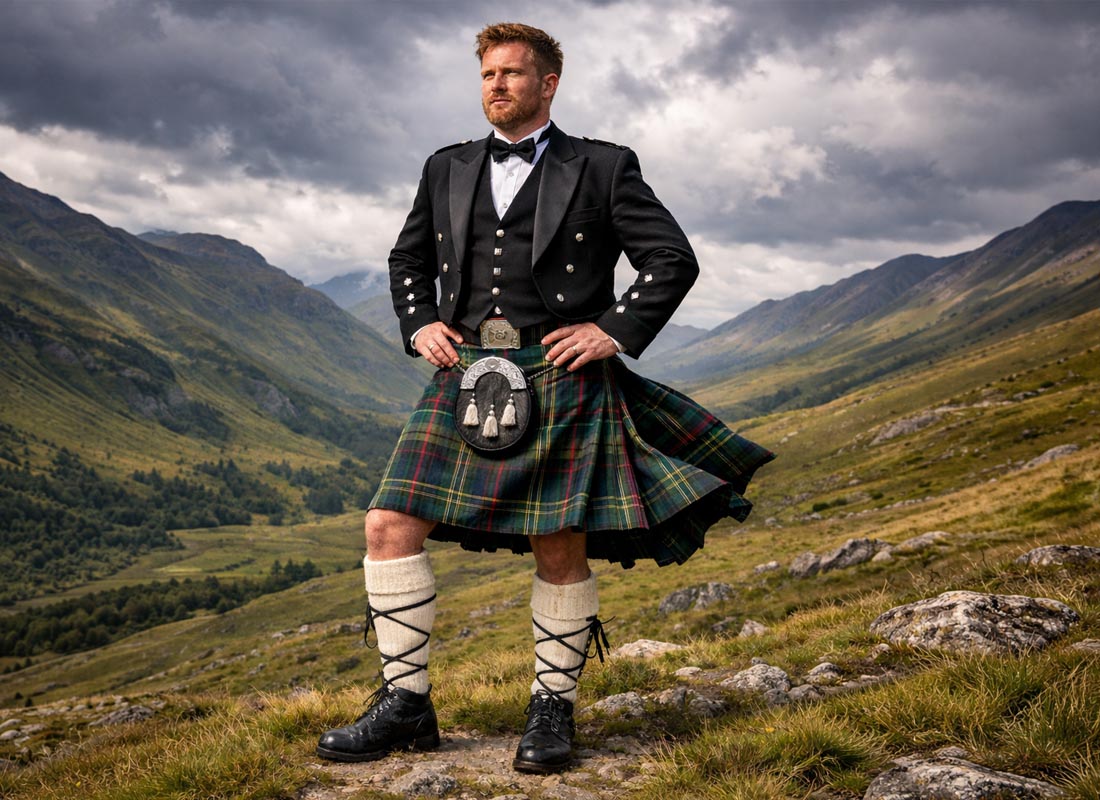
Traditional Scottish footwear has been worn with kilts for centuries and remains the most authentic choice for formal Highland dress. These classic options are deeply rooted in Scottish culture and are specifically designed to complement the kilt’s unique style. Ghillie brogues stand as the most iconic choice, featuring distinctive long laces that wrap around the ankle and tie just below the calf. These shoes originated as practical footwear for Scottish Highlanders who needed shoes that could handle rough terrain while dancing and working.
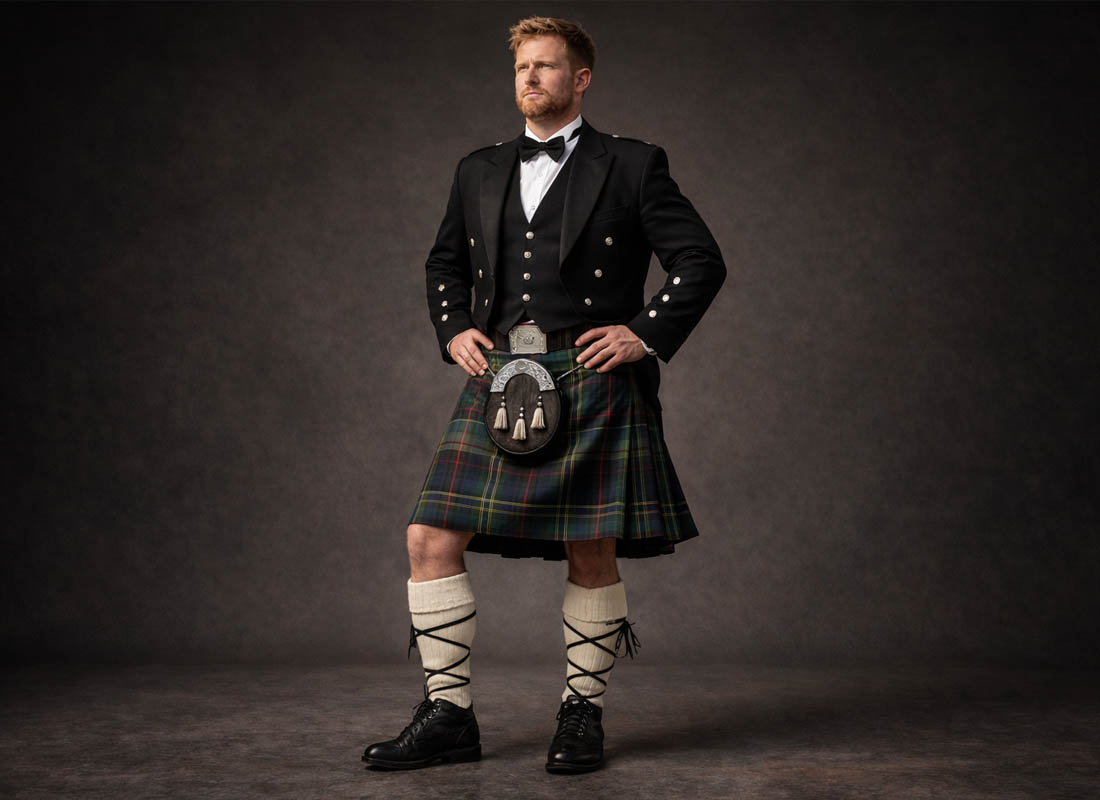
Ghillie brogues typically feature decorative perforations and a tongueless design that allows for better breathability and flexibility. The leather construction ensures durability while maintaining the elegant appearance required for formal occasions. When wearing ghillie brogues, the laces should be wrapped around the leg in a specific pattern, creating an authentic Highland look that pairs perfectly with kilt hose (long socks). These traditional shoes work exceptionally well for weddings, ceilidhs, Highland games, and other formal Scottish events where authenticity is valued.
Another traditional option is the Scottish brogue shoe, which resembles ghillie brogues but features a standard lacing system. These brogues maintain the decorative perforations and sturdy leather construction while offering easier wearability for those unfamiliar with ghillie lacing techniques. Both styles typically come in black or brown leather, with black being the more formal choice for evening events and brown working well for daytime occasions.
Modern Dress Shoes That Work With Kilts
Popular Modern Shoe Styles for Kilts:
- Oxford shoes in polished leather for formal events
- Derby shoes for semi-formal occasions
- Loafers for casual kilt outfits
- Chelsea boots for contemporary styling
- Monk strap shoes for unique fashion statements
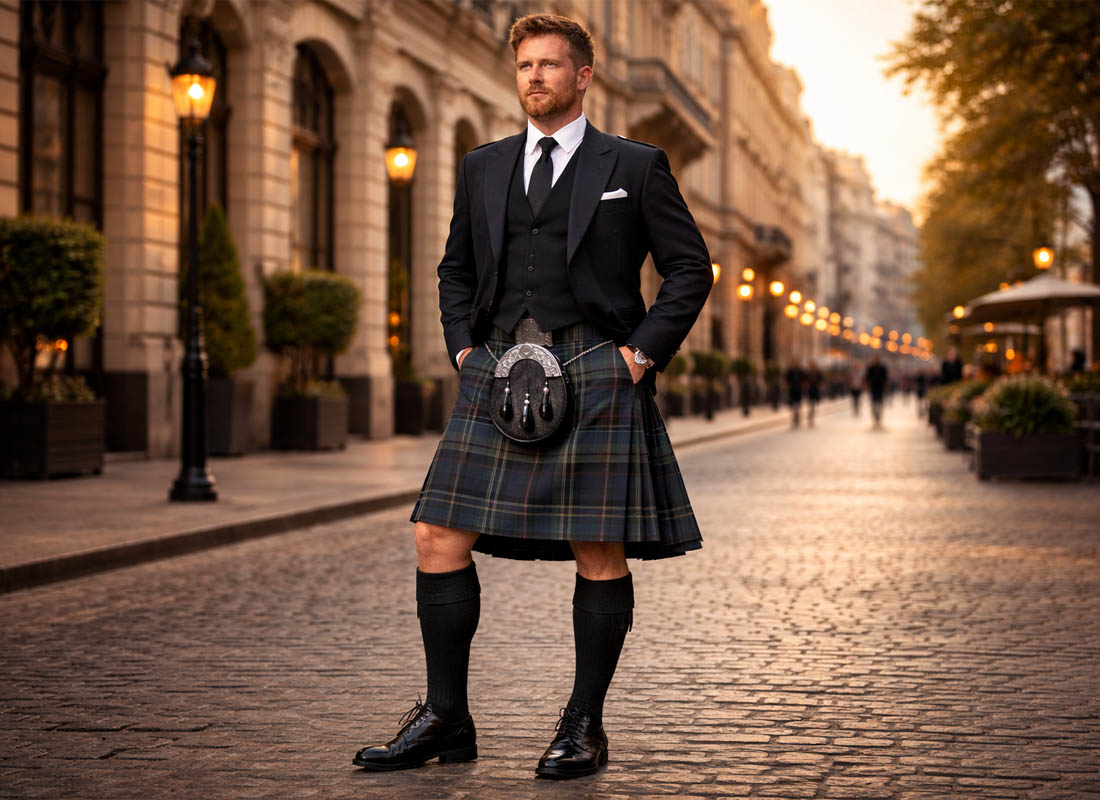
Modern dress shoes offer versatility and convenience when wearing a kilt, especially for those who may not have access to traditional Scottish footwear or prefer a more contemporary look. Classic Oxford shoes in black leather present an excellent formal alternative that maintains sophistication while being more familiar to most wearers. The sleek, closed-lacing design of Oxfords complements the kilt’s structured appearance and works particularly well for business events, formal dinners, or occasions where you want to blend traditional Scottish elements with modern professional attire.
Derby shoes provide a slightly more relaxed option with their open-lacing system, making them ideal for semi-formal kilt outfits. These shoes offer comfort during extended wear while still maintaining an elegant appearance that respects the kilt’s heritage. When selecting modern dress shoes for your kilt, prioritize high-quality leather construction and ensure the color coordinates with your jacket, sporran, and other accessories. Black shoes generally pair best with formal kilt outfits featuring Prince Charlie jackets, while brown shoes can complement more casual tweed jackets and earth-toned accessories.
The key to successfully pairing modern shoes with a kilt lies in maintaining appropriate formality levels and ensuring your footwear doesn’t clash with traditional elements. Avoid overly casual shoes like sneakers or sandals unless you’re deliberately creating a very relaxed, contemporary fusion look. Your shoe choice should respect the kilt’s cultural significance while allowing for personal expression and practical considerations.
Casual Footwear Options for Everyday Kilt Wear
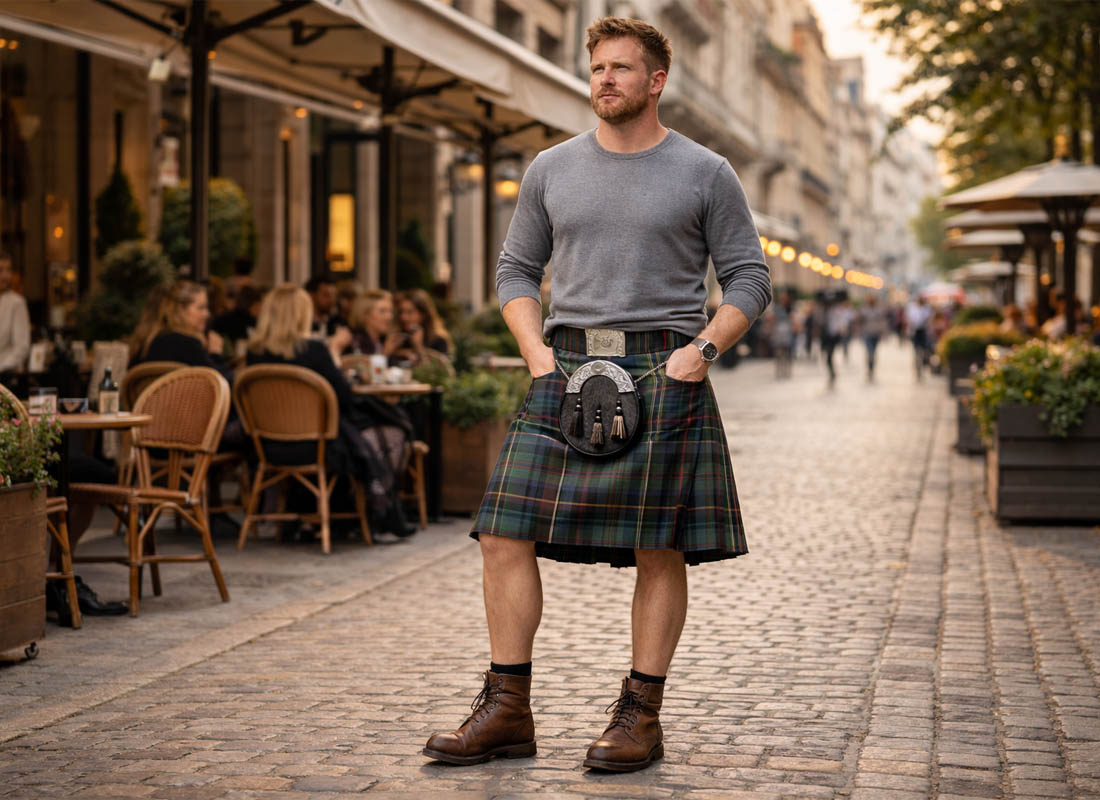
For those who wear kilts casually or as everyday attire, comfortable and practical footwear becomes essential. Casual kilts have gained popularity beyond traditional Scottish events, with many people incorporating them into their regular wardrobe for festivals, outdoor activities, or simply as a unique style choice. In these contexts, your shoe selection can be more relaxed while still maintaining a cohesive look that honors the kilt’s distinctive character.
Leather boots represent an excellent casual option that combines comfort with rugged appeal. Hiking boots, work boots, or even combat boots can pair surprisingly well with utility kilts or casual tartans, especially for outdoor events, Renaissance fairs, or music festivals. The sturdy construction of boots complements the kilt’s practical aspects while providing ankle support and weather protection. Brown or tan leather boots generally work better for casual settings than black, creating a more approachable and less formal appearance.
Desert boots and chukka boots offer a middle ground between formal and casual, featuring simple designs that won’t overwhelm the kilt while providing comfortable wear. These ankle-high boots work particularly well with casual kilt outfits worn with simple shirts or polo tops. For warm-weather casual wear, high-quality leather loafers or boat shoes can work if you’re aiming for a preppy or maritime-inspired look. However, exercise caution with very casual shoes – while sneakers might technically work for extremely casual settings, they often clash with the kilt’s aesthetic and should be chosen carefully with consideration for overall outfit harmony.
Weather Considerations When Choosing Kilt Footwear
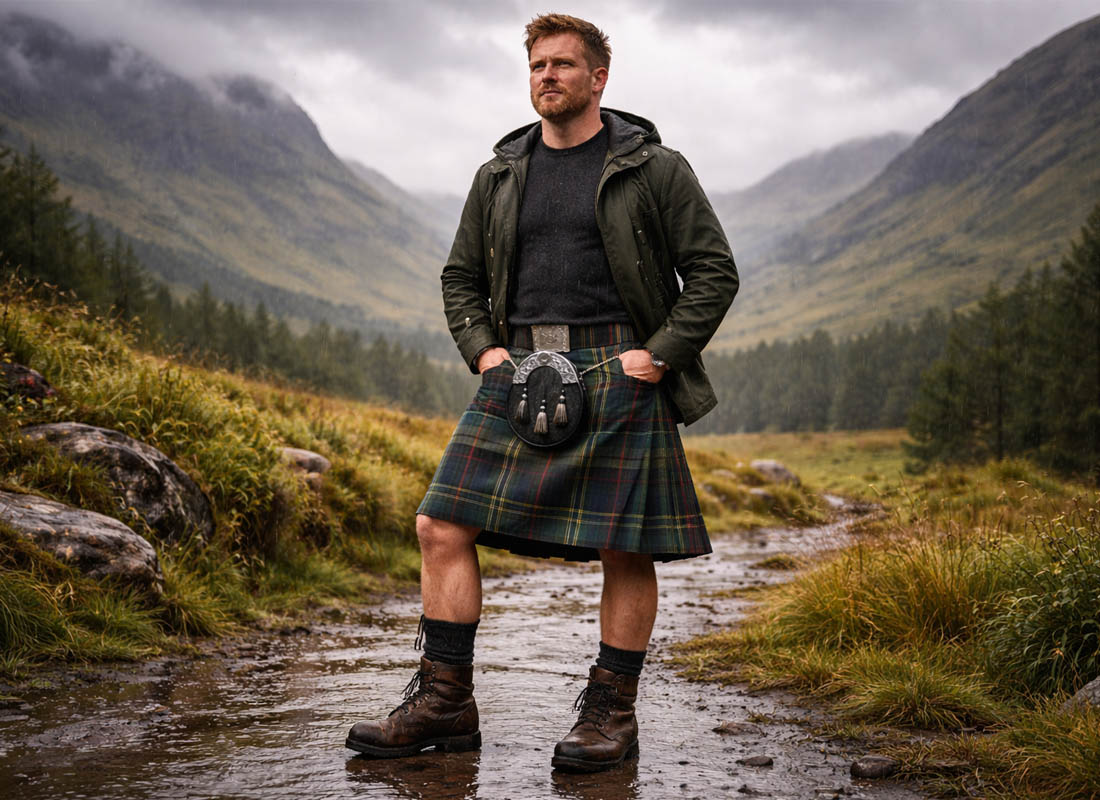
Weather plays a significant role in footwear selection, particularly in Scotland and regions with similar climates where rain and cold temperatures are common. Traditional ghillie brogues, while beautiful, offer limited weather protection due to their open lacing and thin leather construction. For outdoor events during uncertain weather, consider weatherproofing your leather shoes in advance or selecting alternative footwear that can withstand moisture without damage or discomfort.
During cold or wet conditions, leather boots with good tread and water resistance become particularly practical choices. Full-grain leather boots treated with waterproofing products can keep your feet dry while maintaining the dignified appearance appropriate for kilt wear. For winter Highland games or outdoor celebrations, insulated boots that still maintain a formal appearance can prevent cold feet while allowing you to participate fully in activities. Consider bringing an extra pair of shoes if you’re attending an all-day event with both indoor and outdoor components.
Summer weather presents different challenges, as traditional wool kilts combined with heavy leather footwear can become uncomfortably warm. Lighter leather shoes with better breathability, such as perforated brogues, help keep feet cooler during warm-weather events. Ensure your kilt hose are made from appropriate materials for the season – while traditional wool hose are standard, lighter cotton or bamboo-blend hose can provide comfort in hot weather while maintaining the proper appearance under your chosen footwear.
Color Coordination and Matching Guidelines
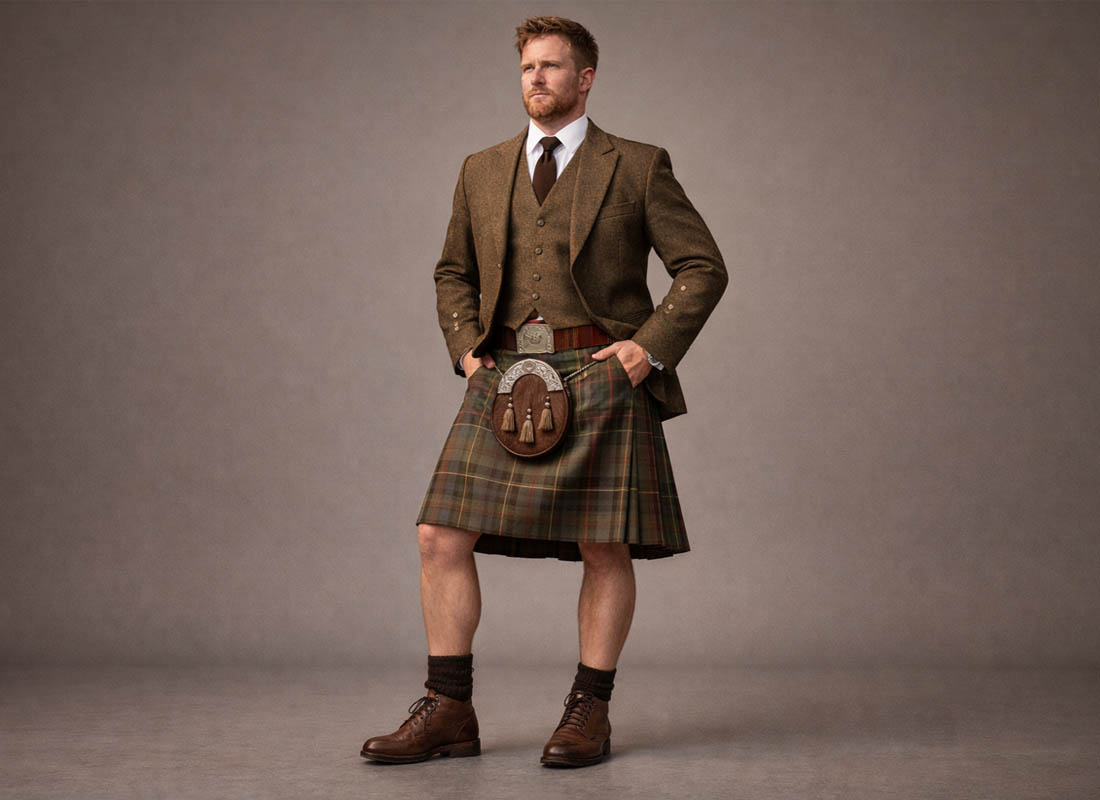
Coordinating shoe color with your kilt outfit requires understanding basic color theory and traditional Highland dress conventions. Black shoes represent the most formal and versatile option, working seamlessly with virtually any tartan pattern and formal jacket style. Black leather shoes should always be chosen for evening events, black-tie occasions, and formal ceremonies where maximum sophistication is required. The stark contrast of black footwear against colorful tartan creates a grounding effect that balances the outfit’s visual complexity.
Brown shoes offer more flexibility for daytime events and casual kilt wear, bringing warmth and approachability to your ensemble. Medium to dark brown leather pairs beautifully with earth-toned tartans, tweed jackets, and casual kilt accessories. When wearing brown shoes, ensure other brown elements in your outfit coordinate – your belt, sporran, and any leather accents should share similar undertones to create visual harmony. Avoid mixing black and brown leather pieces in the same outfit, as this creates a discordant appearance that detracts from overall polish.
Beyond basic black and brown, some wearers incorporate burgundy or tan shoes into their kilt outfits for added personality. These alternative colors work best in casual contexts and should complement specific colors within your chosen tartan. Always consider the overall color palette of your outfit, including your jacket, shirt, tie, and accessories, ensuring your shoes enhance rather than compete with these elements. When in doubt, defaulting to traditional black or brown leather shoes in high-quality finishes guarantees a classic, appropriate look for any kilt occasion.
Accessories That Complete Your Kilt Footwear
Essential Kilt Footwear Accessories:
- Kilt hose in appropriate colors and patterns
- Flashes to hold up long socks properly
- Sgian dubh for traditional formal wear
- Leather sporran coordinating with shoes
- Kilt pins and buckles in matching metals
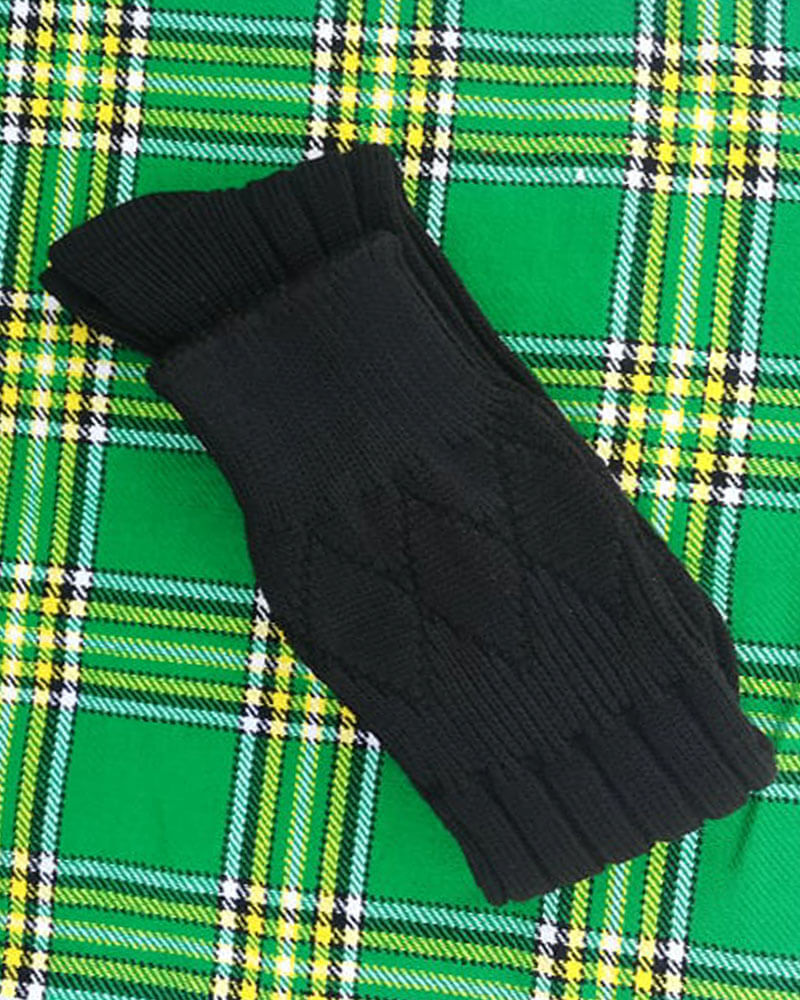
The accessories worn with your kilt and shoes significantly impact your overall appearance and authenticity. Kilt hose, the long socks that reach just below the knee, are essential when wearing traditional ghillie brogues or any formal kilt outfit. These should be worn turned down approximately three finger-widths from the knee, with the fold secured using garter flashes in colors that complement your tartan. Plain colored hose in cream, grey, or black work for formal occasions, while patterned hose featuring checks or intricate designs can add personality to casual outfits.
The sgian dubh, a small decorative knife traditionally tucked into the top of the kilt hose, completes formal Highland dress when wearing traditional footwear. This accessory should be positioned on the same side as your dominant hand, with the handle visible above the sock fold. When selecting a sgian dubh, choose one with handle materials and decorative elements that coordinate with your sporran and shoe buckles. For formal events, simpler designs in silver or chrome work well, while more ornate carved handles suit casual or themed gatherings.
Your sporran’s leather and hardware should coordinate with your shoe choice to maintain visual consistency. If wearing black shoes, opt for a black leather sporran with silver or chrome fittings. Brown shoes pair best with brown or tan leather sporran featuring brass or bronze hardware. This attention to coordination demonstrates understanding of Highland dress conventions and creates a polished, intentional appearance that respects Scottish traditions while expressing personal style preferences.
Maintaining and Caring for Kilt Footwear
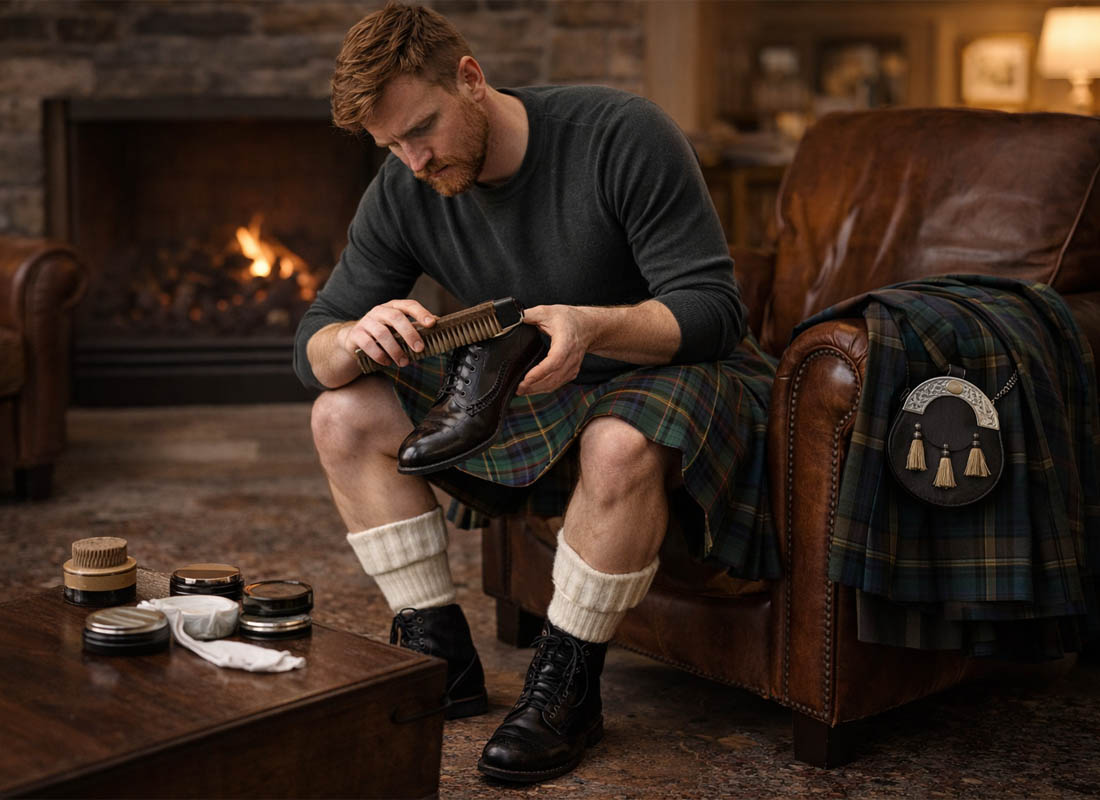
Proper maintenance extends the life of your kilt footwear and ensures it always looks its best for important occasions. Leather shoes, whether traditional ghillies or modern dress shoes, require regular cleaning, conditioning, and polishing to maintain their appearance and structural integrity. After each wearing, remove dirt and debris with a soft brush or damp cloth, paying special attention to decorative perforations where dust accumulates. Allow shoes to air dry naturally if they become wet, stuffing them with newspaper to maintain shape and absorb moisture.
Conditioning leather shoes every few months prevents cracking and keeps the material supple and comfortable. Use a high-quality leather conditioner appropriate for your shoe color, applying it sparingly with a soft cloth and allowing it to absorb fully before buffing. Regular polishing maintains shine and creates a protective layer against moisture and staining. For black shoes, use black polish for color consistency; brown shoes may require matching the specific shade or using neutral polish. Building up multiple thin layers of polish creates deeper luster than applying thick single coats.
Storage matters significantly for maintaining shoe quality between wearings. Keep kilt footwear in a cool, dry location away from direct sunlight, which can fade leather and dry it out. Use shoe trees to maintain proper shape and prevent creasing, especially important for formal dress shoes worn infrequently. For ghillie brogues with long laces, coil the laces loosely rather than tying them tightly during storage to prevent permanent creasing or damage. Before major events, inspect your shoes thoroughly and address any needed repairs professionally to avoid last-minute wardrobe emergencies.
Understanding Different Types of Brogues
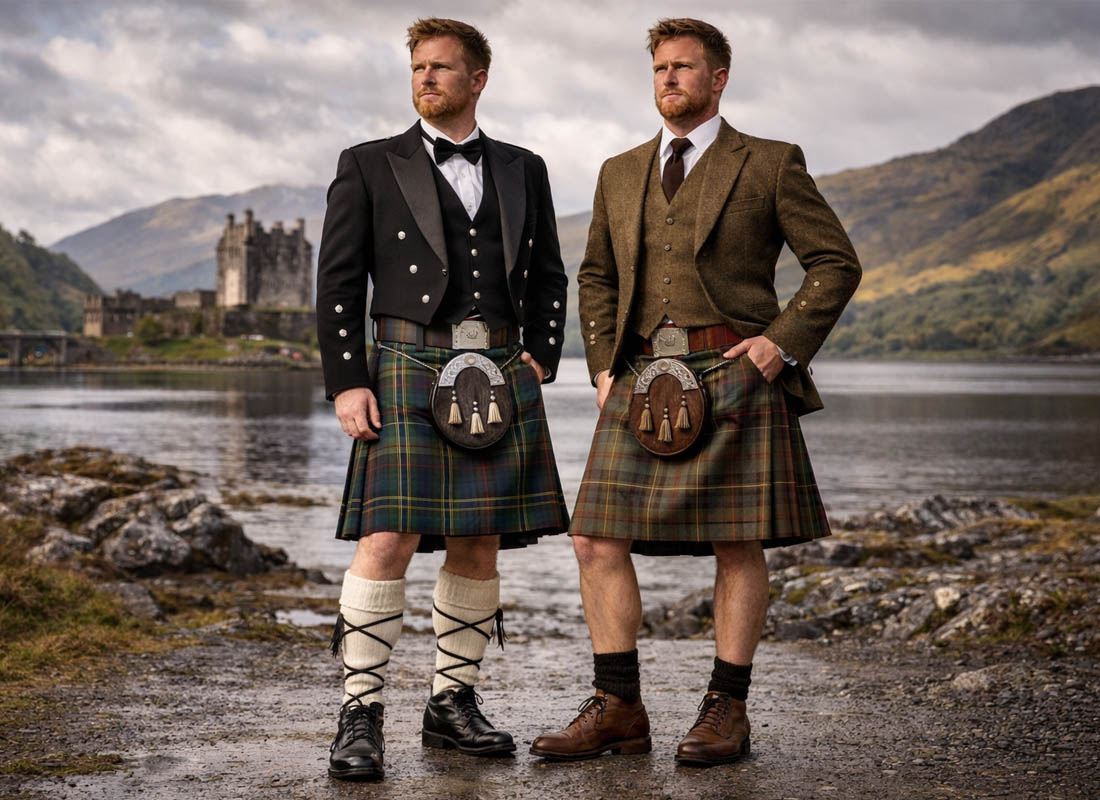
The term “brogue” originates from the Gaelic words brog (Irish) and bròg (Scottish), both meaning shoe. Modern brogues evolved from practical 16th-century outdoor footwear designed for walking through wet Scottish terrain. The characteristic perforated holes that define brogues weren’t merely decorative but served a functional purpose, allowing water to drain from the shoes when walking across boggy Highland landscapes. What began as working-class footwear has transformed into the premier choice for formal kilt attire, representing a fascinating evolution in Scottish fashion history.
Today’s brogues designed for kilt wear fall into two main categories, each suited for specific occasions and offering distinct advantages. Ghillie brogues represent the more traditional option, lacking a tongue to promote faster drying and featuring long laces that wrap around the ankle and tie below the calf. This distinctive design keeps laces away from mud and moisture while creating the iconic Highland look associated with formal Scottish dress. Ghillie brogues work best for weddings, ceilidhs, Highland games, and evening events where traditional authenticity enhances the occasion’s significance.
Day brogues, sometimes called wingtips in the United States due to their W-shaped toe cap design, offer greater versatility for various occasions. These brogues maintain the decorative perforations characteristic of the style while incorporating a standard tongue and shorter laces similar to conventional dress shoes. Day brogues suit both formal and casual settings, making them an excellent investment for those who wear kilts regularly across different event types. The easier lacing system appeals to wearers unfamiliar with traditional ghillie techniques while still honoring Scottish footwear heritage through classic brogue styling and quality leather construction.
How to Properly Lace and Wear Ghillie Brogues
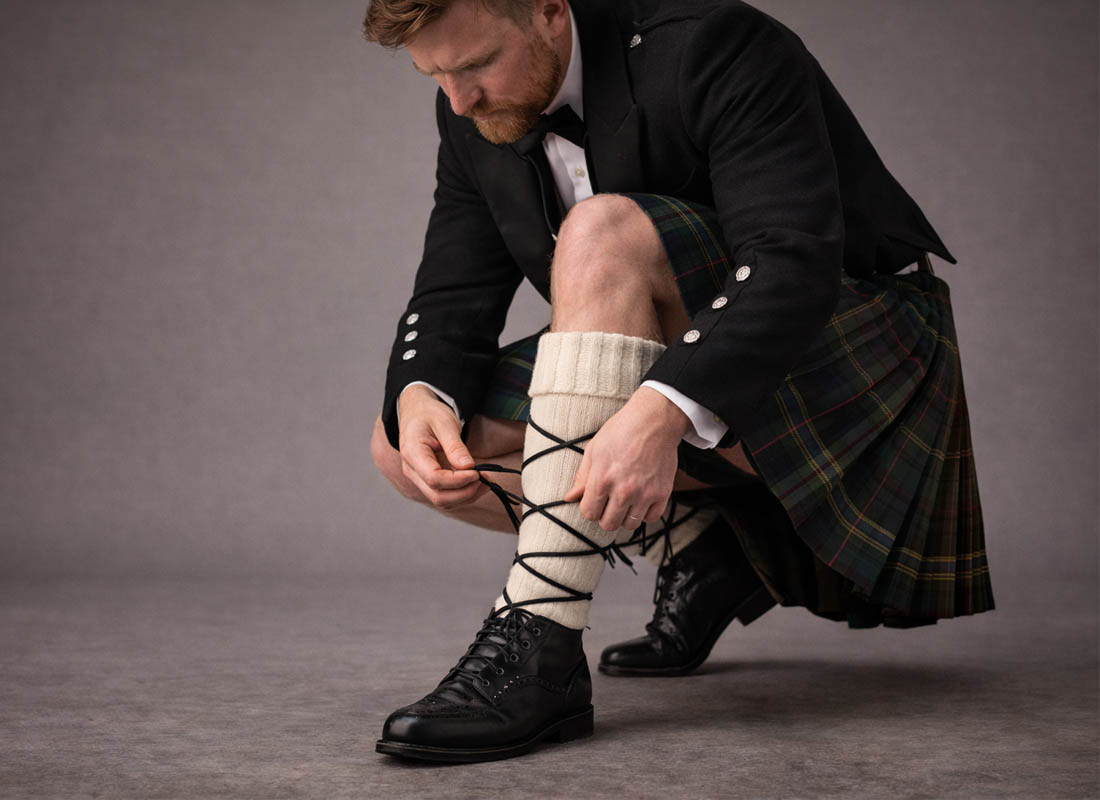
Properly lacing ghillie brogues constitutes an essential skill for achieving an authentic Highland dress appearance. The long laces require a specific wrapping technique that secures the shoe while creating the traditional aesthetic that distinguishes formal Scottish attire. Begin by threading the laces through the bottom eyelets of the shoe, ensuring both sides remain equal in length. Cross the laces over the foot and continue threading upward through each eyelet pair, keeping tension consistent throughout the process.
Once you reach the top eyelets, the distinctive ankle-wrapping technique begins. Cross the laces behind the ankle, then bring them forward and cross again in front. Continue this alternating pattern, wrapping the laces around the ankle and lower calf while maintaining firm but comfortable pressure. The laces should create an X pattern that extends from just above the ankle to approximately two to three inches below the knee. This wrapping provides ankle support during dancing or extended standing while showcasing the traditional Highland aesthetic.
Finish by tying the laces in a bow or double knot positioned at the outer side of the calf, slightly below where your kilt hose fold down. The laces should feel secure without cutting off circulation or causing discomfort. When worn correctly with properly positioned kilt hose, the lacing creates a seamless integration between footwear and hosiery that exemplifies proper Highland dress standards. Practice this technique several times before important events to develop muscle memory and ensure you can achieve the proper appearance quickly and confidently.
Breaking in new ghillie brogues requires patience and preparation to prevent discomfort during extended wear. Wear your new brogues around the house for short periods, gradually increasing duration as the leather softens and molds to your foot shape. The tongueless design means the leather will conform directly to your foot, making proper breaking-in especially important for comfortable wear during lengthy ceremonies or celebrations. Never wear brand-new ghillie brogues to an important event without adequate breaking-in time, as this guarantees painful blisters and potential damage to the shoes from excessive moisture.
Balmoral Boots: A Distinguished Alternative
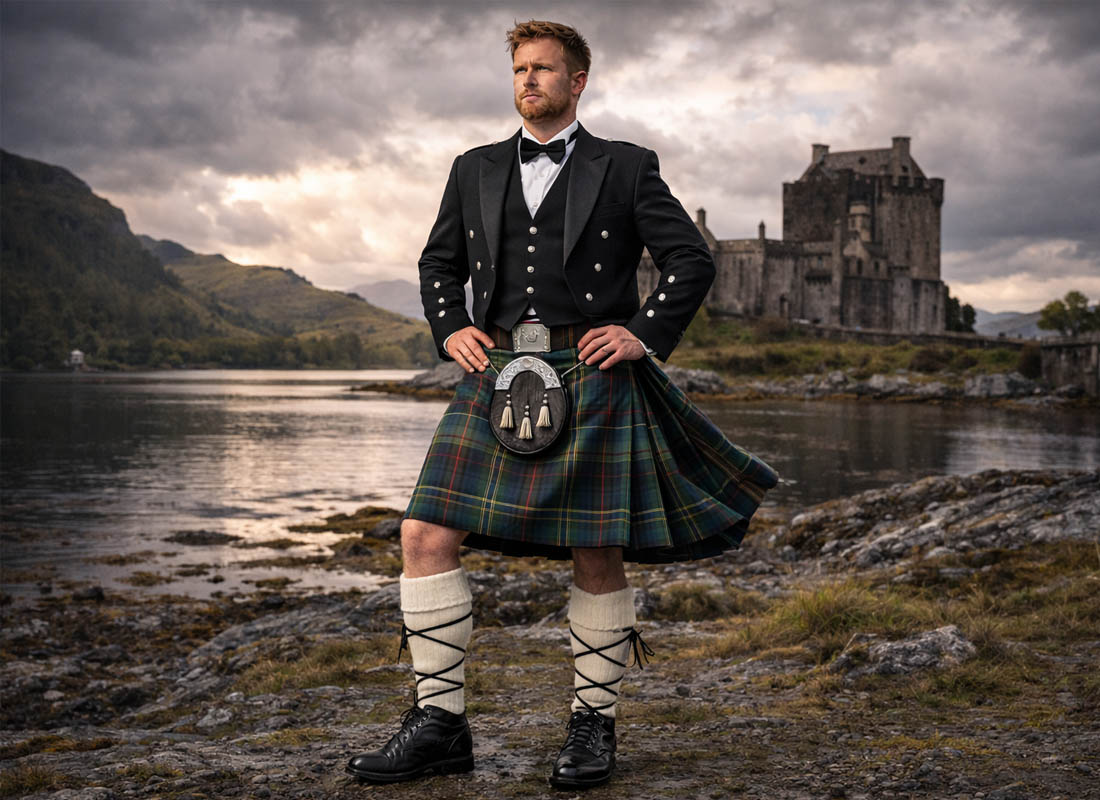
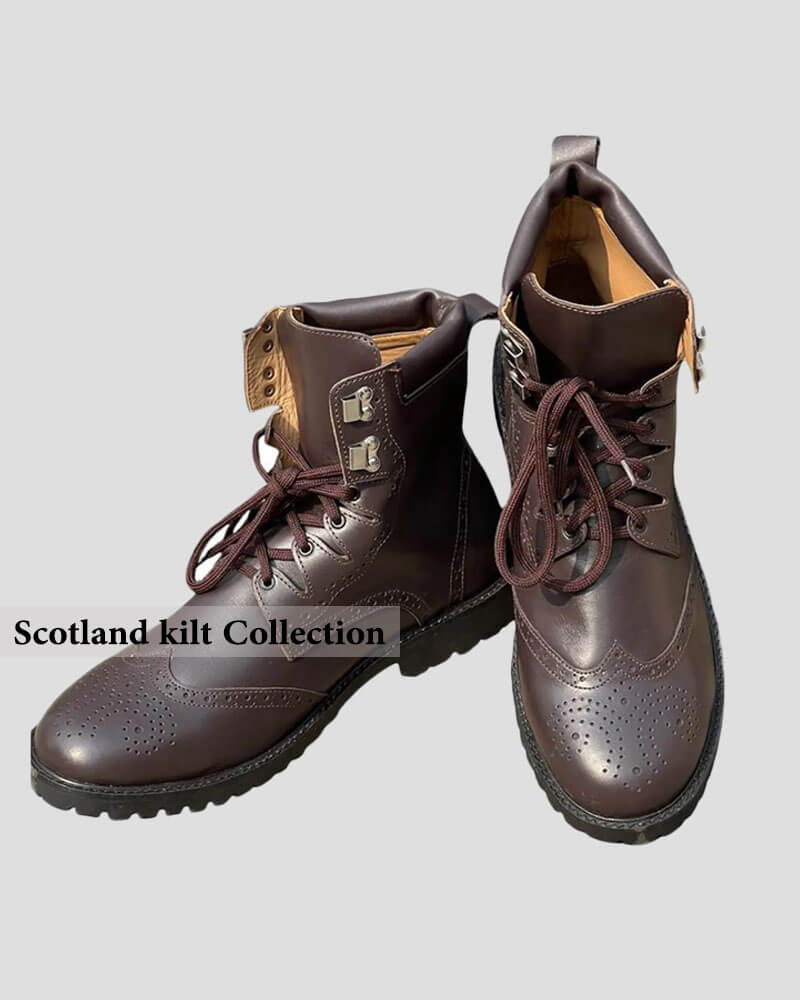
Balmoral boots represent a distinguished alternative to traditional brogues, offering increased ankle coverage and weather protection while maintaining formality appropriate for Highland dress. These leather boots typically extend just above the ankle, featuring a closed-lacing system similar to Oxford shoes and often incorporating decorative broguing details on the toe and quarters. While less common than ghillie brogues at formal events, Balmoral boots provide an elegant option, particularly suited for outdoor winter ceremonies or Highland games held in challenging weather conditions.
The structured appearance of Balmoral boots creates a more commanding presence than standard brogues, with the additional height adding visual weight that balances well with heavier tweed jackets and winter accessories. Black leather Balmoral boots represent the traditional choice, offering formality comparable to ghillie brogues while providing superior protection from cold and moisture. The boots’ closed design prevents water intrusion more effectively than perforated brogues, making them practical for outdoor Scottish weddings or autumn Highland gatherings where unpredictable weather poses challenges.
When selecting Balmoral boots for kilt wear, prioritize quality leather construction and ensure the boot height complements rather than competes with your kilt hose. The boots should rise above the ankle but remain low enough that your kilt hose can be properly displayed when folded at the traditional position below the knee. Polished leather in pristine condition maintains the distinguished appearance these boots deserve, while visible wear or scuffing detracts from the formal impression. Consider Balmoral boots as a worthwhile investment if you frequently attend outdoor Scottish events or live in regions with harsh weather that challenges traditional brogue durability.
Alternative Footwear: Combat Boots and Modern Styles
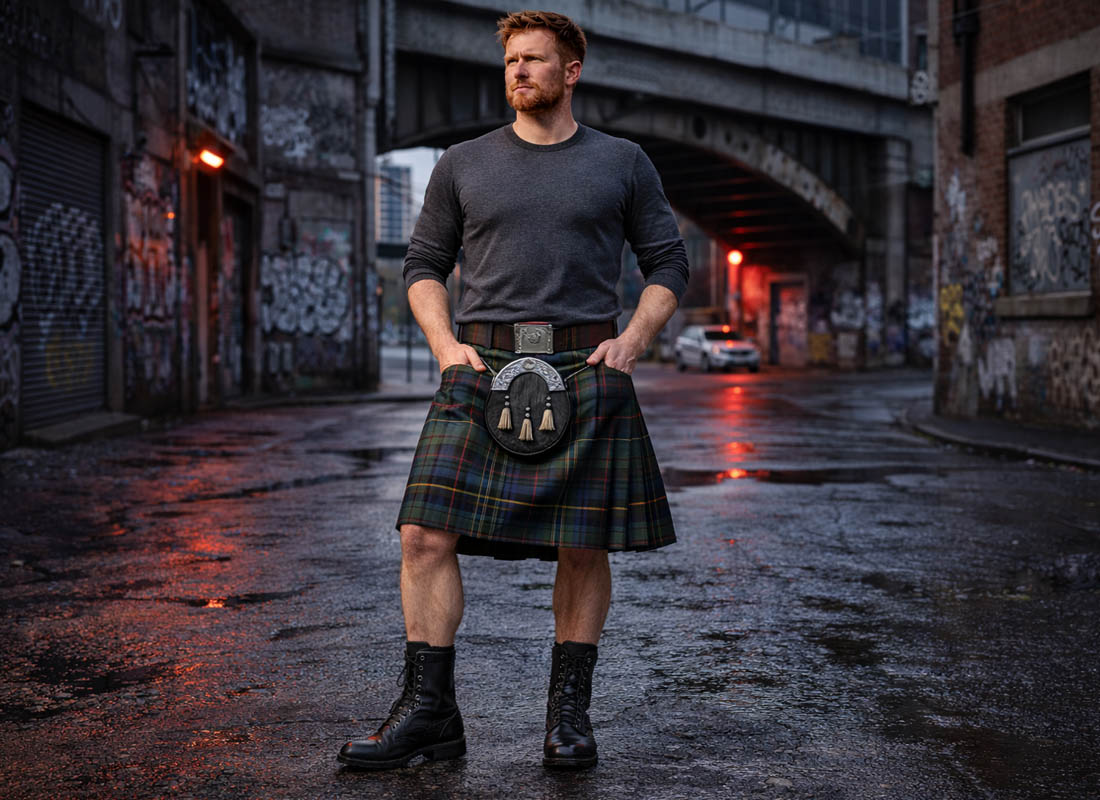
Contemporary kilt fashion has embraced alternative footwear styles that blend traditional Scottish elements with modern aesthetic preferences. Combat boots have emerged as a popular choice for casual kilt wear, particularly among younger wearers and those incorporating kilts into punk, gothic, or alternative fashion styles. Black leather combat boots with substantial soles and prominent lacing create a striking visual contrast with traditional tartan patterns, resulting in an edgy, rebellious appearance that respects the kilt’s cultural significance while expressing individual style.
When pairing combat boots with kilts, consider the overall outfit coherence and ensure other elements support the alternative aesthetic. Combat boots work exceptionally well with utility kilts, leather kilts, or modern denim kilts paired with band t-shirts, leather jackets, or industrial-style accessories. The structured, masculine silhouette of combat boots balances the kilt’s flowing movement, creating dynamic visual interest, particularly effective for music festivals, alternative clubs, or casual social gatherings. However, combat boots remain inappropriate for traditional Scottish events like Highland games or formal ceremonies where authentic Highland dress standards apply.
Other modern footwear options gaining acceptance in casual kilt contexts include Chelsea boots, which offer a sleeker alternative to combat boots while maintaining contemporary appeal. The elastic side panels and streamlined silhouette of Chelsea boots create a refined casualness suitable for artistic events, gallery openings, or modern weddings with relaxed dress codes. Chukka boots and desert boots in suede or matte leather provide additional options for warm-weather casual kilt outfits, offering ankle support and sophisticated styling without the formality of traditional brogues or the edge of combat boots.
Footwear Considerations for Outdoor Activities
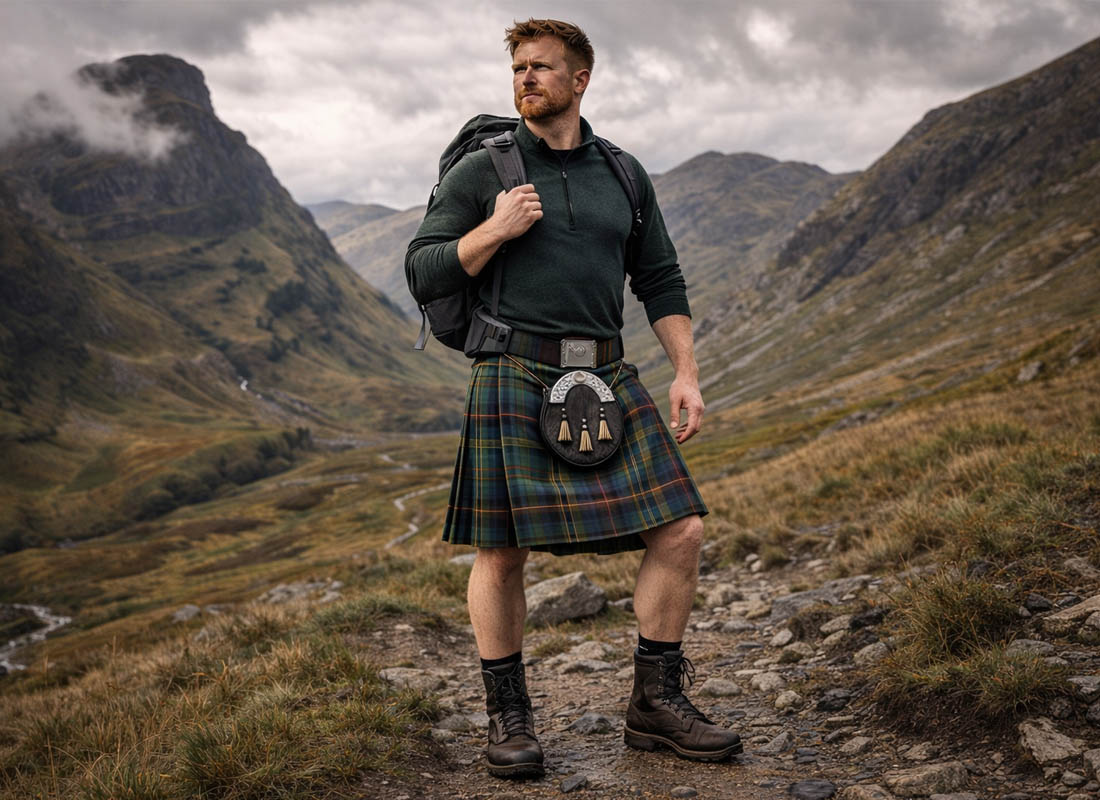
Outdoor activities and adventures while wearing kilts require footwear prioritizing function and weather protection over traditional aesthetics. Hiking in kilts has become increasingly popular, with many enthusiasts embracing the garment’s freedom of movement and cultural connection during outdoor pursuits. For these activities, sturdy hiking boots with ankle support, aggressive tread patterns, and waterproof construction become essential regardless of how they pair aesthetically with your kilt. Safety and comfort must always supersede appearance when venturing onto challenging terrain or engaging in physically demanding activities.
Quality hiking boots designed for Scottish Highland terrain or similar environments provide the grip, support, and weather resistance necessary for safe outdoor adventures. Look for boots with Gore-Tex or similar waterproof membranes, Vibram or equivalent high-quality outsoles, and leather or synthetic uppers that resist abrasion. The boots should fit securely with thick hiking socks that provide cushioning and moisture management during extended wear. While these boots may not create the polished Highland dress appearance, they honor the practical heritage of Scottish outdoor culture while keeping you safe during your adventures.
For less demanding outdoor events like summer festivals, Renaissance fairs, or outdoor concerts where kilts are worn casually, weatherproof leather boots or work boots offer reasonable compromises between function and style. These boots provide adequate protection and support while maintaining a more intentional appearance than pure athletic footwear. Brown or tan leather boots in rugged styles complement the earthy, outdoor aesthetic of casual kilt wear while demonstrating respect for the garment’s cultural significance. Always consider terrain, weather conditions, and activity intensity when selecting footwear, erring on the side of safety rather than strict adherence to aesthetic conventions.
Sizing and Fit: Getting Your Kilt Shoes Right
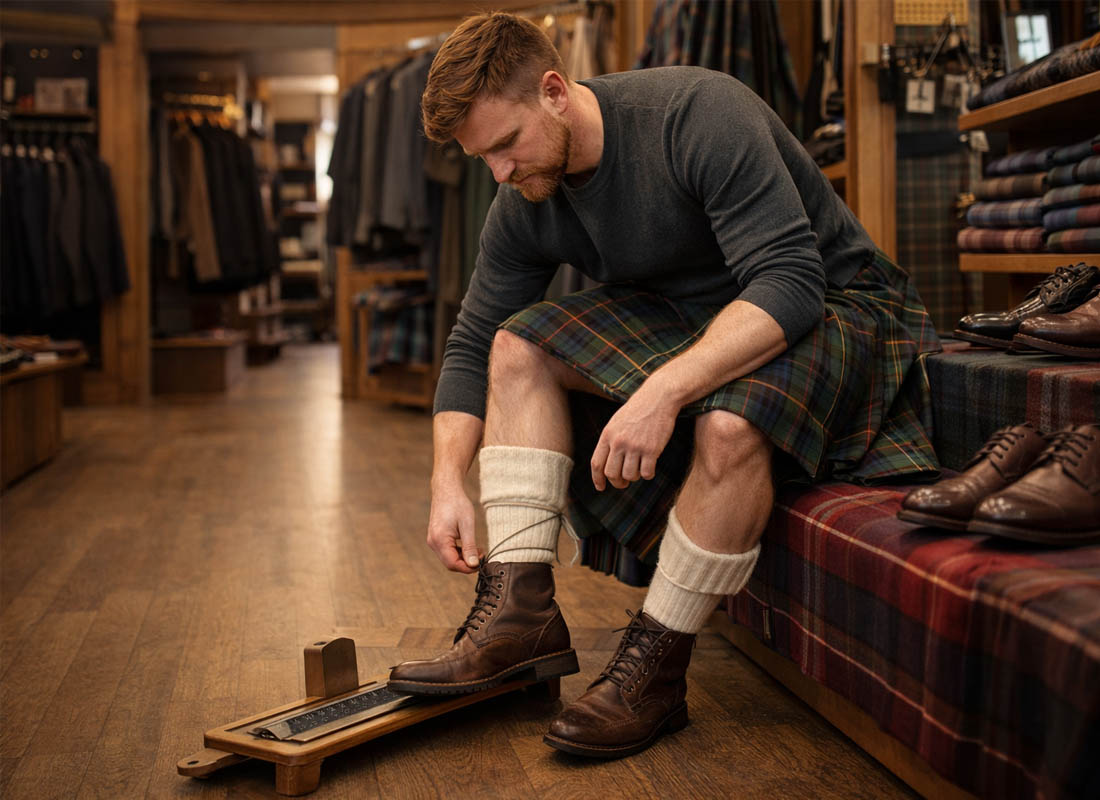
Achieving the perfect fit for kilt footwear requires understanding how traditional Scottish shoes differ from standard dress shoes in construction and sizing. Ghillie brogues, with their tongueless design and extensive lacing system, often fit differently than conventional footwear, making accurate measurement and careful selection essential. Before purchasing kilt shoes, measure both feet accurately using a ruler or measuring tape, determining the exact length from heel to longest toe. Many people have slightly different-sized feet, so always base your purchase on the larger foot’s measurements to ensure comfortable wear.
Traditional ghillie brogues should fit snugly through the midfoot and heel without slipping, while allowing adequate room in the toe box for natural foot expansion during extended wear. The tongueless construction means the leather sits directly against the top of your foot, requiring proper sizing to prevent pressure points that cause discomfort during dancing or standing. When trying on ghillie brogues, wear the same thickness of kilt hose you’ll use during actual events, as the sock thickness significantly impacts overall fit and comfort. Walk around extensively in the shoes, paying attention to any rubbing, pinching, or looseness that indicates sizing issues.
Breaking in new kilt shoes before important events prevents painful blisters and ensures optimal comfort during lengthy ceremonies or celebrations. Wear your new footwear around the house for progressively longer periods, allowing the leather to soften and conform to your unique foot shape. The breaking-in process for quality leather brogues typically requires several weeks of occasional wear, with the leather gradually molding to create a custom fit. Apply leather conditioner during this period to keep the material supple and accelerate the conforming process without causing damage or premature wear.
Professional fitting services offered by specialized Highland dress retailers provide invaluable assistance for first-time kilt shoe buyers or those uncertain about sizing. These experts understand the nuances of traditional Scottish footwear construction and can recommend appropriate sizes based on your foot measurements, wearing preferences, and intended use. If purchasing online, carefully review the retailer’s sizing guidelines and return policies, ensuring you can exchange shoes if the initial size proves incorrect. Investing time in proper fitting ultimately saves money and frustration while ensuring your kilt footwear provides years of comfortable, elegant wear.
Styling Tips for Different Kilt Types
Matching Shoes to Kilt Styles:
- Formal tartan kilts: Ghillie brogues or polished black Oxfords
- Utility kilts: Combat boots, hiking boots, or rugged leather boots
- Casual modern kilts: Brown brogues, loafers, or Chelsea boots
- Leather kilts: Black combat boots or sleek dress shoes
- Wedding kilts: Traditional ghillie brogues with matching accessories
Different kilt styles demand appropriate footwear choices that complement the garment’s formality level and intended aesthetic. Traditional tartan kilts in classic patterns like Royal Stewart, Black Watch, or clan-specific tartans pair best with formal footwear that honors Scottish heritage. Ghillie brogues represent the ideal choice for formal tartan kilts worn to weddings, Highland games, or ceremonial events, creating authentic Highland dress that respects centuries of cultural tradition. Black leather ghillie brogues offer maximum formality, while brown versions suit daytime events with tweed jackets and earth-toned accessories.
Utility kilts designed for practical wear and modern activities accommodate more diverse footwear choices, reflecting their contemporary purpose. These kilts, often constructed from heavy-duty cotton canvas or denim, work well with rugged boots that emphasize functionality over formality. Combat boots, work boots, or tactical boots complement utility kilts worn for outdoor work, festivals, or casual social settings where traditional Highland dress would appear overdressed. The key lies in maintaining visual coherence between the kilt’s casual, functional nature and equally practical footwear choices that support intended activities.
Modern fashion kilts incorporating non-traditional materials like leather, denim, or contemporary fabrics invite creative footwear pairings that blend Scottish heritage with current style trends. Leather kilts create striking alternative fashion statements when paired with polished black dress shoes for elegant occasions or black combat boots for edgier aesthetics. Denim kilts offer versatility suitable for casual gatherings, pairing well with brown leather boots, desert boots, or even clean white sneakers for extremely relaxed summer events. Always consider the complete outfit, including jacket, shirt, and accessories, when selecting footwear, ensuring all elements work harmoniously to create intentional, cohesive styling.
Why Buy From Scotland Kilt Collection?
Benefits of Choosing Scotland Kilt Collection:
- Authentic Scottish craftsmanship and heritage expertise
- High-quality materials ensure durability and comfort
- Extensive selection covering traditional to modern styles
- Expert fitting guidance for perfect sizing
- Competitive pricing with excellent value for investment
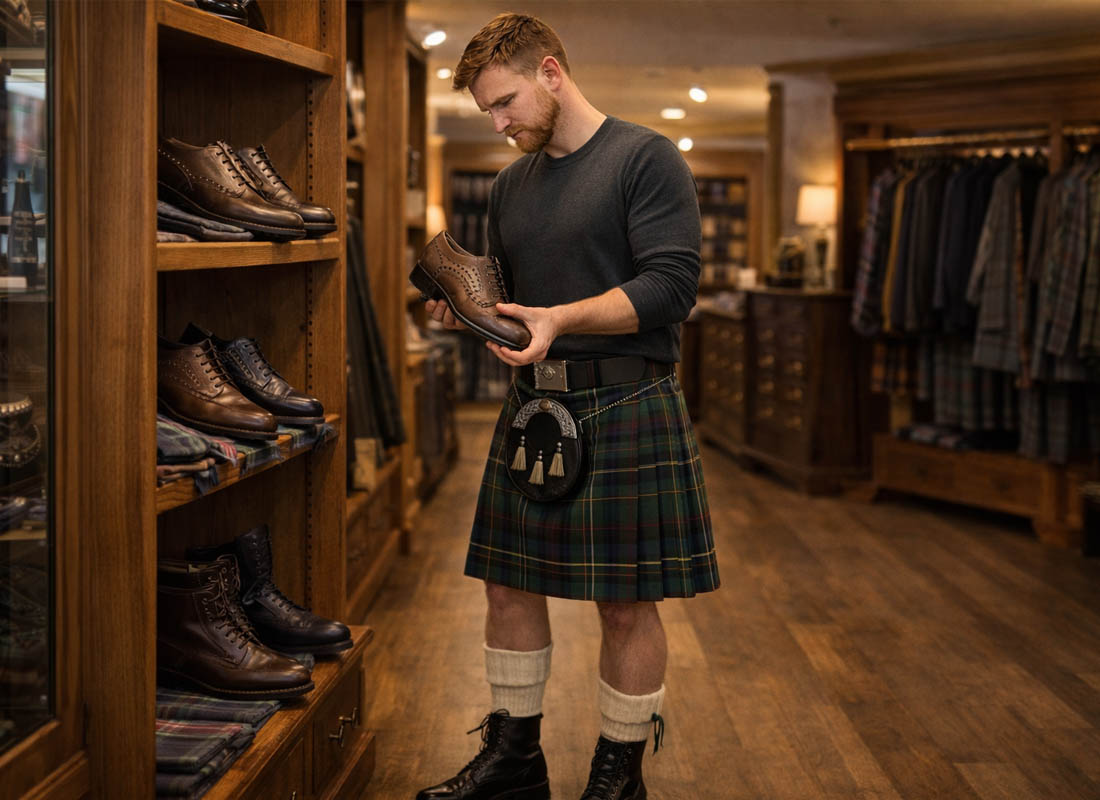
Scotland Kilt Collection stands as a premier destination for authentic Highland dress footwear and accessories, offering customers unmatched quality, expertise, and selection. With deep roots in Scottish heritage and years of experience serving the Highland dress community, Scotland Kilt Collection understands the nuances of traditional footwear and how to properly outfit customers for any occasion. Their commitment to authenticity means every pair of ghillie brogues, traditional brogues, and accessory offered meets the highest standards of Scottish craftsmanship and cultural accuracy.
The quality of materials used by Scotland Kilt Collection sets them apart from mass-market retailers and online sellers offering inferior products. Genuine leather construction, hand-finished details, and traditional manufacturing techniques ensure that footwear purchased from Scotland Kilt Collection withstands years of wear while maintaining its elegant appearance. The company sources materials from trusted suppliers and employs skilled craftspeople who understand the specific requirements of Highland dress footwear, resulting in products that honor centuries of Scottish tradition while incorporating modern comfort features.
Beyond product quality, Scotland Kilt Collection provides invaluable expertise and customer service that helps buyers make informed decisions. Their knowledgeable staff can guide customers through the selection process, considering factors like event formality, personal style preferences, budget constraints, and proper sizing. This personalized approach ensures customers receive footwear perfectly suited to their needs rather than settling for generic options that may not meet Highland dress standards. Whether you’re preparing for your first Highland games, planning a Scottish wedding, or building a complete formal Highland dress wardrobe, Scotland Kilt Collection offers the guidance and support needed for confident purchasing decisions.


Ghillie Brogue Leather kilt Shoes Comfort sole


Scottish Brown Highland Ghillie Brogues Kilt Shoes

Scottish Black Leather Ghillie Boots \ Shoes For kilts
The extensive selection available through Scotland Kilt Collection accommodates diverse needs and preferences, from traditional ghillie brogues in various styles to modern alternatives for contemporary kilt wearers. Their inventory includes options for different budgets without compromising on quality or authenticity, making proper Highland dress footwear accessible to more people. Additionally, Scotland Kilt Collection frequently updates its offerings to include new styles and innovations while maintaining respect for traditional designs, ensuring customers can find both classic options and contemporary interpretations that suit evolving fashion sensibilities.
Purchasing from Scotland Kilt Collection also supports the preservation and continuation of Scottish cultural traditions. By choosing authentic products from companies dedicated to Highland dress heritage, customers contribute to keeping traditional craftsmanship alive and supporting communities that have maintained these skills across generations. This conscious purchasing decision extends beyond simple consumerism, representing participation in cultural preservation and appreciation for the rich history embedded in every properly made piece of Highland dress footwear.
Conclusion: Finding Your Perfect Kilt Footwear
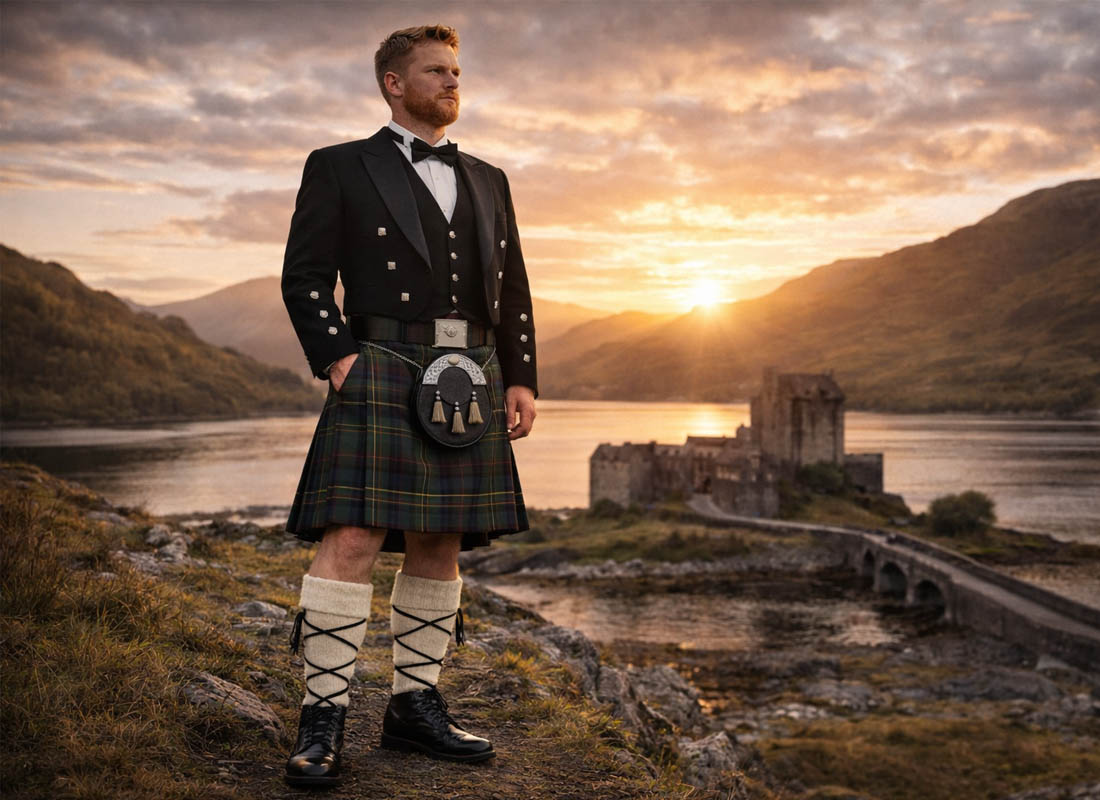
Selecting the right shoes to wear with a kilt ultimately depends on balancing tradition, occasion formality, personal comfort, and individual style preferences. Traditional ghillie brogues remain the gold standard for formal Highland dress and authentic Scottish events, offering unmatched cultural significance and visual impact. However, modern dress shoes and casual footwear options provide practical alternatives that respect the kilt’s heritage while accommodating contemporary lifestyles and varied event types.
Consider building a small collection of kilt-appropriate footwear to cover different occasions and seasons. A pair of quality ghillie brogues or formal brogues serves for weddings, Highland games, and ceremonial events, while classic black or brown Oxfords handle business and semi-formal occasions. Casual leather boots or loafers complete the collection for everyday kilt wear and relaxed gatherings. This versatile approach ensures you’re always appropriately dressed regardless of the event while maximizing the value of your footwear investment over time.
When ready to purchase your kilt footwear, prioritize quality over price and seek out reputable suppliers like Scotland Kilt Collection, who understand Highland dress requirements and offer authentic products backed by expertise. Proper footwear represents an investment in your appearance, comfort, and connection to Scottish heritage, making it worth taking time to research options, try different styles, and select pieces that will serve you well for years to come.
Frequently Asked Questions
Ghillie brogues are the traditional and best choice for formal kilt wear. For casual occasions, brown leather brogues, loafers, or boots work well.
Yes, black Oxford or Derby shoes are acceptable alternatives for formal events. They maintain elegance while being more accessible than traditional ghillie brogues.
Black shoes for formal evening events, brown shoes for daytime or casual occasions. Match your shoe color with your sporran and belt.
Traditional ghillie brogues in black leather are ideal for Scottish weddings. They complete authentic Highland dress perfectly.
Yes, kilt hose (long socks reaching below the knee) are essential with traditional footwear. They’re held up with garter flashes.