
Blog
Complete Guide To Wearing a Kilt
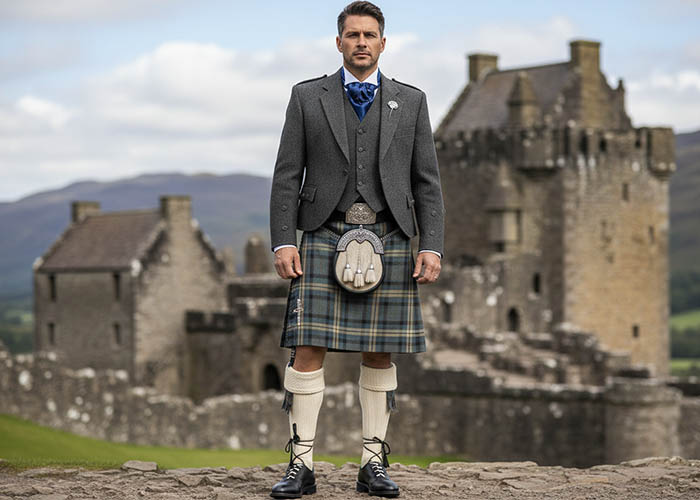
The kilt stands as one of the most iconic garments in traditional fashion, representing Scottish heritage and cultural pride. Whether you’re attending a wedding, Highland games, or simply embracing this timeless style, understanding how to wear a kilt properly ensures you look polished and confident. This comprehensive guide walks you through everything from putting on your kilt to selecting the perfect accessories for any occasion.
Understanding the Traditional Kilt
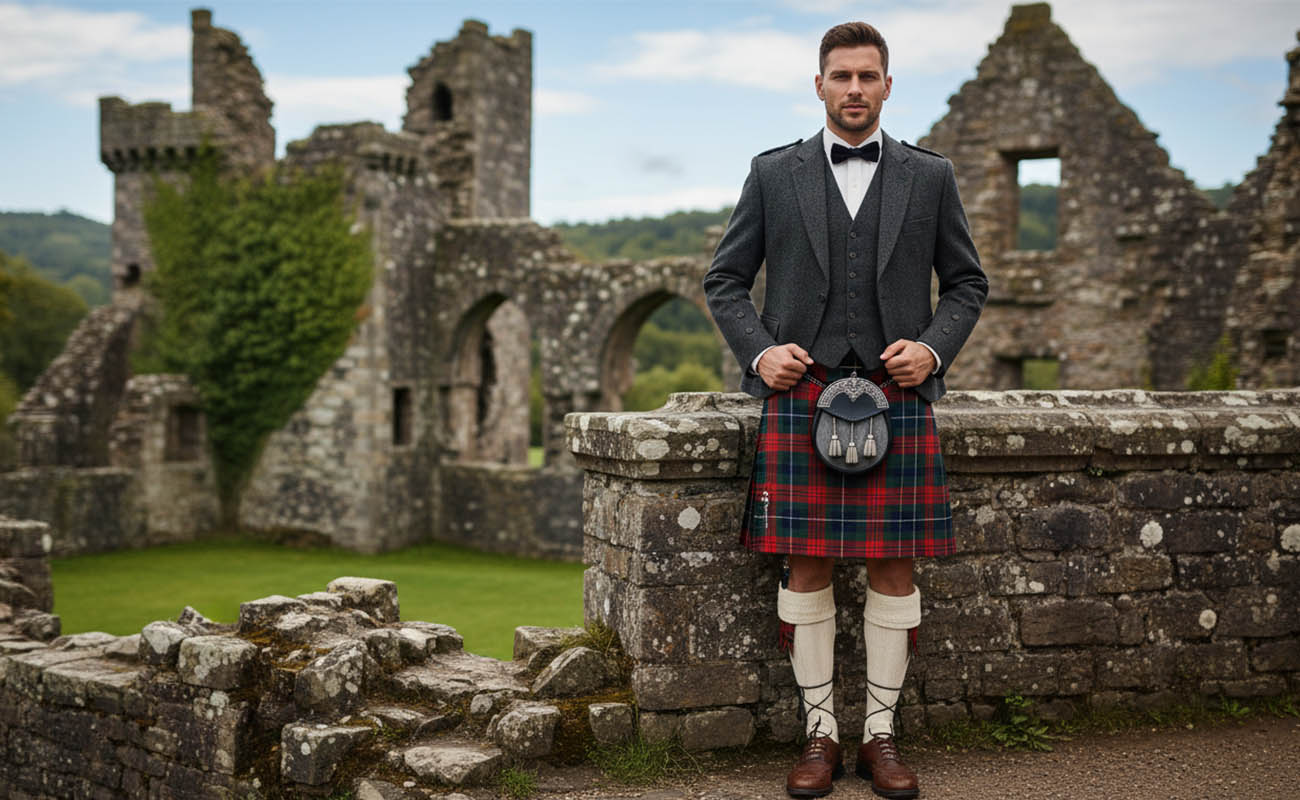
A traditional kilt is a pleated garment crafted from tartan fabric, typically made of wool. The design features pleats at the back and sides, with flat sections called aprons that overlap at the front. The right side of the kilt includes a fringe that should fall along your right side when worn correctly. Kilts have evolved from military uniforms to become versatile pieces suitable for both formal ceremonies and casual gatherings. The key to wearing a kilt successfully lies in proper fit, correct positioning, and appropriate styling for the occasion.
Understanding kilt construction helps you appreciate its craftsmanship. Traditional kilts use approximately eight yards of fabric, carefully pleated to create that distinctive appearance. The pleating technique varies, with some kilts featuring pleats to the stripe and others featuring pleats to the sett. Quality construction includes reinforced stitching, sturdy buckles, and precise measurements that ensure the garment drapes beautifully. When selecting your kilt, consider the weight of the fabric based on climate and intended use, as heavier fabrics provide warmth while lighter weights work better in warmer conditions.
How to Put On Your Kilt Correctly
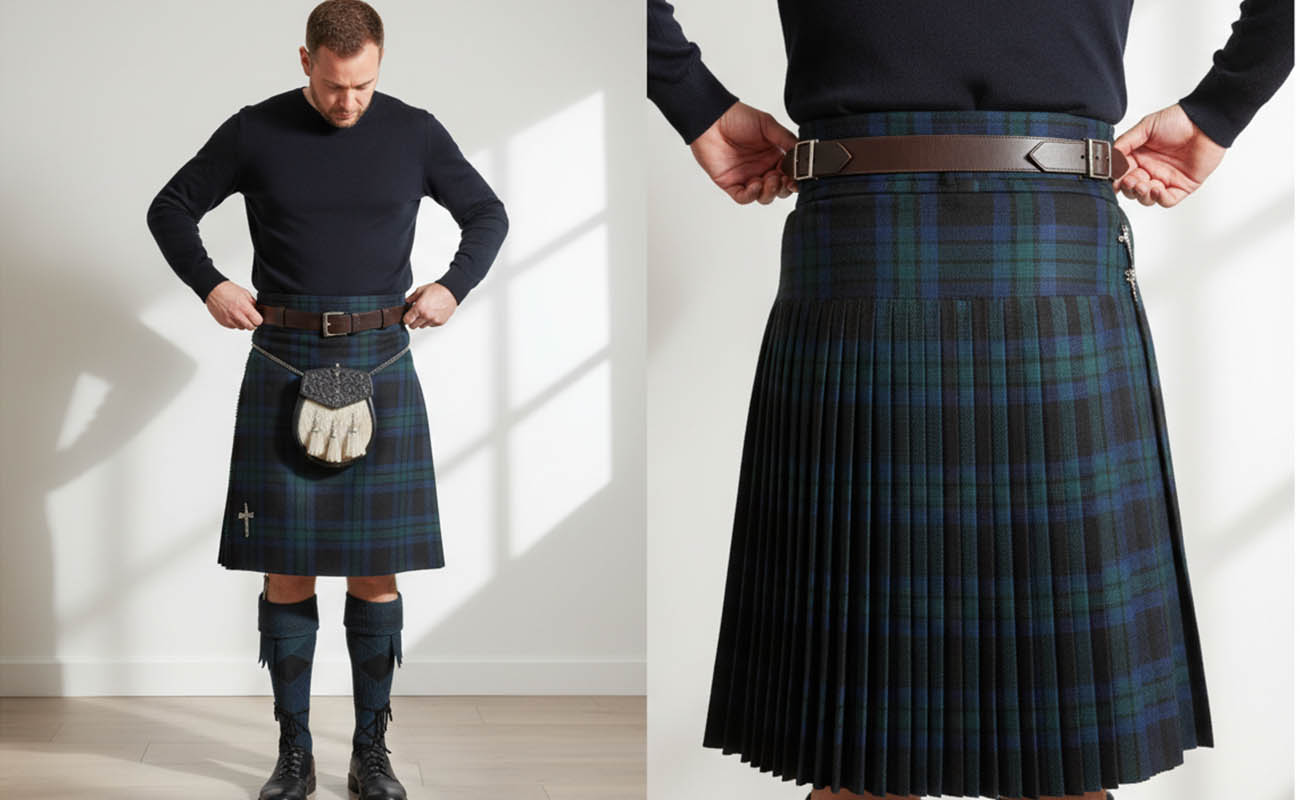
Wearing a kilt begins with proper positioning and fastening. Start by holding the kilt like a towel after a shower, with the pleats facing away from you. The single strap should be in your right hand, while the double straps rest in your left hand. Position the kilt at your natural waist, approximately one to two inches above your navel, rather than on your hips like regular pants. This high placement allows the kilt to fall properly to the middle of your kneecap.
Draw the right hand across your body first, wrapping the inner apron around your waist. Slip the single strap through the hole on your left side and fasten it securely through the buckle. Next, bring the left side across your torso, creating the overlap at the front. Fasten the two straps through the buckles on your right hip, ensuring everything sits comfortably snug. The kilt should feel secure without restricting movement or causing discomfort. Check in a mirror to ensure the aprons lie flat and the pleats remain centered at the back. The fringe should always appear on the right side of the front apron.
Essential Kilt Accessories
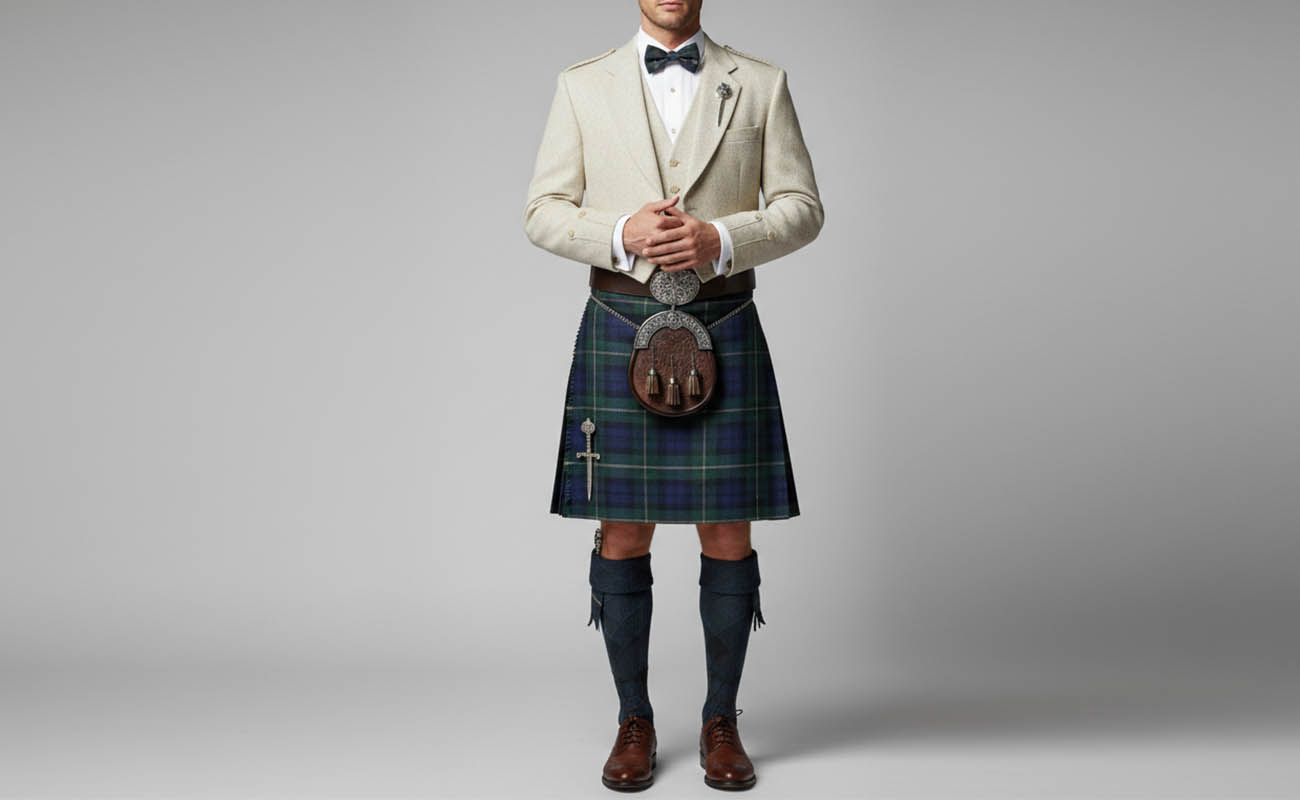
Sporran Selection and Placement
The sporran serves as the kilt’s functional pocket, traditionally made from leather or fur. Three main types exist: day sporrans for casual occasions feature simple leather designs; semi-dress sporrans work for versatile events with moderate detailing; and dress sporrans showcase elaborate fur fronts with metal cantles for formal affairs. Your sporran should match the formality of your event and complement your overall outfit.
Positioning your sporran correctly creates visual balance. Thread the chain strap through the kilt’s belt loops at the back, allowing the sporran to hang at the front center. The sporran should rest approximately four finger widths below your belt buckle, not halfway down your thighs. Proper placement keeps your essentials accessible while maintaining the classic silhouette. Adjust the chain length to achieve this positioning, and ensure the sporran remains centered relative to your kilt’s front apron for a polished appearance.
Kilt Belt and Buckle
Kilt belts differ significantly from regular belts, featuring wider leather straps and decorative buckles often displaying Celtic designs or clan symbols. The belt threads through the kilt’s loops at the rear and fastens at the front, positioned just above the sporran. When wearing a waistcoat or vest, the belt becomes optional, though many prefer wearing one regardless. Choose buckles that complement your other accessories without overwhelming the outfit’s overall aesthetic.
Kilt Pin Placement
The kilt pin serves both decorative and functional purposes, adding weight to prevent the front apron from blowing open. Position the pin on the front apron only, never pinning both layers together, as this restricts movement and causes improper draping. Place the pin approximately two inches from the bottom edge and two inches in from the fringe. The pin should only go through the top layer of fabric, acting as a counterweight rather than a fastener.
Completing Your Look with Proper Footwear and Hosiery
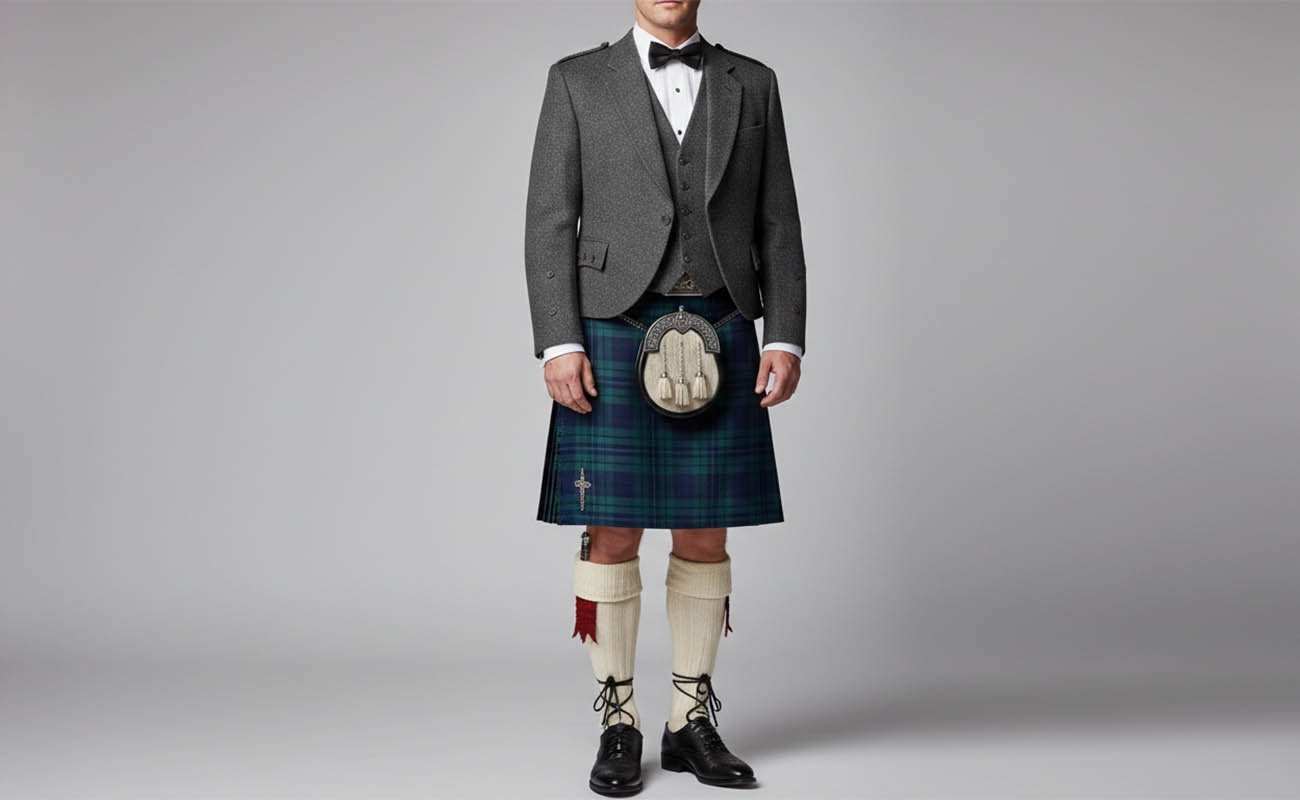
Kilt Hose and Flashes
Traditional kilt hose are knee-high socks, typically made from wool or acrylic blends. Position them approximately two to three inches below the knee, ensuring they sit at equal heights on both legs. The ribbing should run straight without twisting. Fold the top of the sock down to create a cuff that conceals the elastic band.
Kilt Flash Options:
- Match your kilt’s tartan pattern for cohesive styling
- Select solid colors that appear in your tartan
- Choose complementary shades for subtle contrast
- Consider neutral tones for versatile combinations
Flashes are decorative garters that attach to elastic bands, worn on the outer calves. Slide them under the folded cuff of your hose, positioning them on the outside of each leg. The fold of the sock should cover the elastic band while displaying the flash itself. This small detail adds traditional flair and helps secure your hose throughout the day.
Footwear Choices
Ghillie brogues represent traditional Highland footwear, featuring long laces without tongues. To tie them properly, hold both laces together and twist them five to six times, then wrap them around the back of your leg and return to the front. Tie them securely to keep the shoes snug. For formal occasions, black leather ghillies work best, while brown suits work best for daywear events. Modern alternatives include polished dress shoes, leather boots, or even clean sneakers for casual settings, depending on the formality of your occasion.
The Sgian Dubh Tradition
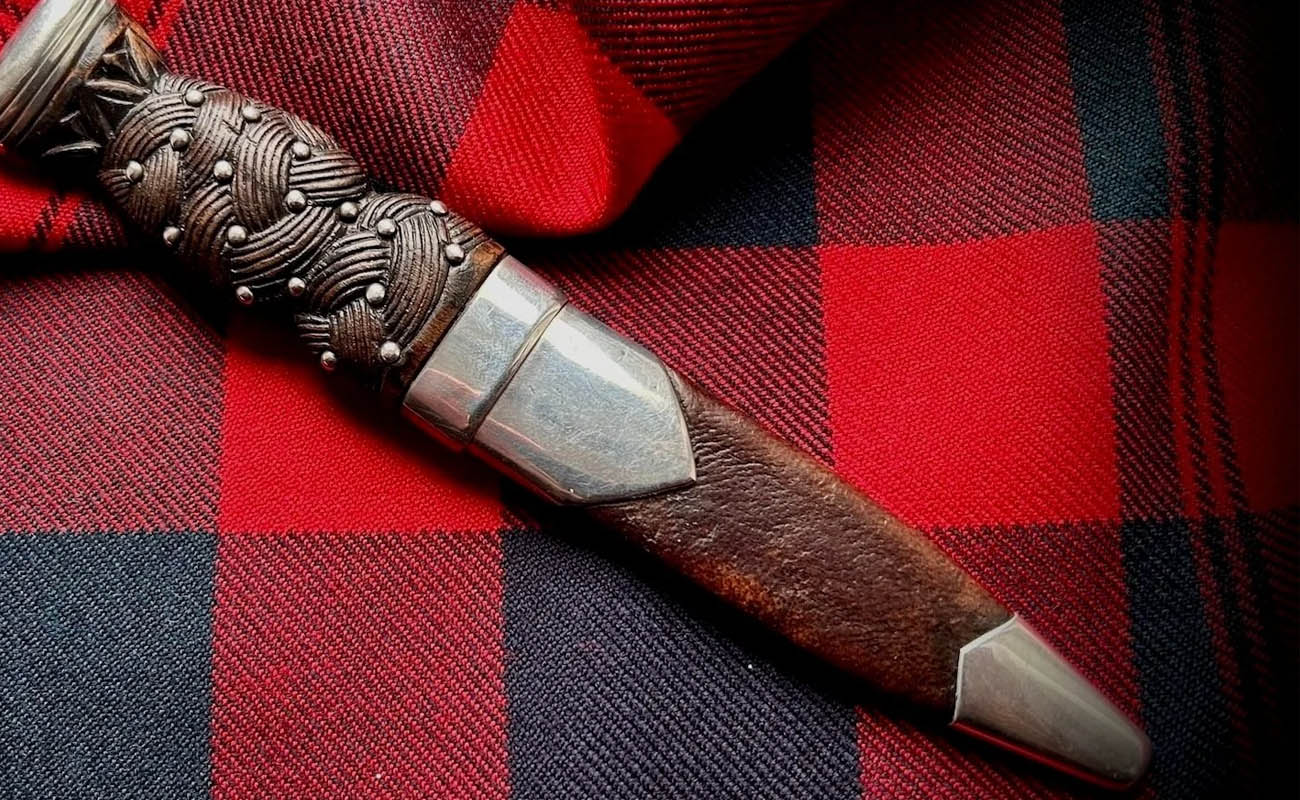
The sgian dubh is a small ceremonial knife traditionally tucked into the top of your kilt hose. This historical accessory originated as a utility tool and later became a symbol of trust when displayed openly. Wear it on the side corresponding to your dominant hand, with approximately two-thirds of the sheathed knife tucked into your sock. The handle should protrude visibly from the cuff, typically positioned on the outer calf.
Modern sgian dubhs range from simple wooden designs to ornate pieces featuring gemstones and clan crests. Choose one appropriate for your event’s formality. Note that security screenings at certain venues may require leaving your sgian dubh at home. Flashes help secure the knife in place, preventing it from slipping down during movement. This accessory adds authentic Highland character to your outfit while honoring traditional customs.
Common Mistakes to Avoid When Wearing a Kilt
Incorrect Sizing and Fit
The most critical mistake involves improper measurements. Never use your regular pants size when ordering a kilt. Measure at your natural waist using a flexible measuring tape, not down at your hips. For length, measure from your waist to the middle of your kneecap along the side of your leg. A properly fitted kilt should rest at your belly button level and fall to the center of your knee. Kilts that sit too low resemble skirts, while those positioned too high create an uncomfortable, unflattering appearance.
Accessory Placement Errors
Many beginners struggle with accessory positioning. Common mistakes include wearing the sporran too low, pinning the kilt pin through both fabric layers, placing the sgian dubh in the wrong leg or too deep in the sock, and choosing accessories that clash in formality levels. Take time to position each element correctly. Your accessories should enhance rather than distract from the kilt itself. Subtle, well-placed pieces always trump excessive ornamentation, especially for first-time wearers.
Style Mismatches
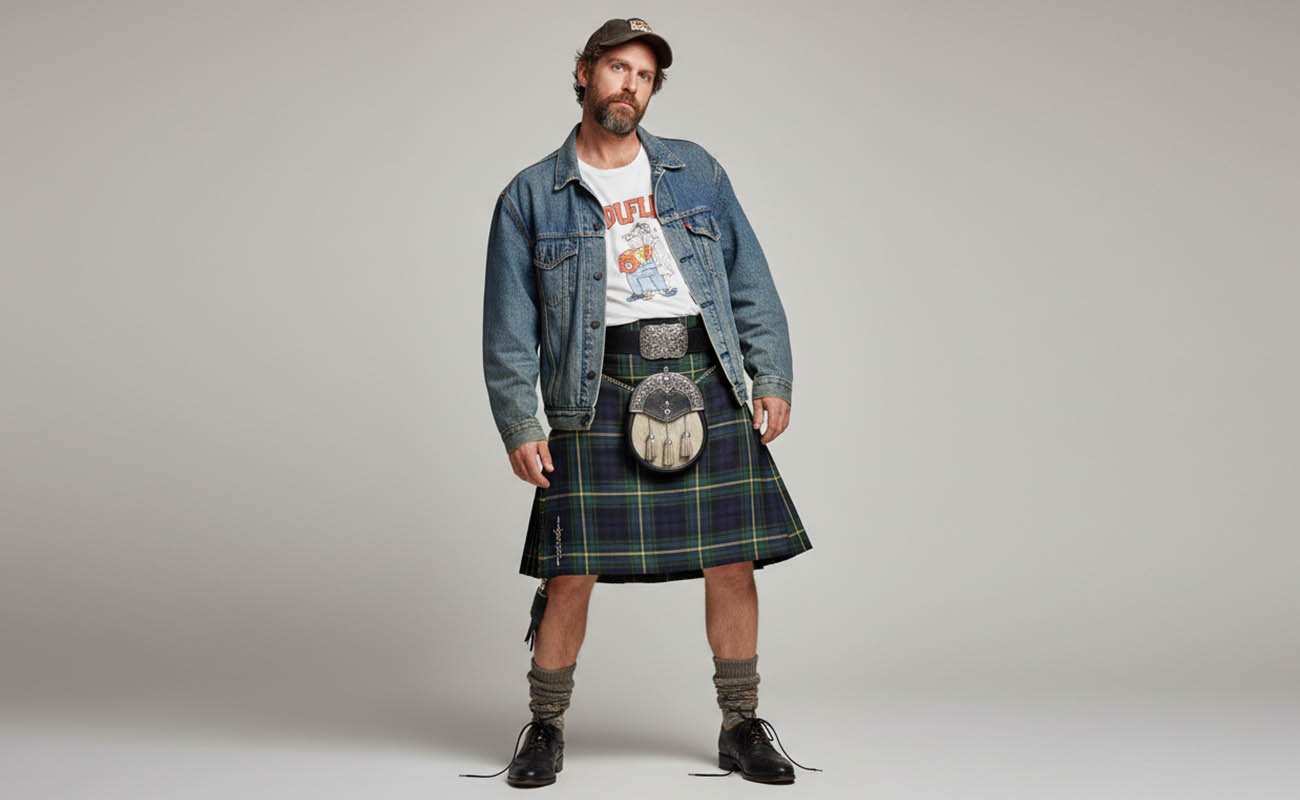
Mixing formal and casual elements creates confusion in your overall appearance. Ghillie brogues belong with formal kilts, while sneakers or boots suit casual settings. Similarly, dress sporrans pair with formal occasions, not everyday wear. Match your shirt and jacket choices to the event’s dress code. Tucking your shirt into the kilt typically looks more polished and allows the full outfit to be appreciated. Avoid wearing graphic tees or hoodies with traditional formal kilts, as this diminishes the garment’s dignified appearance.
Styling Your Kilt for Different Occasions
Formal Events and Weddings
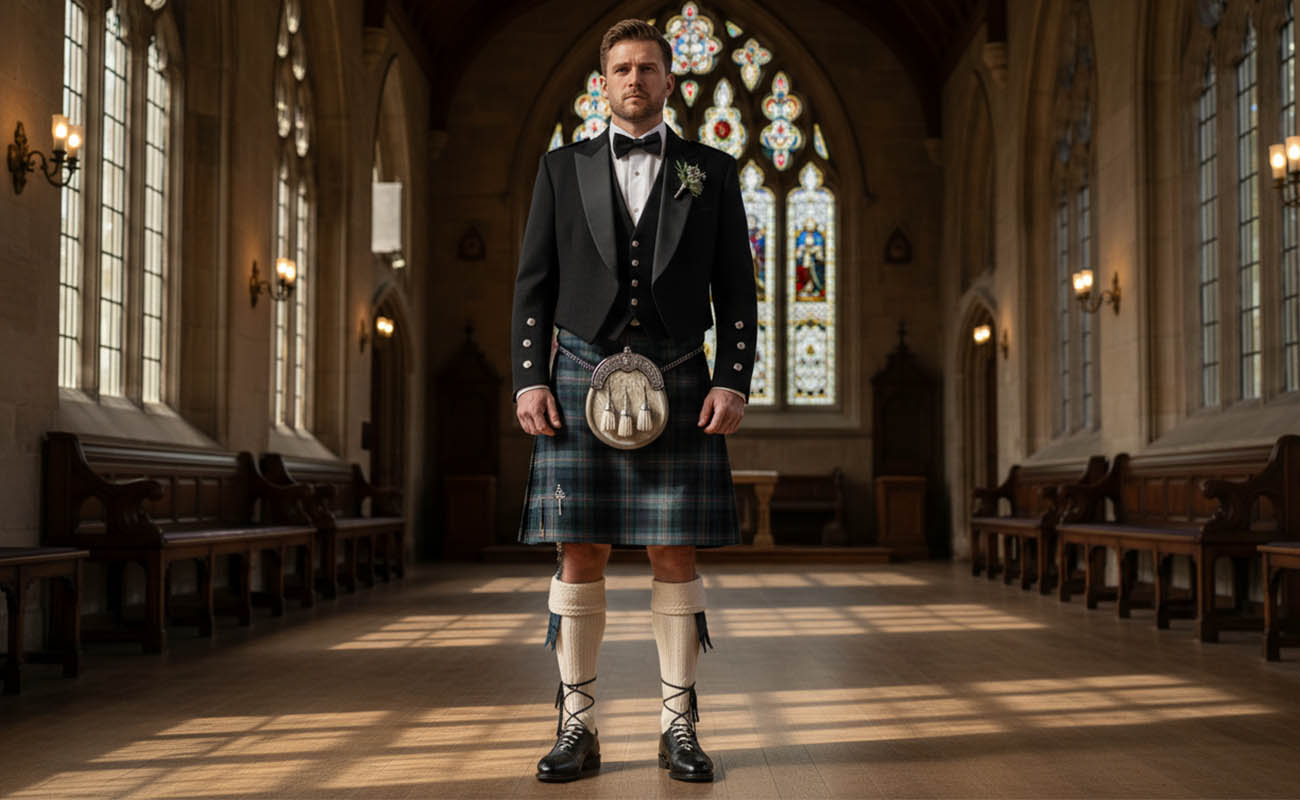
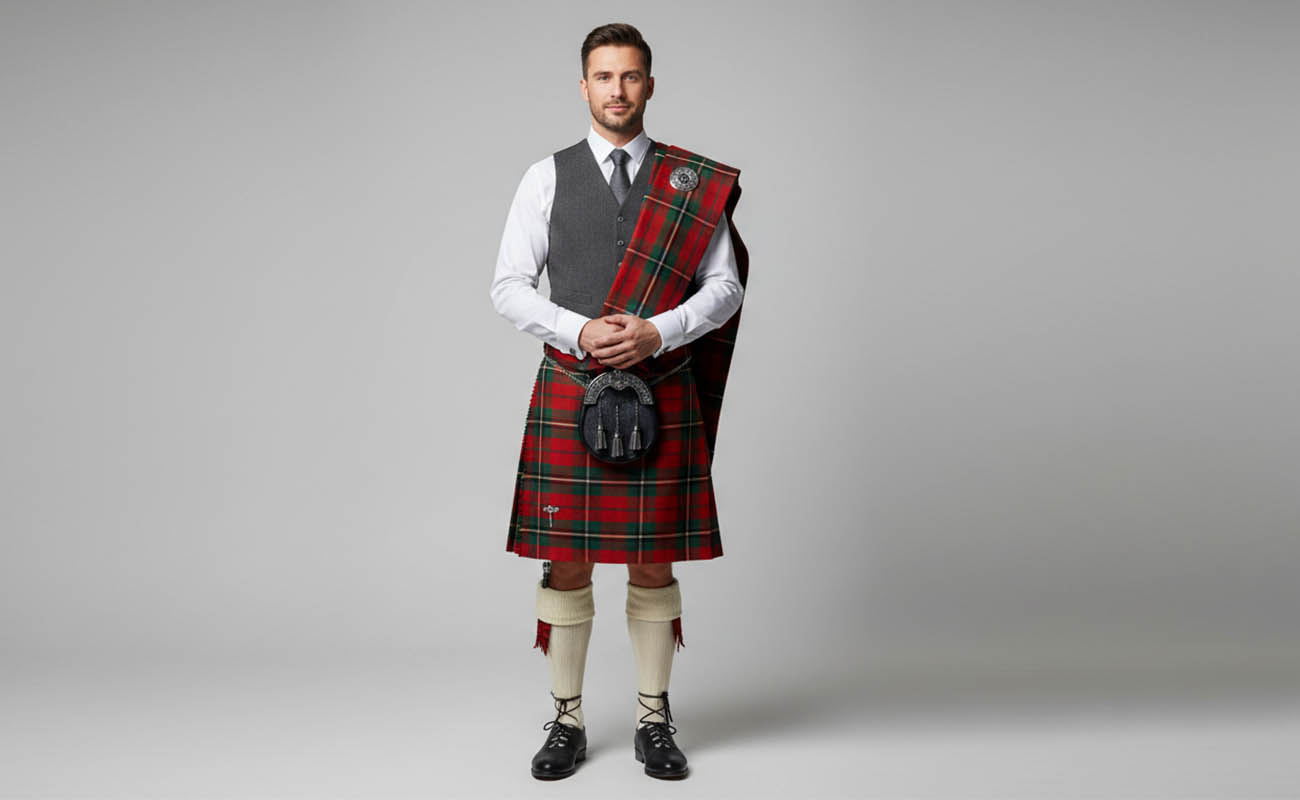
Formal occasions demand elevated styling choices. Select a fitted dress shirt in white or cream, paired with a Prince Charlie jacket or Argyll jacket for traditional elegance. Choose a dress sporran with fur detailing and metal accents. Add a bow tie or formal necktie to complete the sophisticated look. Your kilt should feature traditional tartan in an eight-yard construction, with proper draping and length. Ghillie brogues in polished black leather, cream or white kilt hose, and coordinating flashes finish the ensemble. Consider adding a fly plaid over your left shoulder, secured with a decorative brooch, for maximum formality at weddings or ceremonies.
Casual and Everyday Wear
Kilts adapt beautifully to relaxed settings when styled appropriately. Pair your kilt with a simple polo shirt, button-down shirt, or even a plain t-shirt for comfortable daywear. Day sporrans made from leather provide functionality without excessive formality. Substitute ghillie brogues with leather boots, loafers, or clean sneakers based on your activities. Charcoal or colored kilt hose often appear more modern than traditional cream. You can wear your kilt slightly lower on your hips for casual events, though it should still fall to your knee’s center. This versatile approach allows you to incorporate your kilt into everyday life while maintaining respect for the garment’s heritage.
Caring for Your Kilt
Storage and Maintenance
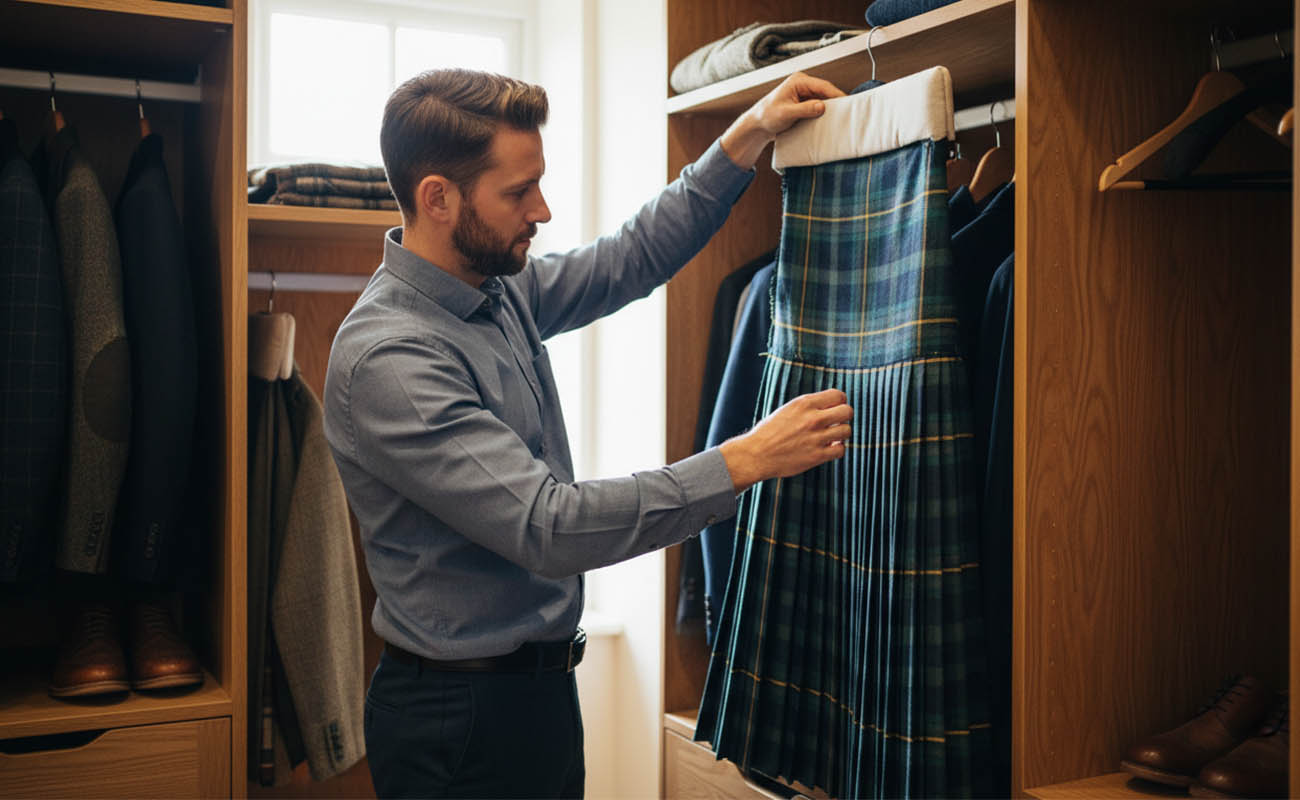
Proper care extends your kilt’s lifespan significantly. Always hang your kilt on a sturdy hanger by the waistband, allowing pleats to drape naturally. Store it in a cool, dry location away from direct sunlight to prevent fading. For travel, fold your kilt carefully along the pleats, rolling rather than creasing to minimize wrinkles. When sitting in vehicles, smooth the pleats beneath you before settling into your seat, or pivot while keeping your legs outside the car initially.
Cleaning Guidelines
Wool kilts require professional dry cleaning to maintain their structure and appearance. Regular washing damages the fabric and destroys the pleating. Between cleanings, air out your kilt after wearing to release any odors. Spot clean minor stains promptly using a damp cloth and mild soap designed for wool. For lighter-weight kilts made from synthetic blends or cotton, follow the manufacturer’s care instructions carefully. Always remove basting stitches before wearing, as these temporary threads secure pleats during shipping but should not remain during use.
Understanding Tartan Selection
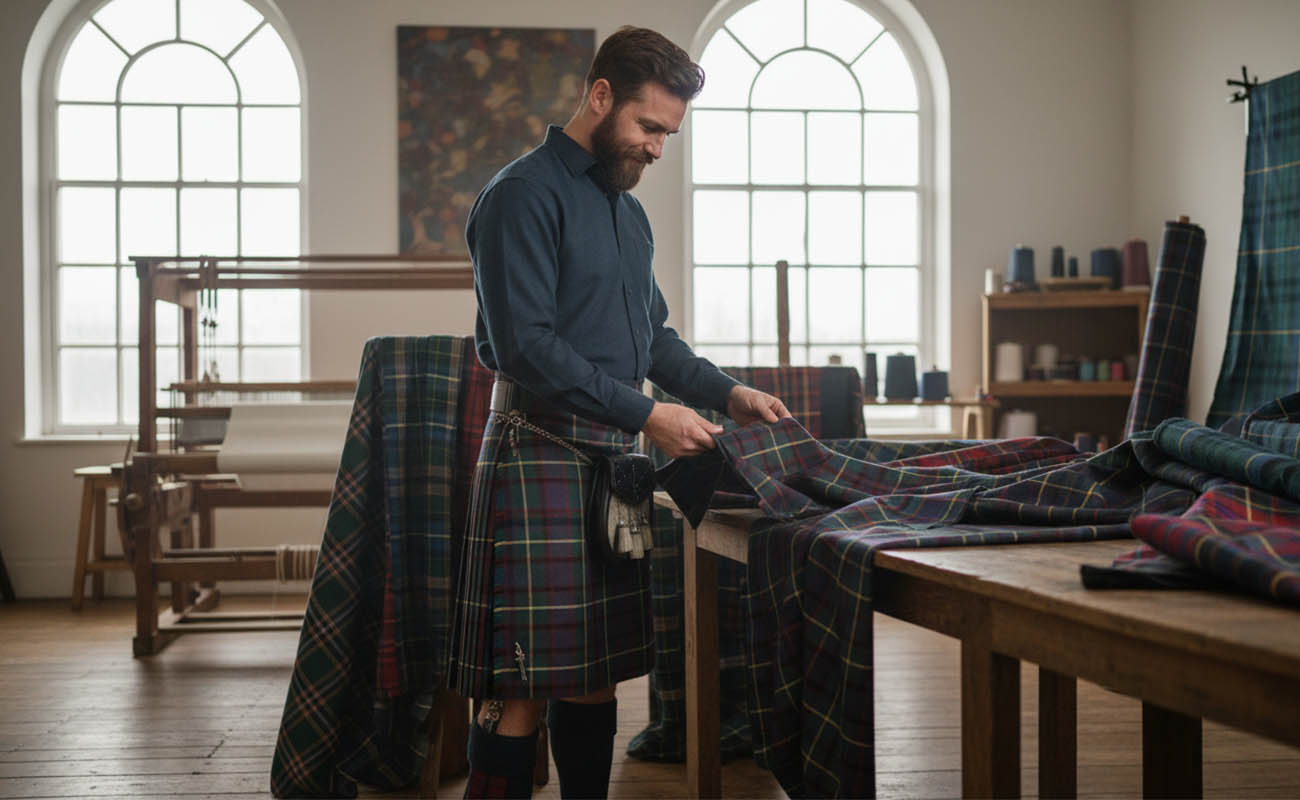
Tartans represent clan heritage, regional associations, or personal preferences through distinctive patterns and colors. If you have Scottish ancestry, research your family’s clan tartan to wear a design connected to your heritage. Universal tartans like Black Watch or Royal Stewart can be worn by anyone, making them excellent choices for those without specific clan connections. Fashion tartans offer contemporary patterns without traditional restrictions, perfect for modern styling.
Many people worry about wearing tartans they’re not entitled to, but in casual settings, this concern is minimal. Formal clan gatherings may expect appropriate tartans, so research beforehand when attending such events. The most important factor is respecting the tradition while expressing your personal style. Your tartan choice should reflect the occasion’s formality, your comfort with bold or subtle patterns, and the colors that complement your complexion and the event’s setting.
Tips for First-Time Kilt Wearers

Starting your kilt journey requires patience and practice. Schedule a fitting session before your event to ensure comfortable movement and proper adjustment. Practice putting on your kilt multiple times at home, as the process feels unfamiliar initially. Check that all buckles fasten securely and the fabric sits comfortably around your waist. Walk, sit, and move around to test the fit before your actual occasion.
Begin with essential accessories rather than purchasing everything immediately. A basic sporran, kilt belt, and hose suffice for most occasions. Add pieces like sgian dubhs, brooches, and fly plaids as you become more comfortable with Highland dress. Quality matters more than quantity, so invest in well-made basics that last for decades rather than numerous cheap items. Consider starting with kilt packages from reputable retailers, which often include coordinated pieces at better prices than buying separately.
The Question of What’s Worn Underneath
The traditional practice of wearing nothing under the kilt, known as going regimental or being a true Scotsman, stems from military history when underwear wasn’t standard issue. Modern practices vary widely based on personal preference and practical considerations. Surveys suggest most people choose to wear underwear beneath their kilts for hygiene and comfort reasons.
Consider your environment and activities when making this decision. Rental kilts should always be worn with underwear for hygiene and respect for the next wearer. If you own your kilt, the choice becomes personal, though practical considerations like wind, dancing, sitting positions, and venue settings should guide your decision. Fitted boxers or compression shorts in dark colors work best if choosing underwear, as they remain invisible and comfortable throughout the day.
Embracing Kilt Culture with Confidence
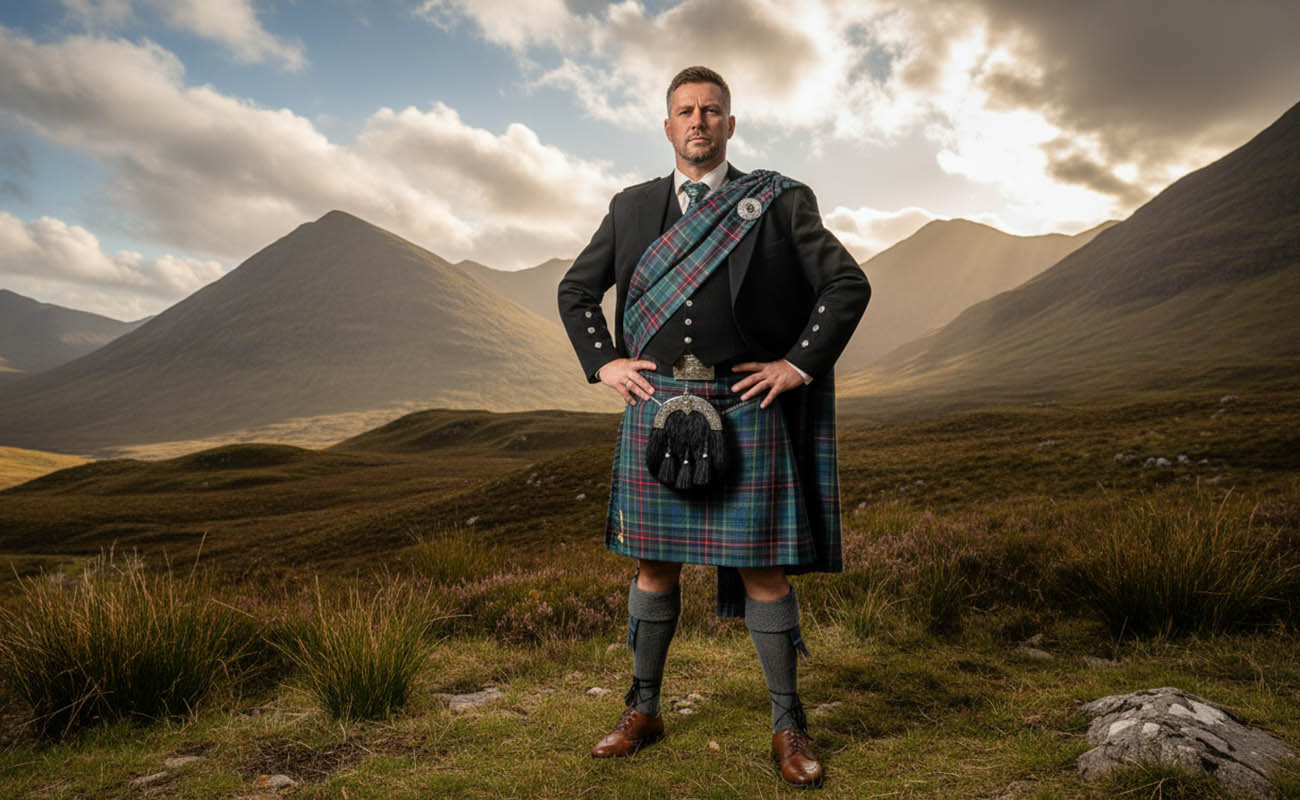
Wearing a kilt represents more than just fashion—it’s a participation in a living tradition and a cultural expression. Whether you have Scottish heritage or simply appreciate the garment’s style and symbolism, wearing your kilt with confidence and respect honors its history. Don’t let concerns about correctness prevent you from enjoying this remarkable piece of clothing. Most people appreciate the effort to embrace cultural traditions, regardless of their background.
Remember that even experienced kilt wearers continue learning and refining their approach. Each occasion provides opportunities to improve your styling choices and comfort level. Connect with others who wear kilts, attend Highland gatherings, and learn from those with experience. The kilt community generally welcomes newcomers enthusiastically, offering advice and encouragement. Your confidence will grow with each wearing, transforming the kilt from a costume into a natural expression of your personal style.
Final Thoughts
Mastering kilt wearing combines knowledge of tradition with practical styling sense. By understanding proper fit, accessory placement, and occasion-appropriate choices, you’ll wear your kilt with the dignity and pride it deserves. Whether attending formal ceremonies or incorporating your kilt into everyday wear, these guidelines ensure you look polished and feel comfortable. The kilt’s enduring appeal lies in its versatility, allowing you to honor heritage while expressing individual style. Take time to learn the basics, invest in quality pieces, and wear your kilt confidently, knowing you’re participating in a timeless tradition that continues captivating people worldwide.