
Blog
What Type of Jackets To Wear With Kilts? Complete Style Guide for 2026
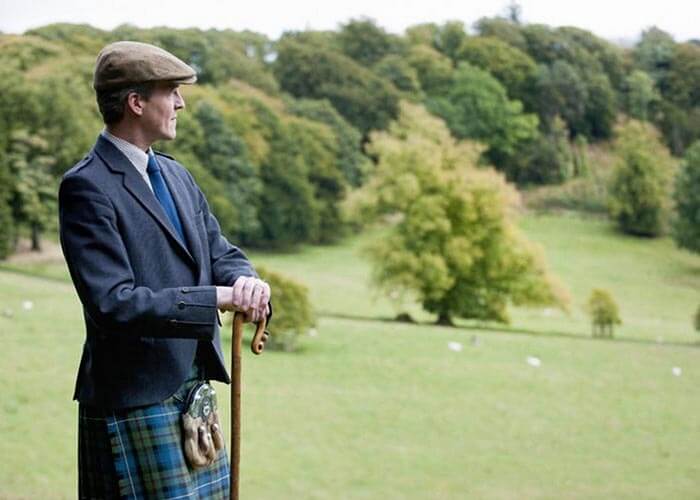
Choosing the right jacket to wear with a kilt can transform your entire outfit from good to exceptional. Whether you’re attending a Scottish wedding, a formal Highland gathering, or simply embracing Celtic heritage in your daily style, understanding which jacket complements your kilt is essential. The traditional Scottish attire has evolved significantly over centuries, and today’s kilt wearers have numerous sophisticated options that blend heritage with contemporary fashion. This comprehensive guide will walk you through the most popular jacket styles, helping you make informed decisions based on occasion, season, and personal preference. From the elegance of formal Prince Charlie jackets to the rugged appeal of tweed blazers, each jacket type brings its own character and authenticity to Highland dress.
The art of pairing jackets with kilts goes beyond simple fashion choices—it represents a connection to Scottish culture that spans generations. Understanding the nuances of different jacket styles allows you to honor tradition while expressing your individual personality. Many newcomers to kilt-wearing feel overwhelmed by the variety of options available, but with proper guidance, selecting the perfect jacket becomes an enjoyable process that enhances your appreciation for this distinctive clothing tradition.
Traditional Scottish Jacket Styles for Kilts
The most authentic way to wear a kilt involves pairing it with traditional Scottish jackets that have been refined over generations. These classic options remain popular choices for formal events and Highland gatherings worldwide. The Prince Charlie jacket stands as the most formal option, featuring satin lapels and ornate silver buttons that create an elegant silhouette perfect for weddings and black-tie events. This jacket typically comes in black barathea wool and is cut shorter at the front to showcase the sporran beautifully. The craftsmanship involved in creating a Prince Charlie jacket is remarkable, with hand-stitched details and precise tailoring that ensure the garment drapes perfectly over the body.
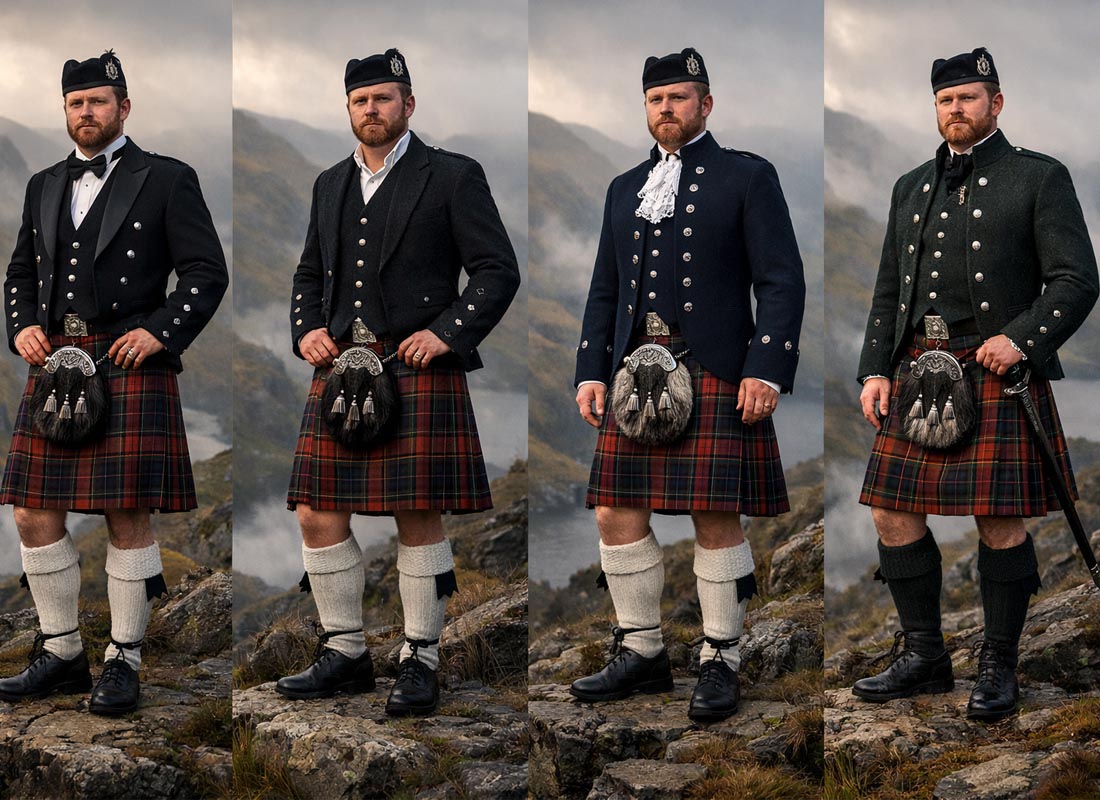
Another timeless choice is the Argyll jacket, which offers slightly less formality while maintaining traditional elegance. The Argyll features gauntlet cuffs and can be worn for both daytime and evening occasions, making it incredibly versatile. This jacket usually comes in black or charcoal grey and pairs wonderfully with various kilt tartans. The Argyll’s design allows for comfortable movement while maintaining a distinguished appearance that works equally well at afternoon receptions and evening celebrations. Many Scottish families invest in Argyll jackets because they serve multiple purposes throughout the year, from weddings to formal dinners and Highland games.
The Montrose doublet represents a more decorative option with its elaborate button configuration and typically features five buttons down the front with additional buttons on the sleeves and back. This style draws inspiration from military dress uniforms and carries a sense of ceremonial importance that makes it popular for special occasions. The Montrose works particularly well for those who want to make a bold statement while respecting traditional Highland dress codes. Its structured silhouette and ornate detailing create a commanding presence that photographs beautifully at formal events.
For those seeking historical authenticity, the Sheriffmuir doublet draws inspiration from 18th-century military uniforms. This jacket features distinctive pointed cuffs and typically includes ornate braiding or lacing details. It’s particularly popular among those participating in historical reenactments or Highland games. Each traditional jacket style carries its own heritage and serves specific ceremonial purposes within Scottish culture. The Sheriffmuir’s unique design elements set it apart from other formal options, making it an excellent choice for those who want to showcase their knowledge of Scottish history and military traditions.
| JACKET TYPE | FORMALITY LEVEL | BEST OCCASION | KEY FEATURES |
|---|---|---|---|
| Prince Charlie | Most Formal | Evening Weddings, Black-tie Events | Satin lapels, silver buttons, shorter front cut |
| Argyll Jacket | Semi-Formal | Day/Evening Weddings, Highland Gatherings | Gauntlet cuffs, versatile styling |
| Montrose Doublet | Formal | Ceremonial Events, Formal Celebrations | Five buttons, decorative sleeve details |
| Sheriffmuir Doublet | Formal/Historical | Highland Games, Historical Reenactments | Pointed cuffs, ornate braiding |
| Tweed Jacket | Casual | Everyday Wear, Country Events | Textured wool, comfortable fit |
| Leather Jacket | Casual | Concerts, Urban Settings, Parties | Modern look, edgy style |
Casual Jackets Perfect for Everyday Kilt Wear
Modern kilt enthusiasts often prefer more relaxed jacket options for everyday wear and informal gatherings. The tweed jacket has become increasingly popular as a casual yet sophisticated choice that works beautifully with kilts. Harris tweed, Donegal tweed, and other textured wool fabrics provide warmth and visual interest while maintaining a connection to Celtic traditions. These jackets work exceptionally well for country walks, casual dinners, and daytime events where full Highland dress might feel too formal. The beauty of tweed lies in its versatility and durability, with quality tweed jackets lasting decades when properly maintained.
Tweed patterns vary tremendously, from subtle herringbone weaves to bold checks and multi-colored flecks that add visual depth to your outfit. When selecting a tweed jacket for kilt wear, consider how the texture and color palette complement your tartan pattern. Earth tones like browns, greens, and greys typically work well with most tartans, creating a harmonious look that feels grounded in nature. The weight of tweed also matters—lighter-weight tweeds suit spring and autumn wear, while heavier tweeds provide excellent insulation during winter months without sacrificing style.
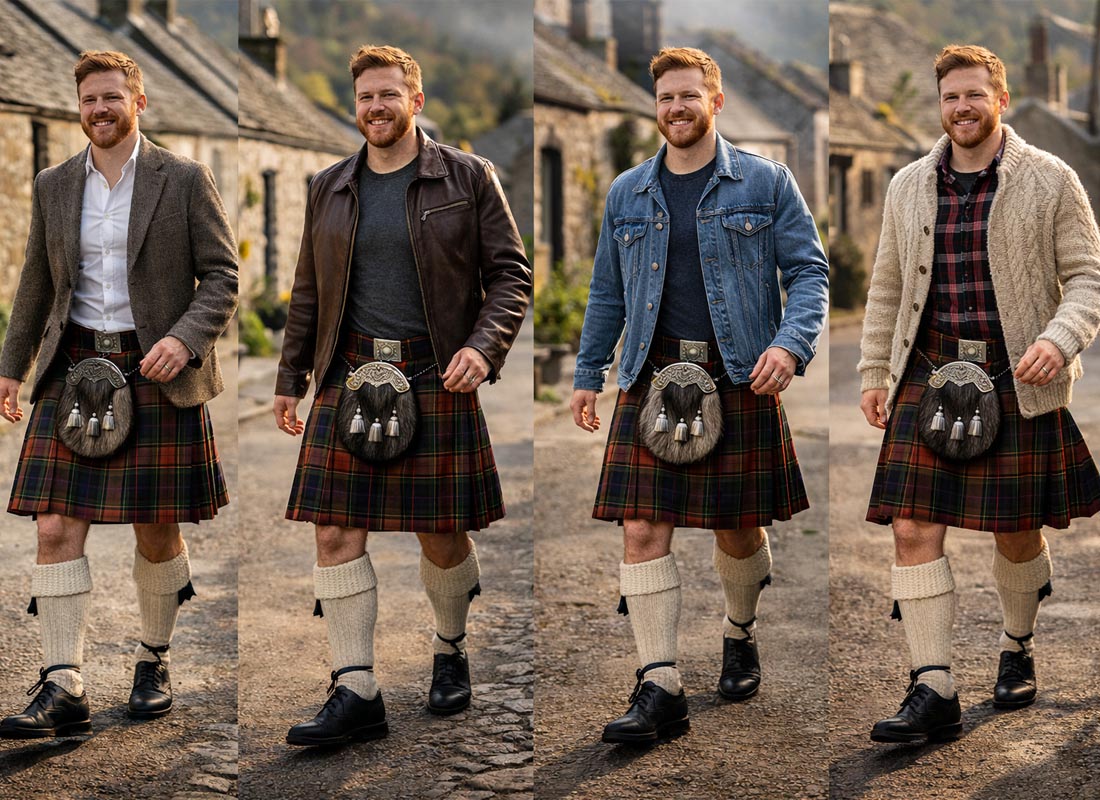
Leather jackets create an edgy, contemporary look when paired with kilts, particularly popular among younger generations exploring alternative fashion. A well-fitted brown or black leather jacket can modernize traditional tartan while respecting the kilt’s unique character. This combination works especially well for concerts, casual parties, or urban environments where you want to make a bold style statement. The contrast between the structured leather and flowing kilt fabric creates visual intrigue that turns heads. Motorcycle-style leather jackets with minimal embellishment tend to work best, avoiding overly decorated pieces that might compete with the kilt’s pattern.
Denim jackets offer another casual option that surprisingly complements kilts quite well, especially for relaxed outdoor events or festivals. The key is selecting a darker wash denim that doesn’t compete with the kilt’s pattern. Raw denim or deep indigo washes provide sufficient contrast without overwhelming the tartan. Denim jackets work particularly well for summer music festivals, casual pub gatherings, and outdoor barbecues where formal Highland dress would be inappropriate. This combination represents a fusion of Scottish and American casual wear traditions that appeals to those seeking a laid-back, approachable aesthetic.
Wool cardigans and knit jackets also serve as comfortable alternatives for indoor gatherings or mild weather conditions. These softer options create an approachable, friendly aesthetic while still honoring the kilt tradition. Heavy cable-knit cardigans in neutral colors provide warmth without the structure of traditional jackets, making them ideal for relaxed home gatherings or casual restaurant dinners. The informal nature of knitwear pairs surprisingly well with kilts, creating a cozy look that maintains respect for Highland dress while prioritizing comfort.
Best Formal Jackets for Weddings and Special Occasions
Weddings and formal celebrations require careful consideration when selecting jacket styles for kilt outfits. The Prince Charlie jacket remains the gold standard for evening weddings and formal receptions, offering unmatched elegance with its satin detailing and traditional silhouette. When wearing this jacket, proper accessories, including a bow tie, wing collar shirt, and formal sporran, are essential to complete the sophisticated look. The Prince Charlie’s shorter front cut ensures the sporran remains visible, which is crucial for maintaining proper Highland dress proportions. Many wedding parties coordinate their Prince Charlie jackets to create a unified appearance in photographs while allowing individual expression through different tartan choices.
The Argyll jacket serves as an excellent alternative for afternoon weddings and semi-formal events where the Prince Charlie might be too formal. Its versatility allows wearers to transition from ceremony to reception comfortably while maintaining appropriate formality levels. Many grooms choose the Argyll for their wedding party, coordinating jacket colors while allowing groomsmen to wear different tartan kilts that represent their family heritage. This approach honors both Scottish tradition and individual family connections, creating meaningful wedding attire that tells a story. The Argyll’s slightly less formal nature also makes it more comfortable for extended wear during long wedding celebrations.
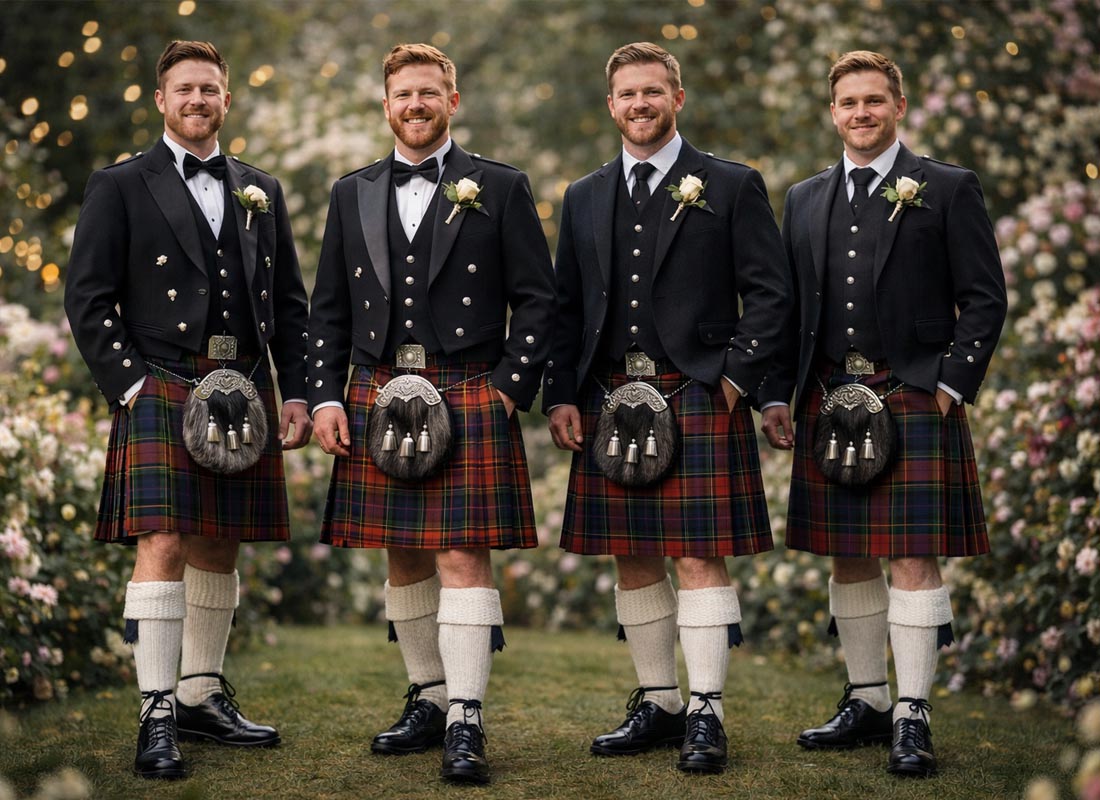
For military weddings or events with service members, the doublet styles like Montrose or Sheriffmuir add ceremonial grandeur appropriate to the occasion. These jackets often feature regimental colors and insignia that honor military tradition. The five-button waistcoat worn underneath formal jackets should coordinate with the overall color scheme while providing an additional layer of sophistication. Military-style doublets carry special significance in Scottish culture, representing the historical connection between Highland dress and military service. When attending events with military themes, these jacket styles demonstrate both respect for tradition and understanding of ceremonial protocols.
Formal jacket selection also depends on the time of day for your event. Morning and afternoon weddings typically call for slightly less formal options like the Argyll, while evening celebrations demand the full elegance of a Prince Charlie. Understanding these timing conventions helps ensure your outfit matches the occasion’s formality level appropriately. Some wedding invitations specify dress codes that guide your jacket selection, but when in doubt, consulting with the wedding party or event organizers ensures you arrive properly attired.
Seasonal Jacket Choices for Kilt Outfits
Summer Lightweight Options:
- Linen blend jackets in cream or light grey
- Lightweight tweed in breathable weaves
- Cotton sports jackets without lining
- Waistcoats alone for very warm weather
- Short-sleeved formal shirts with no jacket
Winter Warmth Solutions:
- Heavy wool Argyll or Prince Charlie
- Tweed overcoats extending past the kilt
- Waxed cotton jackets for outdoor events
- Layered approach with sweaters under jackets
- Wool capes or great plaids for extreme cold
Understanding seasonal requirements ensures comfort throughout the year while maintaining style integrity. Summer events often allow for more flexibility, with some choosing to wear only a waistcoat with their dress shirt when temperatures soar. However, always check event dress codes before making this decision, as some formal gatherings require full Highland dress regardless of the weather. Lightweight linen-wool blend jackets offer excellent breathability while maintaining the structured appearance expected at formal summer events. These fabrics wick moisture effectively and prevent overheating during outdoor celebrations.
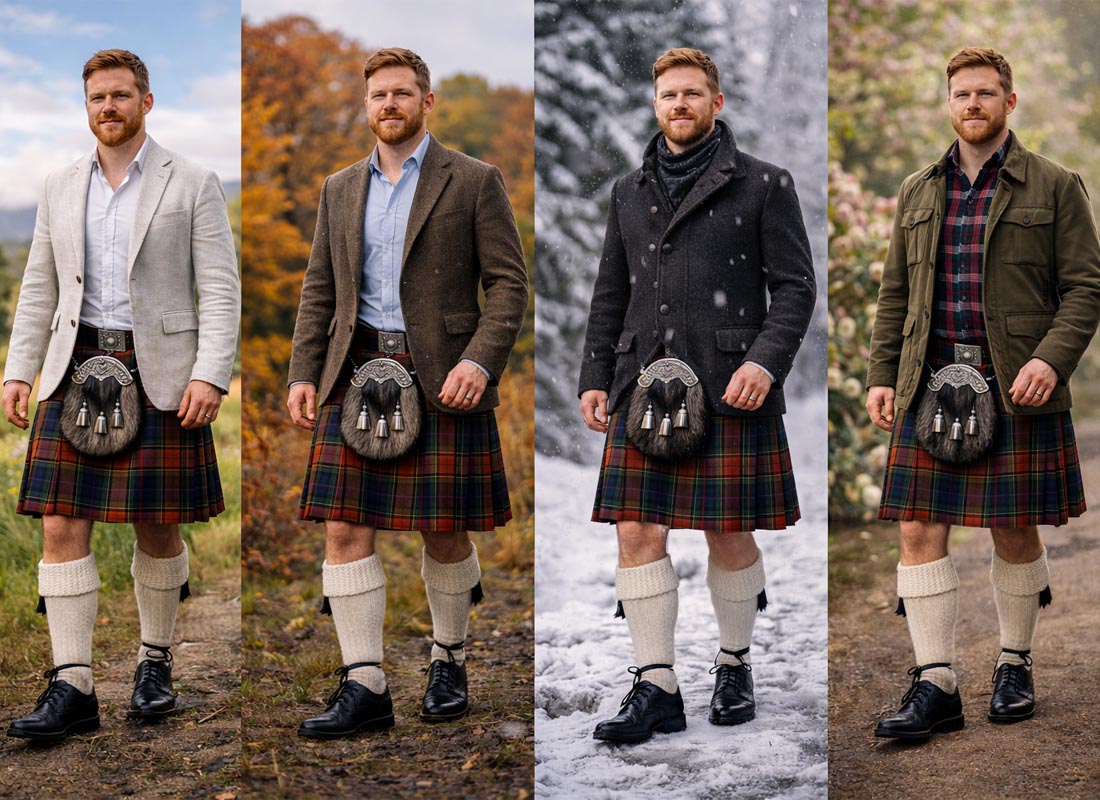
Winter presents unique challenges for kilt wearers, particularly in harsh climates. The traditional great plaid or fly plaid can add warmth while enhancing the outfit’s visual appeal. Layering becomes crucial during colder months, with thermal underlayers, knee-high hose, and proper footwear all contributing to comfort. Heavy wool jackets in darker colors provide necessary warmth while maintaining the formal appearance expected at winter weddings and celebrations. Some kilt wearers invest in wool overcoats that extend below the kilt hem, providing full-body protection from wind and cold while maintaining Highland dress aesthetics.
Transitional seasons like spring and autumn offer the most flexibility in jacket selection. Medium-weight tweeds work beautifully during these months, providing adequate warmth without excessive bulk. The unpredictable weather common during spring and fall makes layering particularly important—wearing a vest or waistcoat under your jacket allows you to adjust your comfort level as temperatures fluctuate throughout the day. Many experienced kilt wearers keep spare layers in their vehicles for unexpected weather changes during outdoor events.
Color Coordination and Tartan Matching
Selecting the right jacket color requires understanding how different hues interact with your kilt’s tartan pattern. Black jackets offer the most versatile option, complementing virtually any tartan while providing a sharp contrast that makes the kilt stand out. This classic choice works for both formal and casual settings, making it an excellent investment for anyone building a kilt wardrobe. The neutrality of black allows even the most complex tartan patterns to take center stage without competing colors creating visual confusion.
Navy blue and charcoal grey jackets provide slightly softer alternatives to black while maintaining formality and versatility. These colors work particularly well with tartans featuring blue or grey threading. Green jackets, especially in darker forest or bottle green shades, complement tartans with strong green elements and create a cohesive Celtic appearance perfect for outdoor Highland games or cultural festivals. The key to successful color coordination lies in identifying the dominant or secondary colors within your tartan and selecting jacket colors that either complement or provide pleasing contrast.
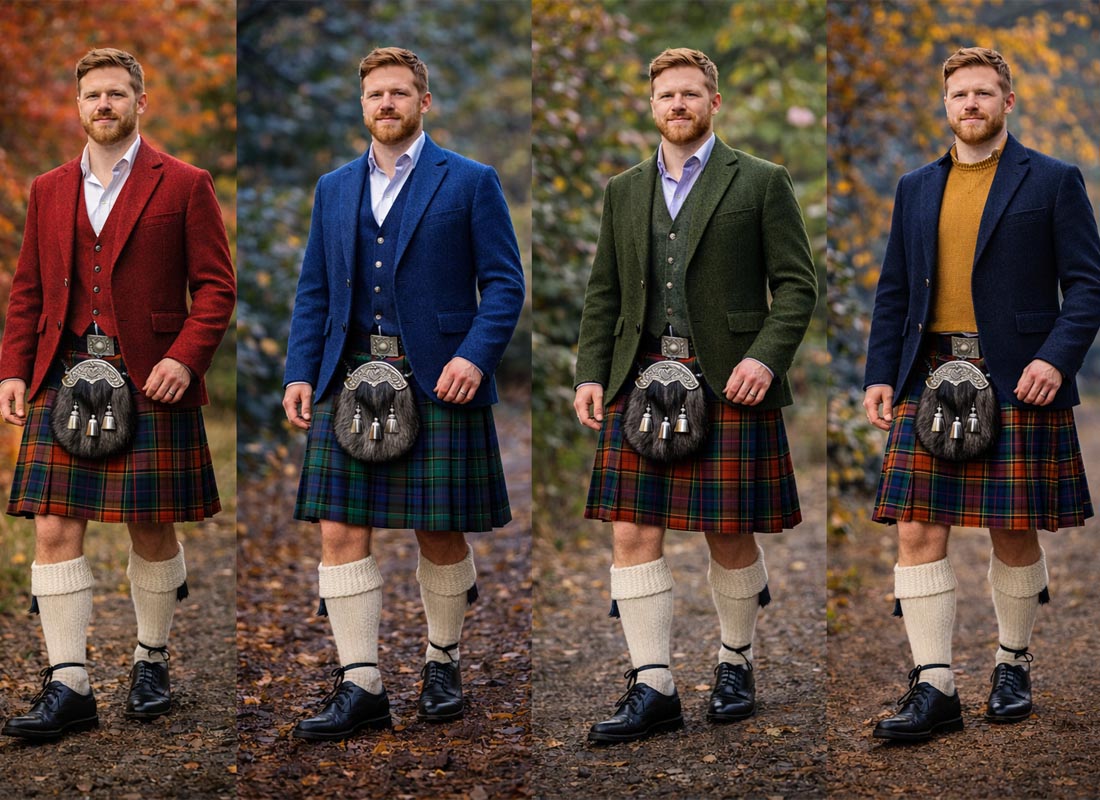
Brown jackets in various shades pair beautifully with earth-toned tartans and create a warmer, more approachable aesthetic. Chocolate brown, tobacco, and tan jackets work especially well for casual settings and autumn events. When wearing colored jackets, ensure your accessories, including sporran, belt, and shoes, coordinate with the overall color palette to maintain visual harmony. Understanding color theory basics helps tremendously—analogous color schemes using adjacent colors on the color wheel create harmonious looks, while complementary colors provide bold contrast that makes statements.
For those wearing rare or unusual tartan patterns, neutral jacket colors like black, charcoal, or navy provide safe choices that won’t clash with complex color combinations. However, confident dressers can experiment with bolder jacket colors that pull specific hues from their tartan, creating intentional color echoes throughout the outfit. This advanced styling technique requires careful consideration but produces stunning results when executed properly.
Jacket Fit and Tailoring Considerations
Essential Fitting Guidelines:
- Shoulders should sit naturally without pulling or bunching
- Sleeve length ends at the wrist bone when arms hang naturally
- Jacket length covering but not hiding the sporran chain
- Back length allowing full visibility of kilt pleating
- Chest measurement allows comfortable movement without strain
Proper jacket fit matters tremendously when wearing kilts, as the unique proportions of Highland dress require careful attention to tailoring details. Unlike standard suit jackets, kilt jackets are typically cut shorter in the front to accommodate the sporran and showcase the kilt’s apron. The back of the jacket should fall just below the hip, allowing the kilt’s pleating to remain visible and creating the intended silhouette. This specialized cut differentiates Highland dress jackets from regular suit jackets, making off-the-rack options sometimes challenging to wear without alterations.
Sleeve length becomes particularly important when wearing formal kilt jackets, as the cuffs should reveal just enough shirt cuff without excessive fabric bunching. Many traditional Scottish tailors recommend showing approximately half an inch of shirt cuff for proper proportions. The jacket’s shoulder line should align perfectly with your natural shoulder edge, avoiding the dropped shoulder look common in casual wear. Proper shoulder fit ensures the entire jacket drapes correctly, affecting how the garment moves with your body during wear.
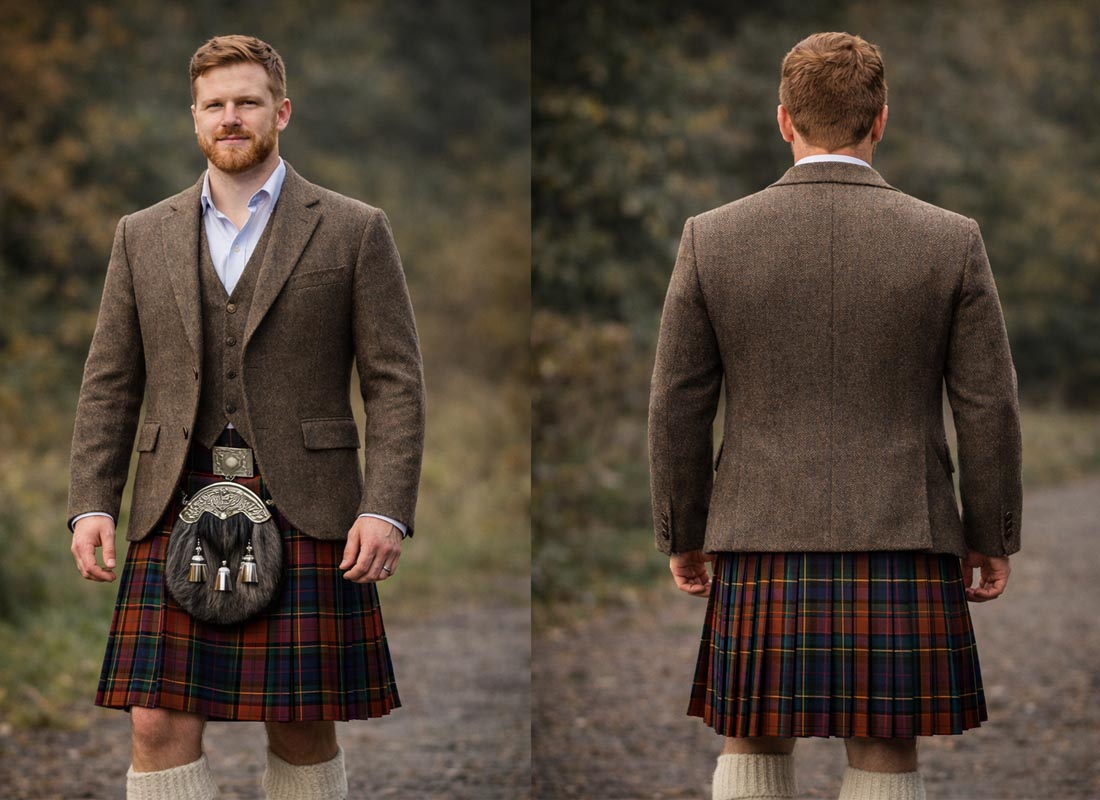
The chest fit should allow comfortable movement without pulling or gaping when buttoning the jacket. You should be able to slide a flat hand between your chest and the buttoned jacket without significant resistance. This proper fit ensures comfort during extended wear at long events while maintaining a tailored appearance. The jacket’s waist should follow your natural body line without excessive suppression, creating a flattering silhouette that complements the kilt’s volume below.
Working with experienced tailors familiar with Highland dress ensures optimal results when purchasing or altering kilt jackets. These specialists understand the unique requirements of kilt jacket fitting and can make adjustments that standard tailors might miss. Investing in professional tailoring transforms even moderately priced jackets into custom-quality garments that enhance your overall appearance significantly.
Accessorizing Your Jacket and Kilt Combination
Once you’ve selected the perfect jacket for your kilt, thoughtful accessorizing elevates the entire ensemble to new heights. The sporran represents the most distinctive accessory in Highland dress, and choosing one appropriate to your jacket’s formality level is crucial. Formal leather sporrans with metal cantle tops suit Prince Charlie and Argyll jackets perfectly, while simpler day sporrans work better with casual tweed or leather jackets. The sporran should hang at the appropriate height, typically positioned so the top sits at your belt line with the body falling naturally across the front of your kilt.
The kilt pin adds both decorative appeal and practical function, traditionally worn on the front apron approximately four inches up from the hem. Choose pins that complement your jacket’s hardware and overall aesthetic, whether ornate Celtic designs for formal wear or simpler styles for casual outfits. Your sgian dubh, the traditional knife worn in the hose, should be selected based on occasion formality as well. Formal events call for sgian dubhs with decorative handles featuring Celtic knotwork or clan crests, while casual occasions allow simpler designs.
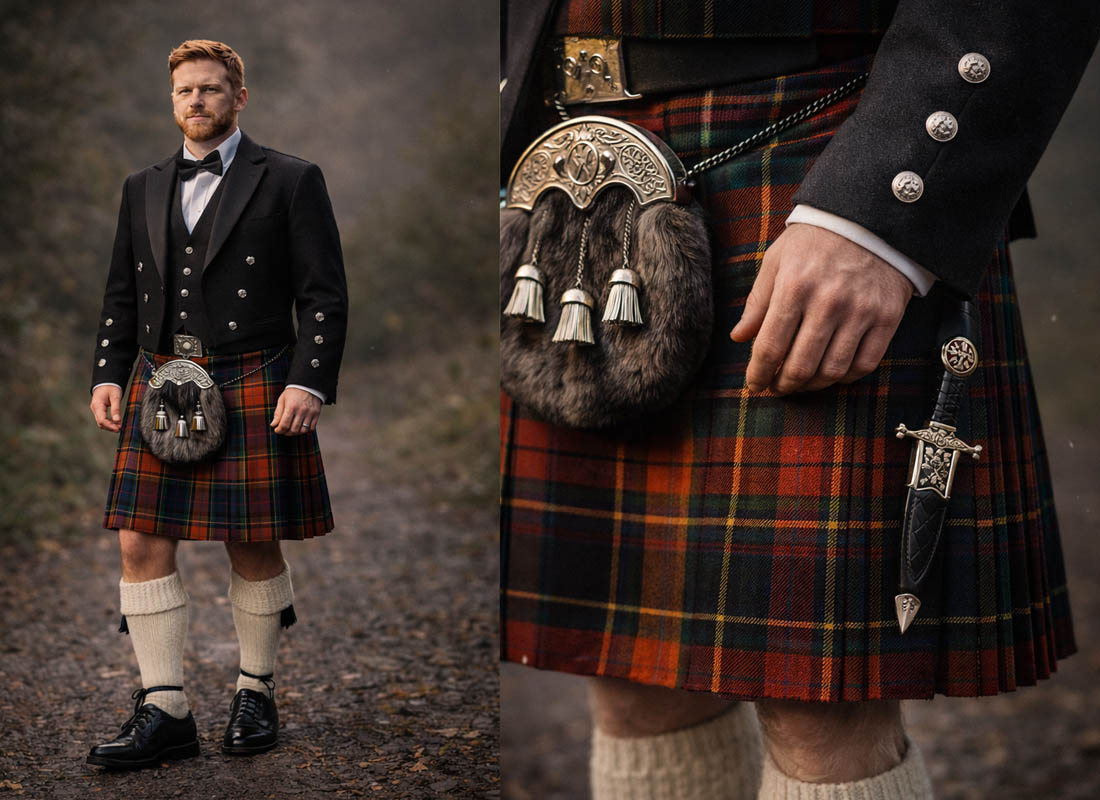
Footwear significantly impacts the overall impression created by your kilt and jacket combination. Traditional ghillie brogues remain the standard choice for formal Highland dress, featuring long laces that wrap around the calf over kilt hose. For casual wear, standard brogues, dress boots, or even clean leather sneakers can work depending on the overall outfit formality. Always ensure your footwear is well-maintained and appropriate to the occasion. Polished shoes demonstrate attention to detail that completes your Highland dress presentation.
Neckwear selection depends on your jacket style and event formality. Prince Charlie jackets typically require bow ties with wing collar shirts, creating maximum formality for evening events. Argyll jackets allow more flexibility, pairing well with standard ties, bow ties, or even open collar shirts for less formal occasions. Some modern kilt wearers experiment with contemporary neckwear like skinny ties or knit ties when wearing casual jackets, creating fashion-forward looks that maintain respect for tradition while embracing current trends.
Budget-Friendly Alternatives and Rental Options
Building a complete Highland dress wardrobe can represent a significant investment, but various budget-friendly strategies exist for those new to kilt-wearing or attending occasional events. Renting formal jackets like the Prince Charlie or Argyll makes excellent financial sense for one-time events such as weddings, where you’re unlikely to wear the outfit frequently. Many Scottish outfitters and formal wear shops offer complete Highland dress rental packages that include jacket, waistcoat, shirt, and accessories. Rental prices typically range from modest amounts for basic packages to higher rates for premium options, still representing significant savings compared to purchasing complete outfits.
For those planning to wear kilts regularly, investing in a versatile Argyll jacket or quality tweed jacket provides better long-term value than repeated rentals. These pieces maintain their quality for decades with proper care and can be worn across numerous occasions. Consider purchasing your jacket slightly larger if you’re young or anticipating body changes, as quality wool can often be taken in by skilled tailors. Building your Highland dress wardrobe gradually allows you to spread costs over time while ensuring each piece meets your quality standards.
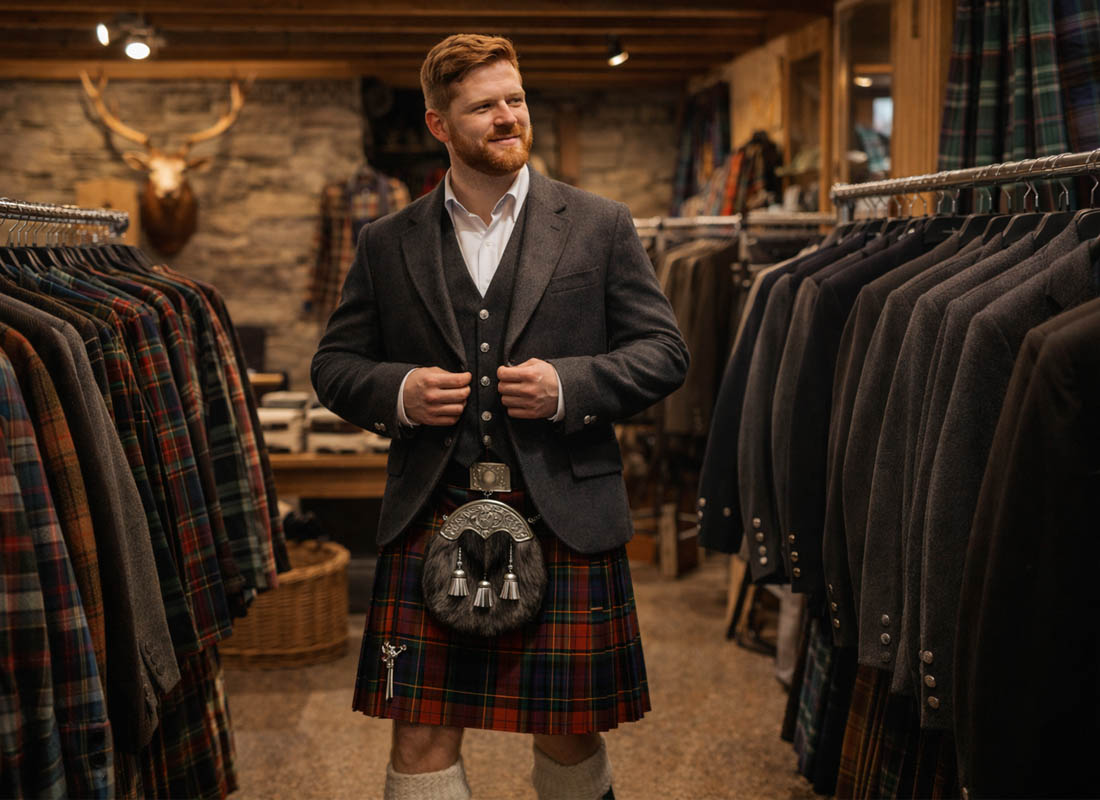
Second-hand markets offer excellent opportunities to acquire traditional kilt jackets at reduced prices. Vintage shops, online marketplaces, and specialized Highland dress resale sites frequently feature high-quality jackets from reputable makers at a fraction of retail prices. Retailers like Scotland Kilt Collection offer both new and quality pre-owned options that cater to various budgets and style preferences. When buying pre-owned jackets, inspect seams, button integrity, and overall fabric condition carefully to ensure you’re making a sound investment. Check for moth damage in wool garments and verify that any repairs needed fall within your capabilities or budget.
Another budget-conscious approach involves purchasing basic jacket styles and upgrading accessories gradually. A simple black Argyll jacket paired with quality accessories creates impressive Highland dress without requiring a complete investment upfront. You can begin with essential items and add premium sporrans, sgian dubhs, and other accessories as your budget allows. This incremental approach makes Highland dress accessible to more people while maintaining standards of quality and authenticity.
Caring for Your Kilt Jackets
Proper maintenance extends the life of your kilt jackets significantly while keeping them looking sharp for every occasion. Most traditional wool jackets require professional dry cleaning rather than home washing, particularly those with satin detailing or intricate embellishments. Establish a relationship with a cleaner experienced in formal wear and Highland dress to ensure proper treatment of your investment pieces. Professional cleaners understand how to handle delicate fabrics and ornate buttons without causing damage, preserving your jacket’s appearance for years.
Between wearings, always hang your jacket on proper wooden or padded hangers that support the shoulder structure. Avoid wire hangers that can distort the jacket’s shape over time. Allow jackets to air out after wearing before storing them in breathable garment bags that protect against dust while preventing moisture buildup. Cedar blocks or sachets help deter moths while keeping your wool garments fresh. Natural fiber garments need air circulation to prevent musty odors, so avoid plastic bags that trap moisture and promote mildew growth.
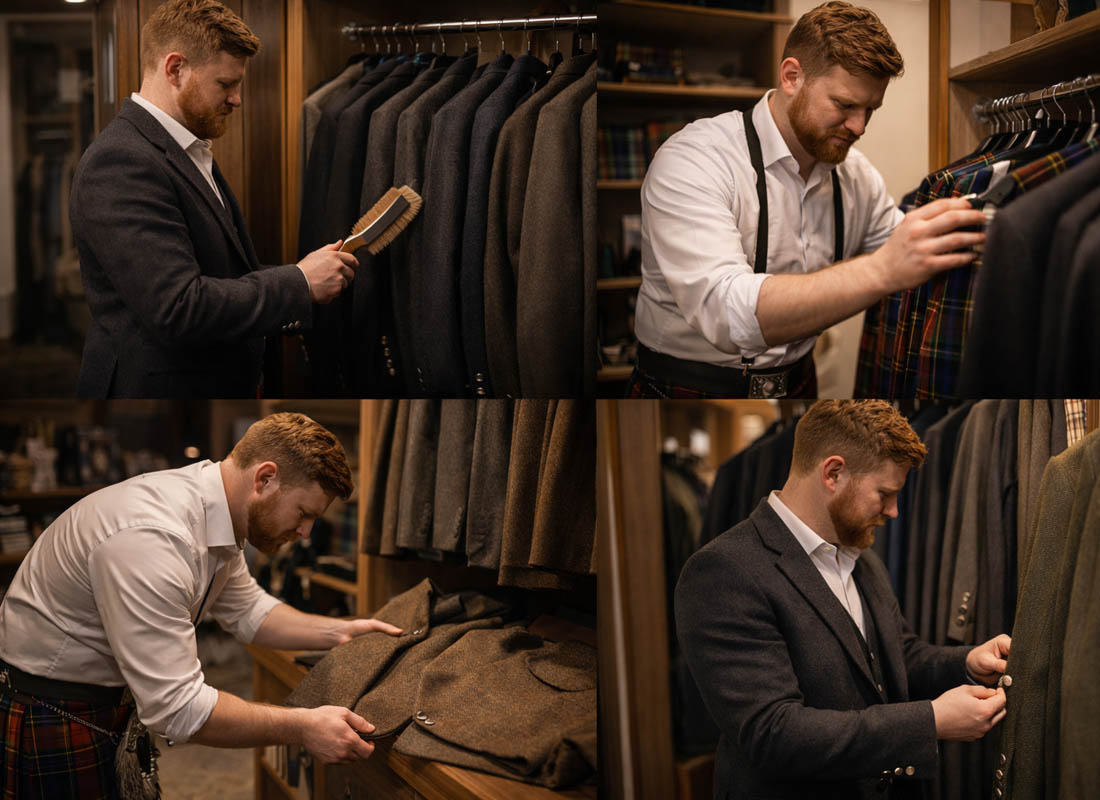
Address stains and damage promptly to prevent permanent marking or deterioration. Brush your jacket after each wearing using a soft clothing brush to remove surface dirt and lint. Pay particular attention to areas around cuffs and lapels where oils from skin contact can accumulate. Minor repairs like loose buttons or small tears should be addressed quickly by a skilled tailor before they worsen into costly problems. Keeping spare buttons from your jacket stored safely ensures matching replacements are available if needed.
Seasonal storage requires special attention for wool jackets. Clean all garments before long-term storage to remove oils and particles that attract moths. Store jackets in cool, dry locations away from direct sunlight, which can fade colors over time. Check stored garments periodically for signs of moth activity or moisture problems. Proper storage protects your investment and ensures your jackets remain ready for use whenever needed.
Modern Trends in Kilt Jacket Fashion
Contemporary kilt fashion has embraced innovation while respecting tradition, creating exciting new possibilities for jacket styles. Hybrid designs incorporating traditional Scottish elements with modern tailoring techniques appeal to younger generations exploring Highland dress. Slim-fit interpretations of classic Argyll and Prince Charlie jackets offer updated silhouettes that align with current men’s fashion trends while maintaining ceremonial appropriateness. These contemporary cuts appeal to fashion-conscious individuals who want Highland dress that reflects current style sensibilities without abandoning tradition entirely.
Sustainable and ethical fashion considerations have entered the kilt world, with increased demand for jackets made from responsibly sourced materials. Scottish wool from heritage breeds, vegetable-tanned leathers, and natural dyes align with environmental values while supporting traditional craftsmanship. Several contemporary Scottish outfitters now offer eco-conscious Highland dress options that don’t compromise on quality or authenticity. This movement toward sustainability honors both environmental stewardship and the historical Scottish connection to land and livestock.
Cross-cultural fusion styles have emerged as people from diverse backgrounds embrace kilt-wearing, incorporating elements from their own heritage into Highland dress. This creative approach has produced fascinating jacket combinations that honor multiple traditions simultaneously. Whether blending Celtic and Asian influences or incorporating African textile patterns with traditional tweed, these innovative approaches expand kilt fashion’s possibilities while maintaining respect for Scottish culture. Such fusion styles demonstrate how traditional clothing can evolve while remaining relevant to contemporary multicultural societies.

Digital communities and social media have dramatically influenced modern kilt fashion, with enthusiasts sharing styling ideas and inspiring others globally. Online forums and Instagram accounts dedicated to Highland dress showcase creative jacket combinations and encourage experimentation within respectful boundaries. This digital exchange has democratized kilt fashion knowledge, making styling advice accessible to anyone interested, regardless of geographic location or cultural background.
Conclusion
Selecting the right jacket to wear with your kilt enhances both your comfort and confidence while honoring this distinctive clothing tradition. From formal Prince Charlie jackets for elegant weddings to casual tweed blazers for everyday wear, understanding your options empowers you to create appropriate, stylish outfits for any occasion. Consider the event formality, seasonal requirements, and your personal style preferences when making selection decisions. Take time to understand how different colors, fabrics, and styles interact with your particular tartan to create harmonious, visually appealing combinations.
Remember that Highland dress represents more than just clothing—it connects wearers to centuries of Scottish heritage and cultural pride. Investing time in understanding proper jacket selection, fit, and styling demonstrates respect for this tradition while allowing personal expression. Whether you’re attending your first Highland gathering or are a seasoned kilt wearer, the perfect jacket combination awaits to help you look and feel your absolute best. The journey of building your Highland dress wardrobe should be enjoyable, allowing you to gradually acquire pieces that reflect your personal style while honoring Scottish traditions that have endured for generations.
Frequently Asked Questions About Kilt Jackets
The Prince Charlie jacket is the most formal option, featuring satin lapels and silver buttons. It’s perfect for evening weddings and black-tie events, and should be paired with a bow tie and formal sporran.
Regular suit jackets aren’t recommended because they’re cut longer and hide the sporran. Kilt jackets are specifically designed shorter in front to showcase Highland dress properly. Invest in a proper Highland jacket for the best results.
Black jackets are the most versatile and work with any tartan. Navy blue and charcoal grey are also excellent choices. For casual wear, brown tweeds complement earth-toned tartans beautifully.
Yes, lightweight linen blends work for summer, while heavy wool jackets are essential for winter. Medium-weight tweeds are perfect for spring and autumn, providing comfort across changing temperatures.
Prices vary widely based on style and quality. Casual tweed jackets start at moderate prices, while formal options cost more. Rental is economical for single events, and pre-owned options from retailers like Scotland Kilt Collection offer quality at reduced costs.