
Blog
What is The History of Kilts in The USA? From Battlefields to Modern Fashion

The history of kilts in the USA tells a captivating story of cultural survival, military valor, and innovative adaptation that spans nearly three centuries. When Scottish immigrants first stepped onto American soil carrying their traditional Highland dress, they brought more than just a garment. They carried symbols of resistance, identity, and pride that would eventually transform American culture in unexpected ways. From Revolutionary War battlefields where Highland regiments fought in full tartan to modern construction sites where workers sport utility kilts, this journey reveals how a piece of Scottish heritage became authentically American. Understanding this evolution helps us appreciate how immigrant traditions don’t just survive in new lands; they adapt, innovate, and ultimately contribute back to their places of origin.
Early Scottish Immigration: Bringing Highland Culture to Colonial America
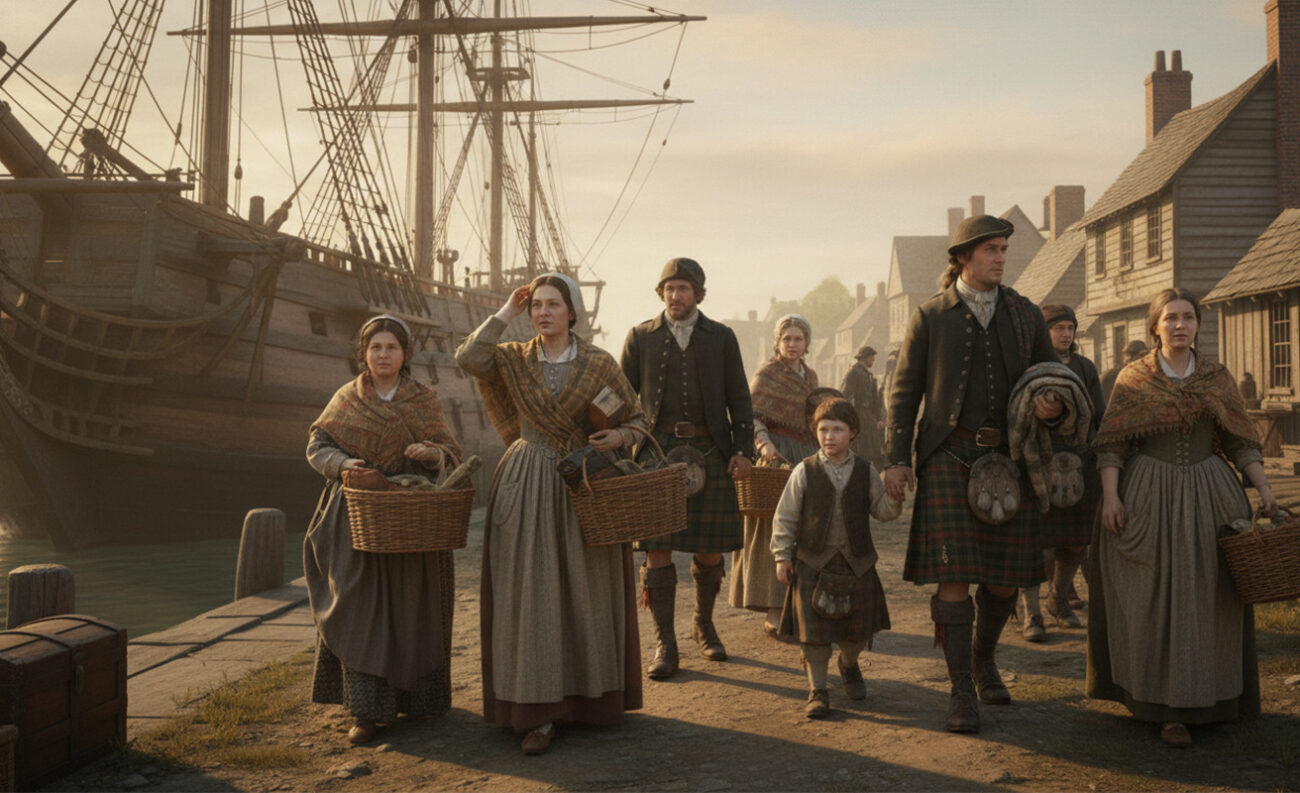
The story of kilts in America begins during the turbulent 18th century, when waves of Scottish Highlanders fled their ancestral homeland. Economic devastation from the Highland Clearances, political persecution following failed Jacobite uprisings, and the cruel Dress Act of 1746 drove thousands across the Atlantic Ocean seeking new opportunities. These weren’t casual immigrants seeking adventure. They were refugees escaping systematic cultural destruction, carrying precious fragments of their threatened identity. Among those fragments, the kilt held special significance as a powerful symbol of what the British government was trying to erase from Highland culture forever.
Between 1730 and 1775, approximately 40,000 Scots emigrated to North America, establishing concentrated communities throughout the colonies. The Cape Fear River valley in North Carolina became home to one of the largest Scottish settlements outside Scotland itself, with entire Highland communities transplanting themselves to American soil. Pennsylvania’s Cumberland Valley, New York’s Mohawk Valley, and the backcountry regions of Virginia, Georgia, and the Carolinas all welcomed significant Scottish populations. These settlers didn’t just occupy land, they recreated Highland society in miniature, maintaining their Gaelic language, Presbyterian faith, clan systems, and crucially, their traditional dress, including kilts.
What made the American experience unique was freedom from British oppression that had banned kilts in Scotland itself. Following the catastrophic Battle of Culloden in 1746, the British Parliament passed the Dress Act, specifically prohibiting Highland dress, with violators facing six months imprisonment for first offenses and seven years indentured servitude in colonial plantations for repeat violations. This meant that, ironically, Scottish immigrants in America enjoyed greater freedom to wear their traditional kilts than their relatives still living in the Highlands. Colonial America became a refuge where Highland culture could survive during its darkest period, preserved by exile communities who refused to abandon their heritage despite being thousands of miles from home.
The Revolutionary War Era: Kilts on American Battlefields
Scottish involvement in the American Revolution included:
- Highland regiments like the 71st Fraser’s Highlanders, 42nd Black Watch, and 84th Royal Highland Emigrants were fighting for Britain
- Prominent Patriot leaders of Scottish descent, including Hugh Mercer and John Paul Jones
- Complex divided loyalties based on recent Jacobite experiences versus monarchist traditions
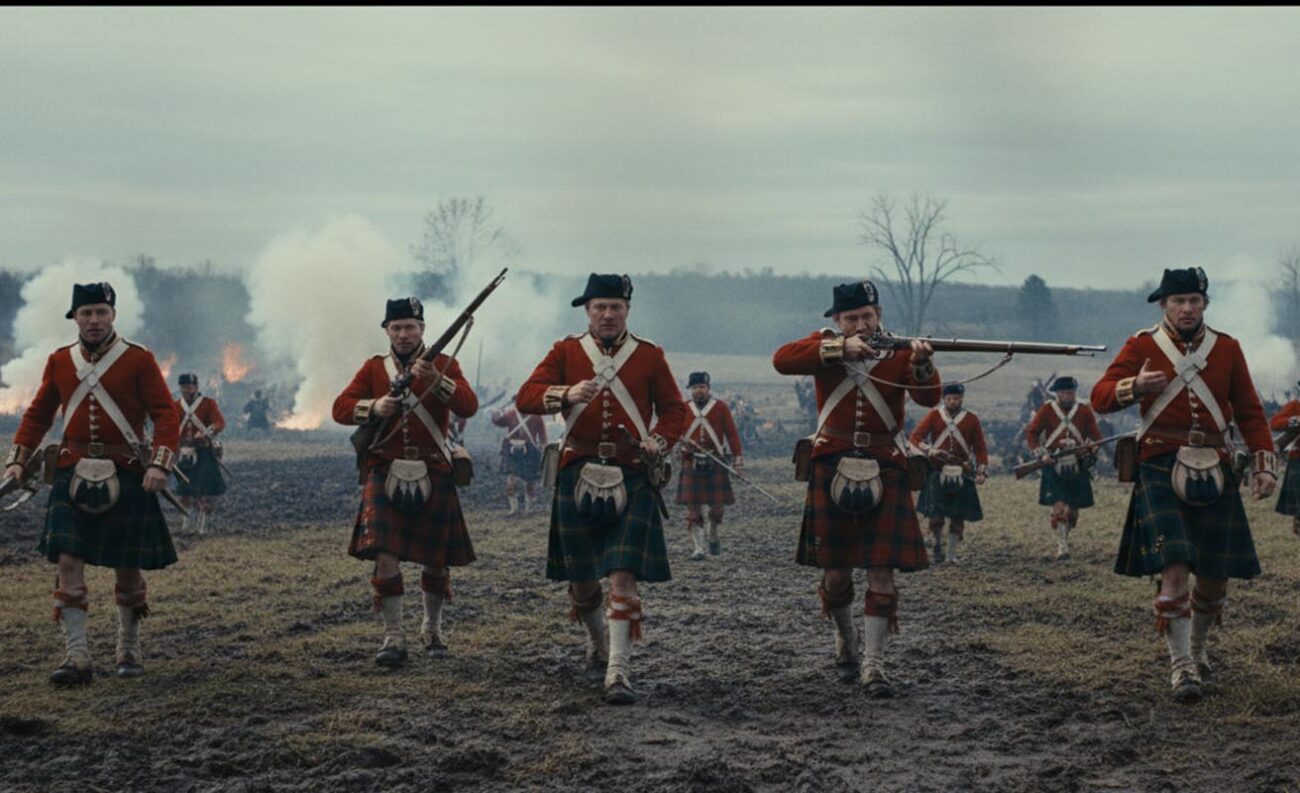
- Full Highland dress uniforms featuring kilts, sporrans, bonnets, and tartan hose
- Significant influence of Scottish Enlightenment philosophy on Revolutionary thinking
The American Revolution presented Scottish immigrants with complicated choices that split families and communities. Many recent Jacobite veterans who had fled Scotland after supporting Bonnie Prince Charlie’s rebellion ironically found themselves fighting against another rebellion in America. These men, having previously challenged British authority in Scotland, now wore British uniforms defending the Crown against American Patriots. The contradiction reveals how Jacobite loyalty was to a specific monarch, not to republican ideals of self-governance. Meanwhile, other Scots embraced the Patriot cause, seeing parallels between Highland struggles and American aspirations for independence.
Highland regiments serving in America maintained their traditional dress throughout the Revolutionary War, creating unforgettable impressions on both allies and enemies. The 71st Regiment of Foot, known as Fraser’s Highlanders, wore government tartan kilts with red jackets featuring white facings. They fought at Long Island, Brandywine, Savannah, Charleston, Camden, and Guilford Courthouse, earning fierce reputations for courage under fire. At Guilford Courthouse in 1781, one officer reported that half the Highlanders fell on that battlefield. These kilted warriors represented the last time large numbers of British troops would fight in traditional Highland dress, as standardized military uniforms gradually replaced ethnic distinctions in subsequent decades.
The 79th New York Volunteer Infantry: America’s Kilted Combat Unit
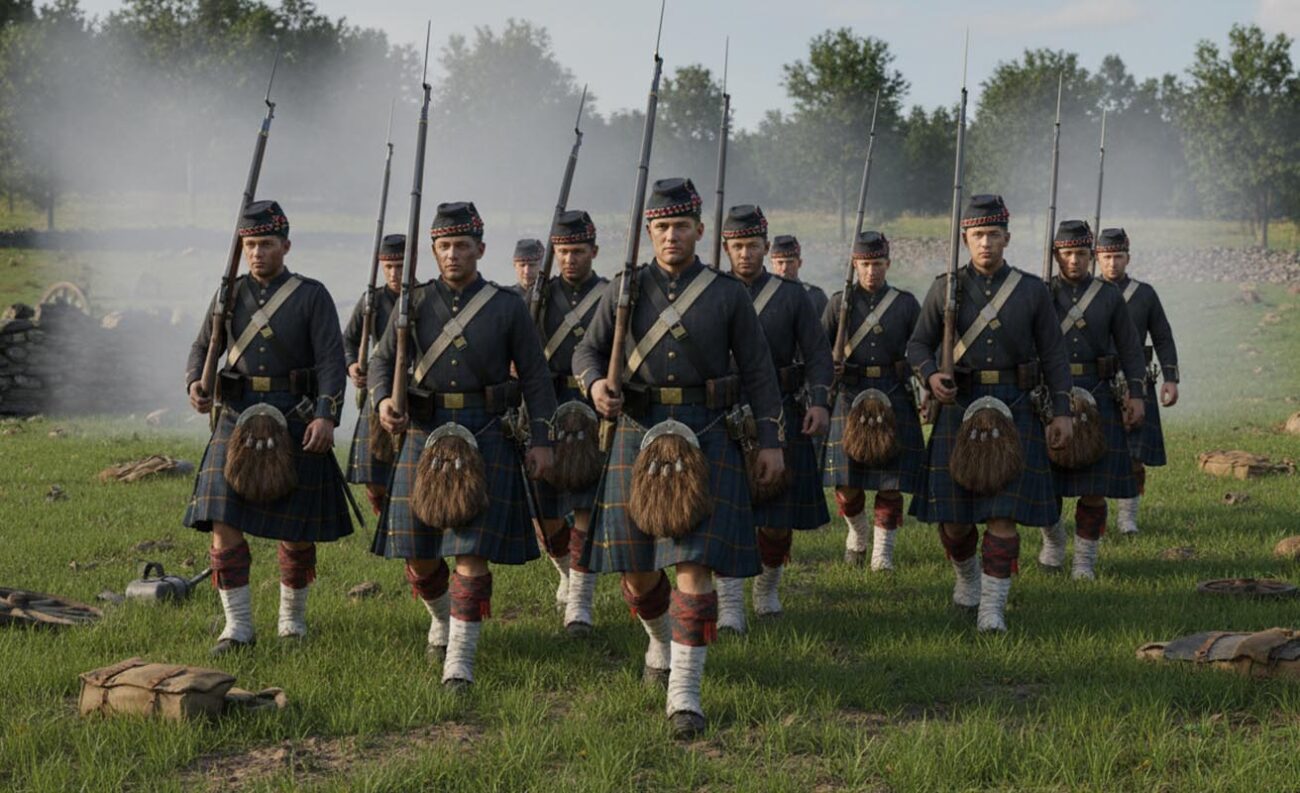
Among all chapters in American kilt history, none surpasses the remarkable story of the 79th New York Volunteer Infantry. Formed in the late 1850s by Scottish immigrants as the Highland Guard, this regiment made history as the only American military unit to regularly wear kilts in combat. Their appearance at the First Battle of Bull Run in July 1861 shocked Confederate forces, who reported facing warriors in skirts charging through Virginia fields. The 79th New York embodied the fusion of Scottish military tradition with American patriotic service, demonstrating that cultural heritage could strengthen rather than dilute national identity.
The regiment’s full Highland dress included Cameron tartan kilts, sporrans made from animal fur, white spats over their shoes, and bonnets featuring regimental insignia. Officers carried basket-hilt swords reminiscent of weapons their ancestors wielded at Culloden over a century earlier. This striking uniform served practical and psychological purposes simultaneously. The kilt allowed superior freedom of movement compared to restrictive trousers, particularly useful during rapid marches and battlefield maneuvers. Psychologically, wearing Highland dress connected these immigrant soldiers to warrior traditions stretching back centuries, instilling confidence and unit cohesion that translated into battlefield effectiveness.
As the Civil War progressed and casualties mounted, the 79th New York accepted recruits from German, Irish, and other ethnic backgrounds who had no Scottish heritage. These new soldiers found wearing kilts strange initially, but the regiment’s proud traditions and combat record convinced them to embrace Highland dress with honor. Eventually, practical considerations and standardized Union Army regulations led to replacing kilts with conventional light blue trousers, but not before the 79th New York permanently established kilts as legitimate American military attire. Their legacy continues inspiring military pipe bands and veterans’ organizations that maintain Highland traditions as part of American military heritage.
Victorian Influence and the Kilt Suit Phenomenon in American Society
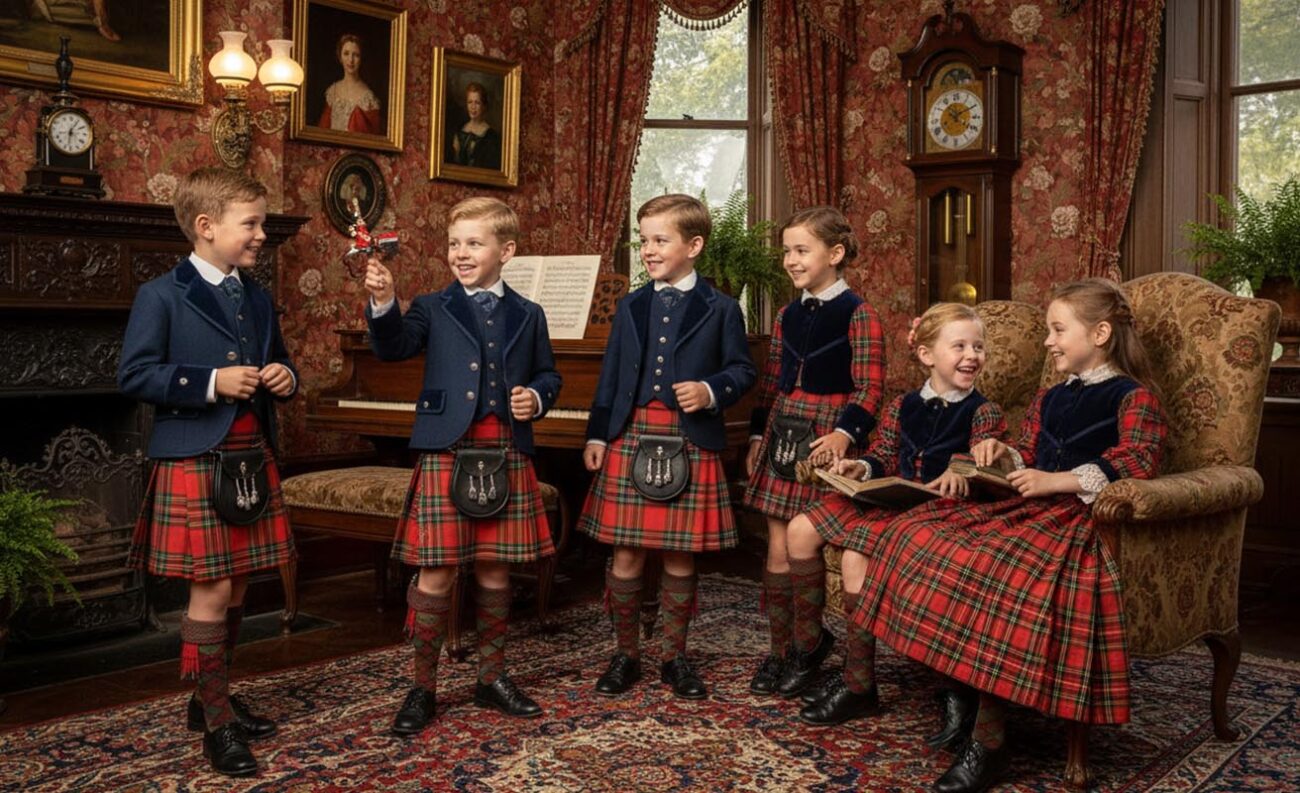
An unexpected boost to kilt popularity in 19th-century America came from Queen Victoria’s passionate embrace of Highland culture. After purchasing Balmoral Castle in the Scottish Highlands in 1852, Victoria became obsessed with all things Scottish, decorating her private apartments in tartan patterns and dressing her sons in elaborate Highland outfits for formal portraits. This royal endorsement transformed kilts from symbols of rural Highland poverty into fashionable markers of aristocratic taste. American mothers, always attentive to European fashion trends, enthusiastically adopted the kilt suit for their young sons regardless of ethnic background.
The Victorian kilt suit became enormously popular throughout America during the 1870s through the 1910s, appearing in countless family photographs from this era. These outfits typically consisted of a shortened kilt reaching mid-thigh, a matching jacket with velvet trim, an elaborate sporran, kilt hose with garter flashes, and sometimes a small dirk or sgian dubh. Importantly, these kilt suits were worn by boys of all ethnic backgrounds, making kilts familiar to millions of American families with no Scottish ancestry whatsoever. Department stores in major cities stocked ready-made kilt suits, while custom tailors created elaborate versions for wealthy clients.
This widespread adoption of kilts as children’s fashion had profound long-term effects on American perceptions of Highland dress. When these Victorian-era boys grew into adulthood, they remembered kilts fondly as part of their childhood rather than viewing them as exotic foreign garments. This familiarity helped normalize kilts in American culture, making later adult adoption less controversial than it might otherwise have been. The Victorian kilt suit craze also established commercial infrastructure for importing Scottish tartans and Highland accessories, creating supply chains that would later support adult kilt wearing when that trend emerged in the 20th century.
From Immigrant Necessity to Cultural Celebration
While Victorian children wore kilts as fashionable outfits, adult Scottish Americans increasingly wore them as deliberate expressions of ethnic pride and cultural continuity. The late 19th and early 20th centuries witnessed the formation of hundreds of Scottish American societies, clan associations, and Caledonian clubs throughout the United States. These organizations organized annual gatherings, Burns Night celebrations, and St. Andrew’s Day events where members proudly displayed their clan tartans. Genealogical research became increasingly important as Scottish Americans sought to determine which specific tartans they were entitled to wear based on family ancestry.
This period also saw the establishment of tartan registration systems and the creation of new tartan patterns specifically for American purposes. Organizations like the St. Andrew’s Society created their own distinctive tartans. States with large Scottish populations commissioned state tartans, such as the Carolina Tartan designed for North and South Carolina. These innovations demonstrated that tartan culture was alive and evolving in America rather than remaining frozen as a museum piece from the Old Country. American contributions to tartan development would eventually influence practices back in Scotland, creating reciprocal cultural exchanges that enriched both nations.
Highland Games: The Cornerstone of American Kilt Culture
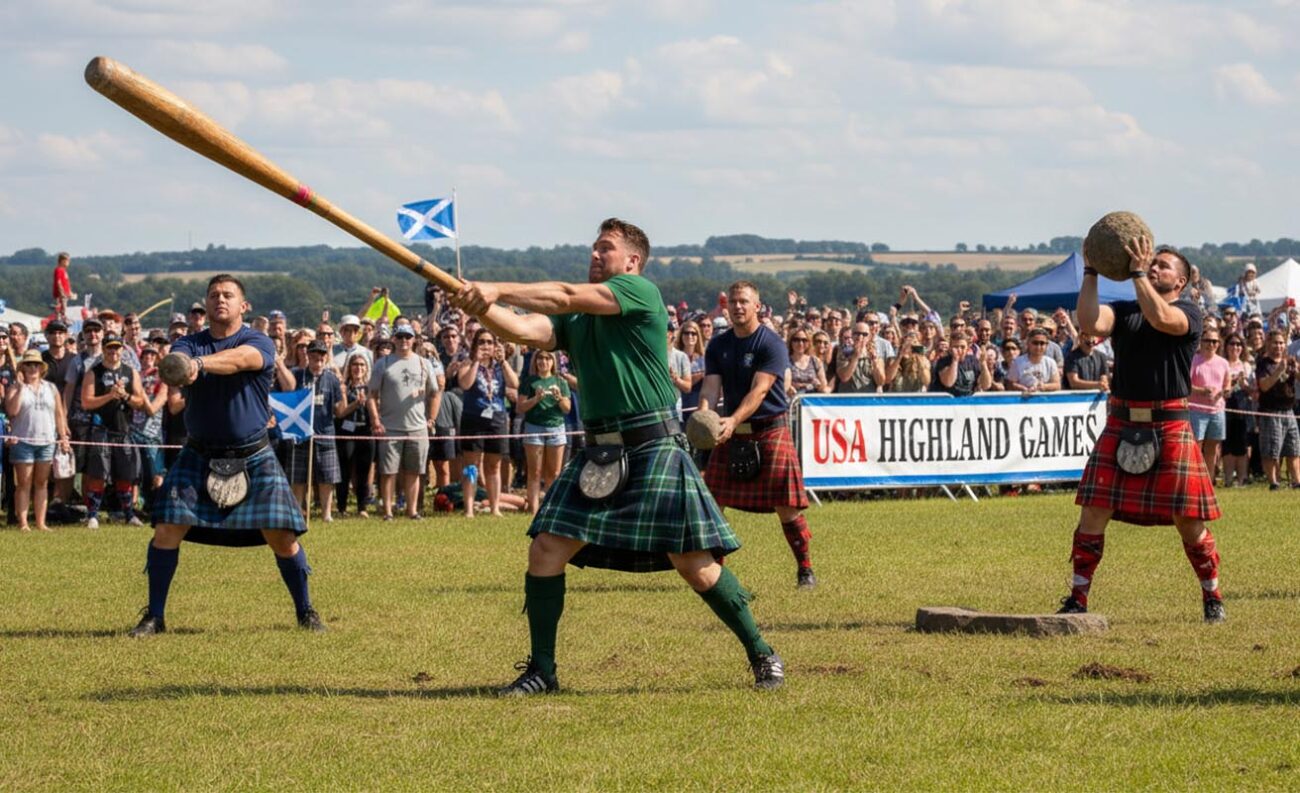
No institution has done more to preserve and promote kilt-wearing in America than Highland Games. The first recorded Highland Games in North America occurred in New York in 1836, though informal athletic competitions among Scottish communities likely occurred earlier. These festivals recreate traditional Scottish sports, including caber tossing, stone putting, hammer throwing, and weight for height events. What makes Highland Games particularly significant for kilt culture is that competitors almost universally wear kilts while performing these demanding physical feats, publicly demonstrating the garment’s practical advantages for athletic movement in ways that formal gatherings never could.
By the mid-20th century, Highland Games had spread across the entire United States, with major annual events in Grandfather Mountain, North Carolina, Pleasanton, California, the New Hampshire Highland Games, and dozens of other locations. These festivals attract tens of thousands of participants and spectators annually, creating massive public visibility for kilt-wearing. Beyond heavy athletics, Highland Games feature pipe band competitions with hundreds of kilted musicians, Highland dancing demonstrations, clan society gatherings representing hundreds of Scottish families, sheepdog trials, and extensive vendor areas selling kilts and accessories. For many Americans, attending their first Highland Games represents a transformative experience where they discover connections to Scottish heritage and purchase their first kilt.
Essential elements that make Highland Games vital to American kilt culture:
- Public normalization of men wearing kilts in athletic, outdoor settings
- Creation of sustained demand for American kiltmakers and Highland outfitters
- Intergenerational transmission of kilt traditions through family attendance
- Cross-cultural introduction of non-Scots to Highland culture and dress
- Innovation in kilt design driven by practical athletic and climate considerations
- Community building among scattered Scottish Americans across vast geographic distances
Highland Games directly influenced American innovations in kilt design and construction. Traditional Scottish kilts use eight yards of heavy wool fabric, creating substantial weight and warmth appropriate for cool Highland weather. American Games held in hot, humid summer climates across the South and Midwest made these traditional kilts uncomfortable or even dangerous due to heat exhaustion. This practical problem drove innovation, including lighter-weight tartans, breathable synthetic blends, and eventually the development of utility kilts specifically designed for active wear in warm weather. What began as practical adaptations eventually transformed into distinctive American contributions to global kilt culture.
The Utility Kilt Revolution: America’s Greatest Contribution to Kilt History
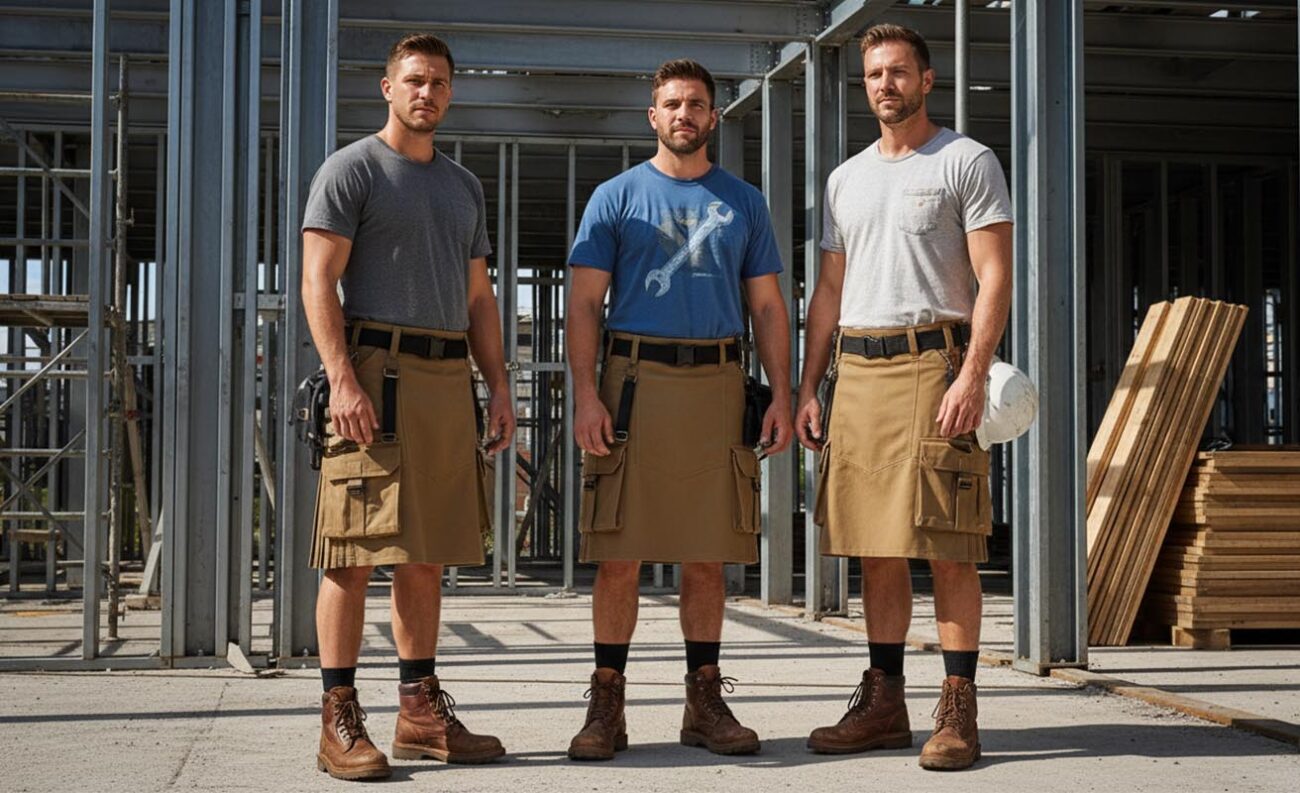
The late 20th and early 21st centuries witnessed perhaps the most significant American innovation in kilt history with the development of the modern utility kilt. Companies like Utilikilts, founded in Seattle in 2000, and USA Kilts, established in Pennsylvania in 2003, pioneered revolutionary approaches to kilt design that prioritized functionality over tradition. These entrepreneurs recognized that many Americans loved wearing kilts but found traditional wool tartans impractical for everyday use, especially in warmer climates or physically demanding work environments. Their solution was to reimagine the kilt as a modern garment while maintaining its essential character.
Utility kilts typically feature durable cotton or canvas construction, multiple cargo pockets eliminating the need for a sporran, adjustable waist straps with quick-release buckles, and solid colors or camouflage patterns rather than traditional tartans. Some designs incorporate tool loops for construction workers, reinforced knees for tradesmen who kneel frequently, and moisture-wicking fabrics for athletic activities. This design philosophy appealed to workers in construction, technology, creative industries, and outdoor recreation who wanted the freedom and comfort of a kilt without the formality and fragility of Highland dress. The utility kilt movement transformed kilts from ceremonial garments worn a few times yearly into everyday clothing suitable for work, recreation, and casual social settings.
Companies specializing in utility kilts grew from hobby businesses run in home workshops into thriving enterprises with retail showrooms, international shipping, and diverse product lines. USA Kilts operates a large retail store in Spring City, Pennsylvania, employing full-time kiltmakers and offering hundreds of customization options. Their success demonstrates substantial American demand for kilts beyond Scottish heritage celebrations. Modern American kiltmakers offer an incredible variety, including leather kilts for motorcycle riders, denim kilts for casual wear, camouflage patterns for hunters, and custom designs incorporating everything from firefighter themes to sports team colors. This innovation revolutionized how Americans think about kilts, expanding them from ethnic dress into mainstream alternative fashion.
Cultural Impact: American Innovation Influencing Scottish Tradition
The utility kilt phenomenon created an interesting dynamic where Americans were now influencing Scottish kilt traditions rather than simply importing them. Traditional Scottish kiltmakers initially viewed utility kilts with skepticism or outright disdain, dismissing them as corruptions of authentic Highland dress. However, growing international demand eventually led many Scottish companies to offer their own modern variations, incorporating cargo pockets and contemporary fabrics while maintaining traditional pleating and construction methods. American innovation demonstrated that kilts could evolve without losing their essential character, encouraging experimentation and personalization that benefits wearers worldwide.
This cultural exchange illustrates how immigrant communities don’t just preserve traditions, they actively develop them in response to new environments and challenges. The utility kilt exists because Americans took Scottish traditions seriously enough to adapt them thoughtfully rather than abandoning them as impractical. This respectful innovation honored the kilt’s heritage while making it relevant to 21st century life. Today, utility kilts are worn globally, with Scottish, Irish, Canadian, Australian, and other wearers embracing designs pioneered in America. This represents a remarkable reversal where the cultural colony influences the motherland, enriching both in the process.
Contemporary American Kilt Culture: Tradition and Innovation in Balance
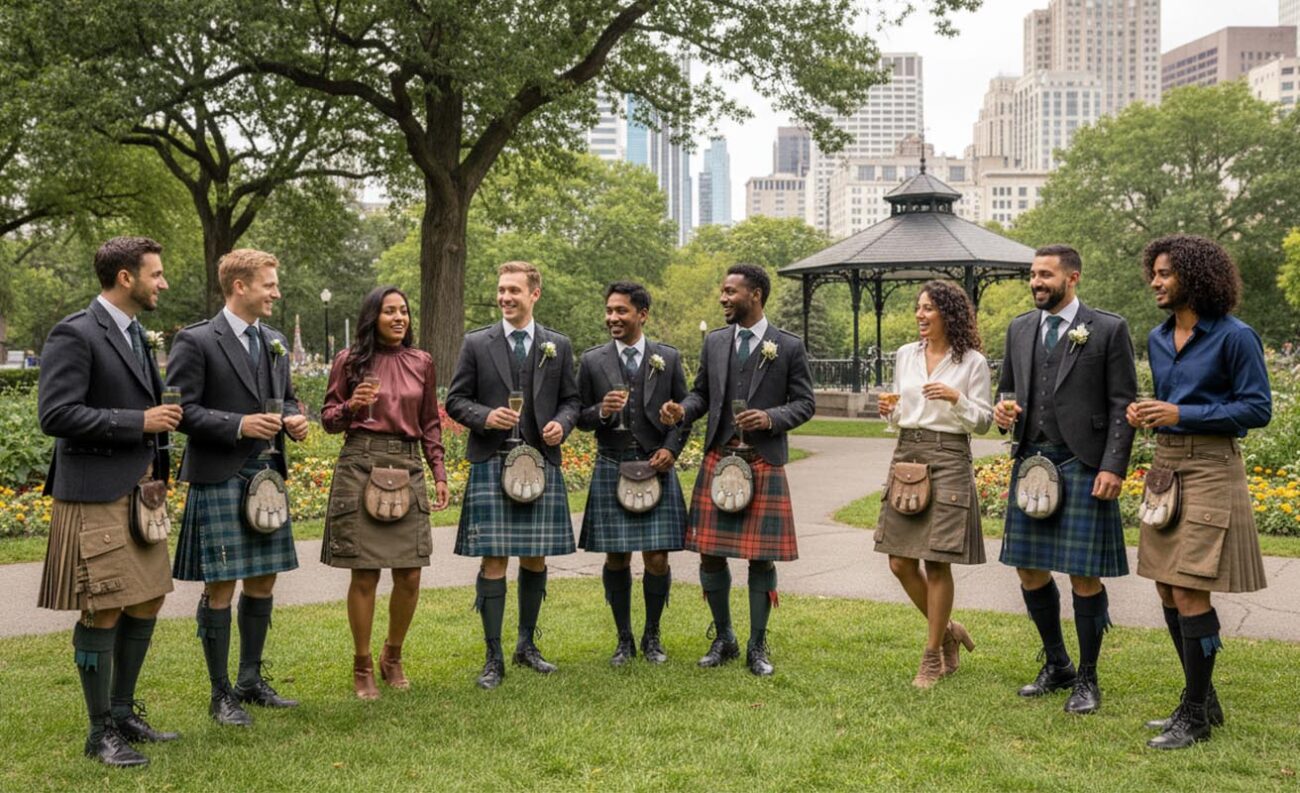
Twenty-first century American kilt culture represents a fascinating blend of preservation and innovation operating simultaneously. Traditional Highland dress remains popular at weddings, formal events, and Scottish cultural celebrations, with full formal outfits including Prince Charlie jackets, elaborate sporrans, sgian dubhs, and formal kilt hose representing the highest expression of Highland tradition. Simultaneously, utility kilts have become acceptable casual wear in many American cities, particularly on the West Coast and in areas with strong Scottish heritage populations. This dual track allows Americans to choose how they engage with kilt culture based on personal preferences and circumstances rather than being restricted to a single authentic approach.
The internet and social media revolutionized American kilt culture by connecting enthusiasts across geographic distances that previously isolated individuals from supportive communities. Online forums like Xmarks the Scot, Reddit’s kilt communities, and Facebook groups share styling advice, recommend kiltmakers, organize meetups, and provide crucial support for men nervous about wearing kilts publicly for the first time. This digital connectivity accelerated kilt acceptance and normalized seeing kilts in contexts ranging from Renaissance faires to music festivals to professional workplaces. What once seemed exotic or transgressive now appears increasingly ordinary in American streets, particularly in progressive urban areas.
Modern American kiltmakers offer unprecedented customization options that would have been unimaginable in previous eras. Customers can specify measurements down to fractions of inches using detailed fitting guides, choose from hundreds of tartan patterns or solid colors, select hardware finishes in chrome, brass, or antique styles, add personalized embroidery with names or clan mottos, and request special features like hidden pockets for valuables or reinforced construction for specific activities. Established brands like Scotland Kilt Collection have become trusted names in the American market, offering both traditional Highland dress and contemporary designs that bridge Scottish authenticity with American practicality. This level of personalization reflects American consumer expectations and contrasts sharply with the traditional Scottish approach, where standardized clan tartans and conventional construction methods predominated for generations.
American Tartans: Creating New Traditions in the New World
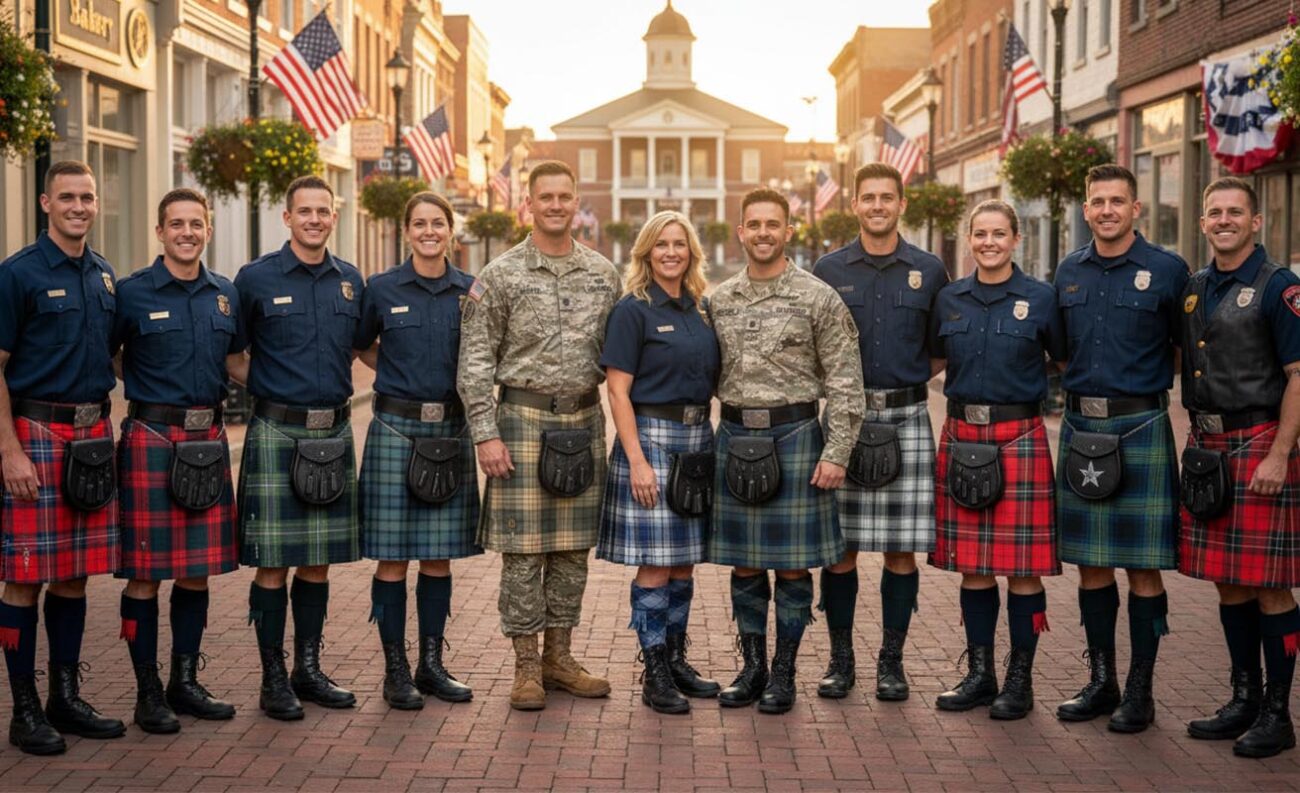
A particularly interesting development in American kilt history involves the creation of distinctly American tartan patterns that celebrate non-Scottish identities and affiliations. While Scottish tartans traditionally represented clans and families, American designers created tartans celebrating states, cities, military branches, occupations, and causes. The Firefighter tartan honors emergency responders with red, gold, and black representing flames, courage, and smoke. Military branch tartans represent the Army, Navy, Air Force, Marines, and Coast Guard. State tartans like Arizona, Texas, Pennsylvania, and dozens of others celebrate regional identity and pride.
These American tartans allow people without Scottish ancestry to participate authentically in tartan culture without appropriating someone else’s clan heritage. A Texas firefighter can wear the Firefighter tartan or Texas state tartan with pride, connecting to community and identity rather than fabricating fictional Scottish ancestry. This democratization of tartan culture initially generated controversy among Scottish traditionalists who viewed tartans as inviolate representations of Highland clan history. However, historians note that the modern clan tartan system itself only developed in the 19th century during the Victorian Highland revival, making it less ancient than many assume. American tartan creation actually continues the tradition of adapting tartans to represent communities and shared identities, just in different geographic and cultural contexts.
The Economics of American Kilt Culture
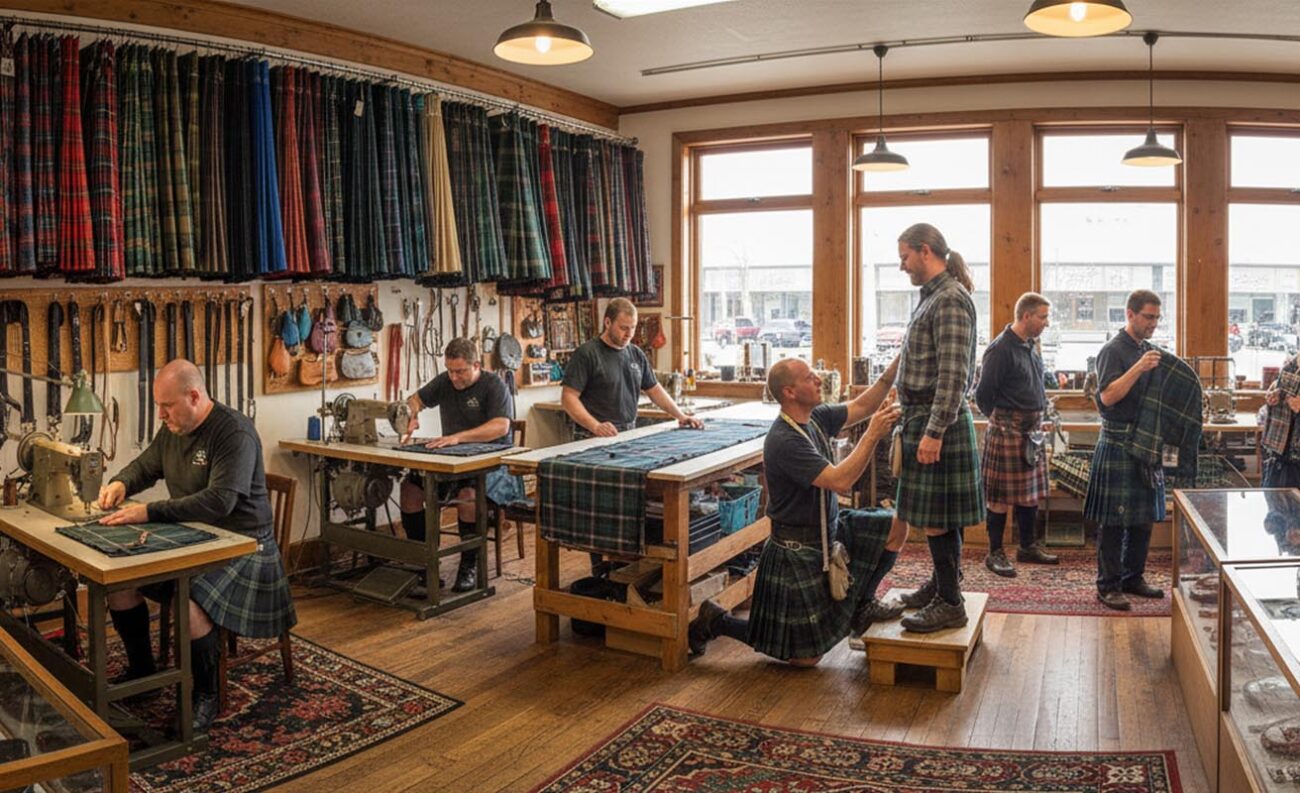
The American kilt industry encompasses diverse businesses, including:
- Custom kiltmakers creating made-to-measure garments with traditional construction methods
- Mass production companies offering affordable, ready-to-wear options in standard sizes
- Specialty retailers focusing on specific styles like utility kilts, leather kilts, or formal Highland dress
- Accessory manufacturers producing sporrans, kilt belts, pins, and sgian dubhs
- Tartan weavers are preserving traditional fabric production while developing new patterns
- Online marketplaces connecting buyers with international sellers and vintage items
The economic impact of kilt culture in America extends far beyond manufacturing. Highland Games generate millions in annual tourism revenue for host communities, with visitors traveling hundreds of miles to attend major festivals. Kilt rental businesses serve the wedding industry, outfitting grooms and groomsmen who want Highland elegance without purchasing expensive formal wear. Scottish cultural centers and museums preserve heritage while attracting visitors and educational groups. This economic ecosystem ensures that kilt traditions will continue thriving in America for generations to come, supported by both cultural passion and commercial sustainability.
Kilts Beyond Heritage: Mainstream American Fashion and Identity
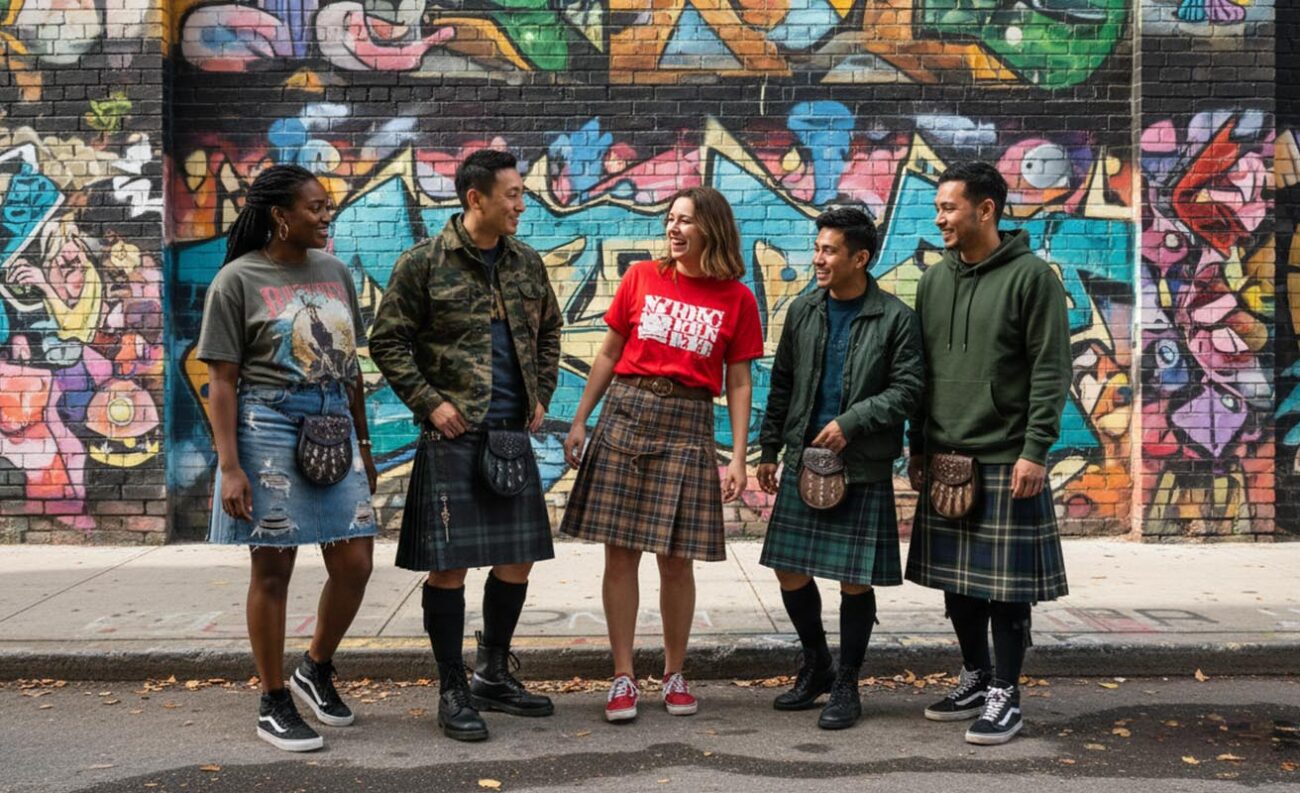
Perhaps the most revolutionary aspect of modern American kilt culture is its expansion beyond Scottish heritage contexts into mainstream alternative fashion. Fashion-forward Americans increasingly wear kilts simply because they like them, without any claim to Scottish ancestry or cultural connection. Alternative fashion movements, steampunk communities, Renaissance faire enthusiasts, and LGBTQ+ culture have embraced kilts as expressions of individuality and rejection of restrictive gender norms around clothing. This democratization of kilt-wearing represents a dramatic departure from their origins as markers of specific clan identity in the Scottish Highlands.
Rock musicians, artists, and creative professionals popularized kilts as rebellious fashion statements that challenge conventional masculinity. Brands like Damn Near Kilt ‘Em market specifically to these demographics, emphasizing freedom, comfort, and nonconformity rather than heritage or tradition. Their slogan, “Your rebellion, your rules,” appeals to customers who never would have considered traditional Highland dress but find utility kilts appealing as modern garments. This approach succeeded in attracting diverse customers who appreciate kilts for practical and aesthetic reasons rather than genealogical connections.
The normalization of kilts in American fashion represents both continuation and transformation of Highland traditions. On one hand, wearing kilts without Scottish ancestry might seem like cultural appropriation or dilution of authentic heritage. On the other hand, this mainstream adoption ensures kilts remain visible, viable, and economically sustainable rather than becoming museum pieces or ethnic costumes. The fact that Americans of all backgrounds feel comfortable wearing kilts demonstrates their successful integration into broader American culture while maintaining recognition of their Scottish origins.
The Digital Age: Social Media and Online Communities Transform Kilt Culture

The rise of social media and online communities fundamentally changed how Americans engage with kilt culture, breaking down geographic isolation that previously limited participation. YouTube videos teaching proper kilt-wearing techniques, measuring guides, and historical information reach millions of viewers worldwide. Instagram accounts showcase diverse kilt styles from formal Highland dress to punk rock interpretations, demonstrating the breadth of contemporary kilt culture. TikTok videos featuring men wearing kilts at Highland Games, weddings, or casual outings normalize kilt wearing for younger generations who might never have encountered this tradition otherwise.
Online retailers revolutionized kilt accessibility by allowing customers anywhere in America to purchase quality kilts without traveling to specialized shops. Detailed measurement guides, customer reviews, and return policies reduced the anxiety of ordering expensive custom garments sight unseen. Virtual try-on tools using smartphone cameras help customers visualize how different tartans and styles will look before purchasing. These technological advances democratized kilt access, making it possible for someone in rural Montana or urban Florida to obtain the same quality Highland dress previously available only in areas with large Scottish populations.
Looking Forward: The Future of Kilts in American Culture

The future of kilts in America appears remarkably bright based on current trends and demographic shifts. Younger generations show increasing interest in ancestral heritage, driving attendance at Highland Games and genealogical research into family histories. DNA testing services like Ancestry and 23andMe reveal Scottish heritage to millions of Americans who never knew of these connections, creating new audiences for Highland culture and kilt-wearing. Simultaneously, the normalization of diverse fashion choices means wearing kilts attracts less attention or ridicule than in previous decades, when gender-nonconforming clothing faced greater social stigma.
Technology enables innovations impossible in previous eras that could revolutionize kilt-wearing. Advanced synthetic fabrics might create performance kilts superior to traditional materials for specific applications like hiking, biking, or construction work. 3D body scanning could revolutionize custom kilt fitting, ensuring perfect measurements without in-person appointments. Online communities will continue connecting enthusiasts and spreading knowledge across borders and generations. Some predict that kilts may eventually achieve mainstream acceptance as ordinary clothing options rather than special occasion wear or cultural statements, though this transformation will likely take decades of continued normalization.
The relationship between American and Scottish kilt cultures continues evolving in mutually beneficial ways. While Americans once simply imported Scottish traditions wholesale, they now actively influence global kilt development through their innovations and market demands. This reciprocal relationship creates dynamic exchanges that keep kilt traditions vibrant and relevant rather than frozen in historical amber. Young Scottish designers now look to American utility kilt companies for inspiration when creating contemporary Highland wear, while American kiltmakers study traditional Scottish construction methods to improve their craftsmanship.
Conclusion: The Enduring Legacy of Kilts in America
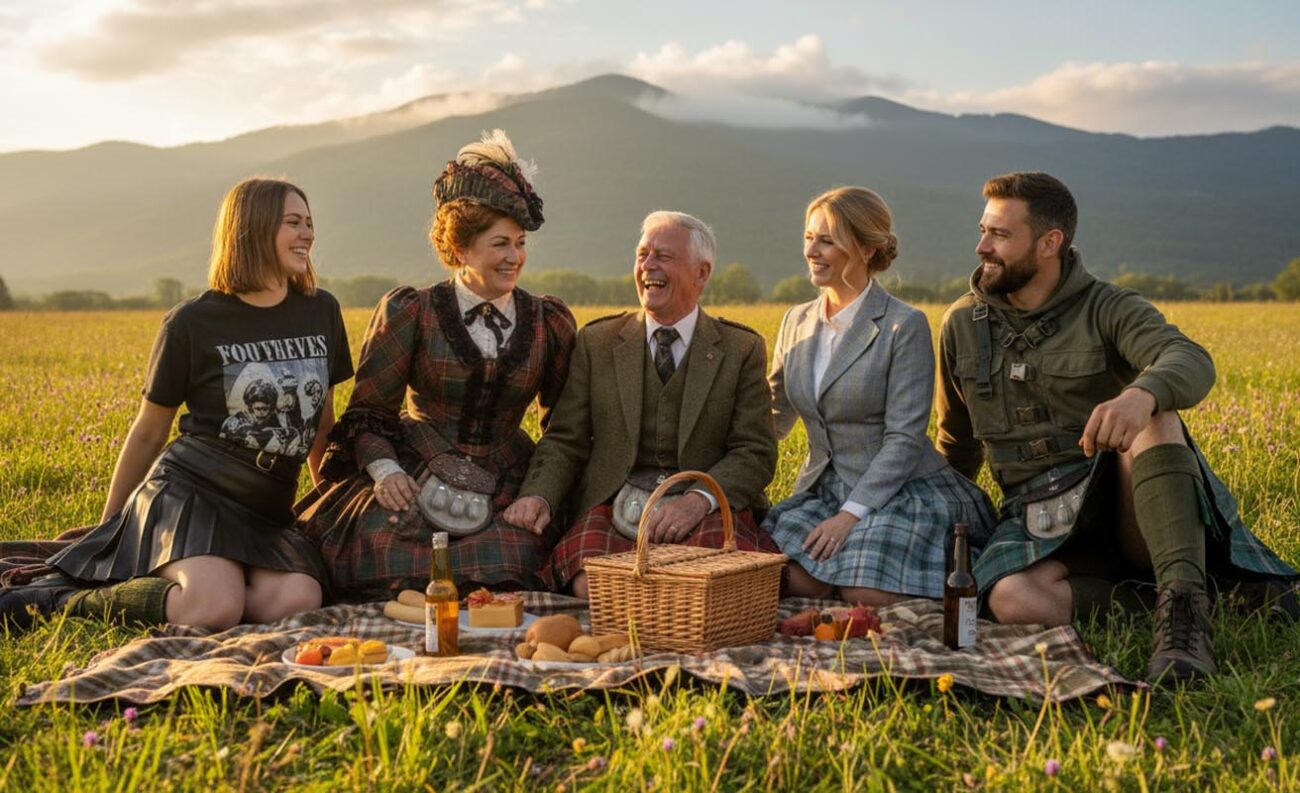
The history of kilts in the USA represents far more than the simple transplantation of Scottish clothing to American soil. It embodies profound themes of cultural preservation, adaptive innovation, ethnic pride, and creative expression that define the American immigrant experience. From persecuted Highland refugees clutching their precious tartans in 18th century ships, to Union soldiers marching in kilts at Bull Run, to Seattle entrepreneurs creating utility kilts in modern workshops, the American kilt story encompasses centuries of evolution and transformation guided by necessity, pride, and imagination.
Today, kilts occupy a unique position in American culture that would have been unimaginable to those first Scottish immigrants. They simultaneously represent ancient Highland warrior traditions and cutting-edge alternative fashion. They connect Americans to ancestral homelands thousands of miles distant while serving as canvases for contemporary self-expression. They preserve cultural heritage while constantly evolving to meet modern needs and circumstances. This multifaceted character ensures that kilts will remain significant in American life for generations to come, adapting to new contexts while maintaining their essential connection to the rugged independence and proud traditions that first brought them across the Atlantic Ocean centuries ago.
Whether worn at Highland Games, weddings, music festivals, construction sites, or technology offices, kilts in America tell stories of identity, belonging, freedom, and cultural continuity. They remind us that cultural traditions need not remain frozen in time but can grow, change, and find new meanings while honoring their origins. The journey of kilts through American history continues today, written by everyone who chooses to wrap themselves in pleated fabric and walk proudly through their world, connected simultaneously to ancient traditions and contemporary possibilities. From Scottish immigrants fleeing persecution to modern Americans embracing heritage or simply seeking comfortable alternatives to trousers, kilts demonstrate how immigrant cultures don’t just survive in America, they thrive, innovate, and ultimately enrich both their adopted homeland and their ancestral origins in unexpected and beautiful ways.
Frequently Asked Questions
Scottish immigrants began arriving in America during the early 1700s, bringing their traditional Highland dress, including kilts. The largest wave came between 1730 and 1775, with approximately 40,000 Scots settling in colonies like North Carolina, Pennsylvania, and Virginia, where they freely wore kilts that were actually banned in Scotland itself.
The 79th New York Volunteer Infantry, formed by Scottish immigrants in the 1850s, wore full Highland dress, including Cameron tartan kilts, as their official combat uniform. They fought in major Civil War battles like Bull Run and Antietam, proving kilts were practical military attire while honoring their Scottish heritage and maintaining unit pride.
Utility kilts are an American innovation featuring durable materials like cotton or canvas, multiple cargo pockets, adjustable straps, and solid colors instead of tartan. Created by companies like Utilikilts and USA Kilts in the early 2000s, they’re designed for everyday work and casual wear rather than formal occasions.
Yes, absolutely! Modern American kilt culture welcomes everyone, with specially designed American tartans representing states, occupations, and causes rather than Scottish clans. Brands like Scotland Kilt Collection offer diverse options allowing anyone to wear kilts respectfully, whether celebrating heritage or simply enjoying the comfort and style.