
Blog
Did the Irish Wear Kilts? Unveiling the Truth About Celtic Clothing History

The question “did the Irish wear kilts?” often sparks curiosity among those interested in Celtic culture and heritage. While kilts are commonly associated with Scotland, many people wonder whether the Irish also adopted this iconic garment as part of their traditional dress. The answer is more nuanced than a simple yes or no, and understanding the historical context reveals fascinating insights into Irish clothing traditions and cultural identity. This exploration takes us through centuries of Irish history, from ancient Celtic tribes to modern cultural revivals.
The Historical Reality of Irish Traditional Dress
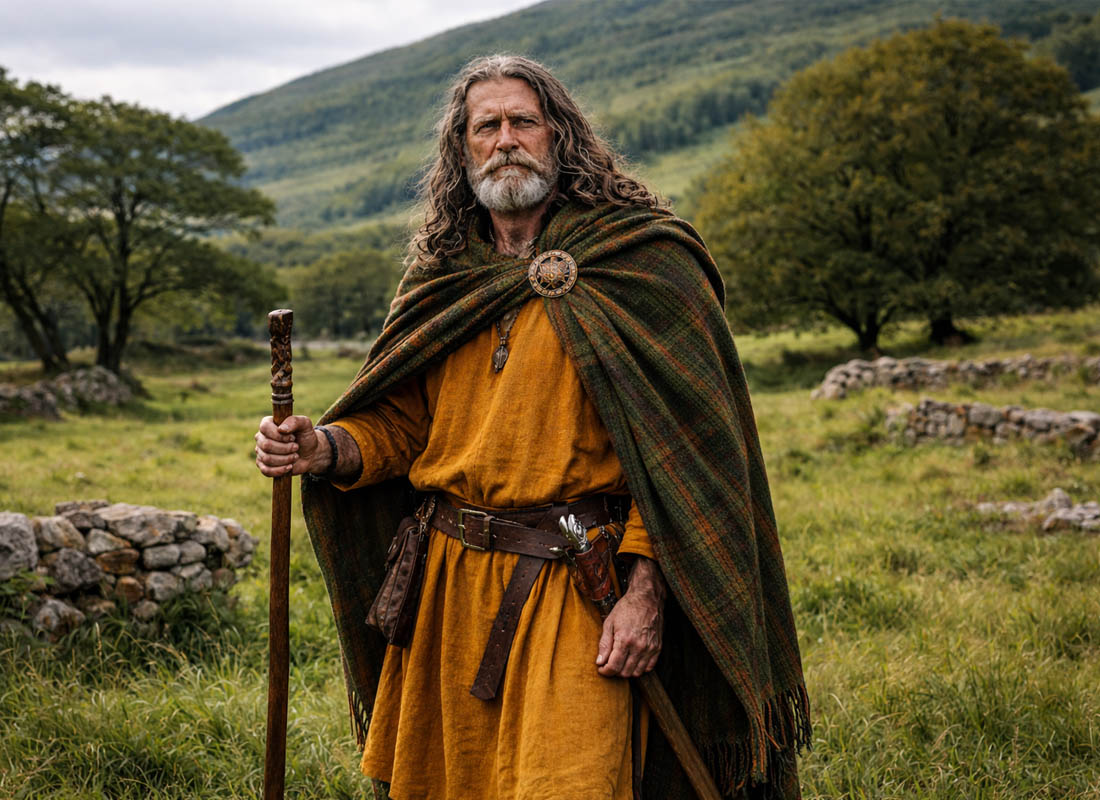
Historically, the Irish did not wear kilts in the same way or timeframe as the Scottish. Traditional Irish clothing differed significantly from Scottish Highland dress, though both cultures share Celtic roots. The ancient Irish wore tunics called léines, which were long shirt-like garments made from linen or wool. These tunics were typically knee-length or longer and were worn by both men and women throughout medieval Ireland. The Irish also wore woolen cloaks called brats, which were fastened with decorative brooches and provided protection against Ireland’s damp climate.
The confusion about Irish kilts often stems from the modern revival of Celtic traditions and the commercialization of Irish heritage. During the 19th and 20th centuries, there was a growing interest in Celtic identity, which led some Irish groups to adopt kilts as a symbol of their heritage. However, this adoption was largely a modern phenomenon rather than a continuation of ancient Irish traditions. The Irish kilt, as we know it today, is essentially a recent invention inspired by Scottish Highland dress but adapted with distinctly Irish elements. Understanding this distinction helps clarify the authentic history of Irish clothing while acknowledging contemporary cultural practices.
Understanding Traditional Irish Clothing Throughout History
Ancient Irish society had its own distinct clothing customs that reflected the social, economic, and environmental conditions of the island. The primary garment worn by Irish men was the léine, which evolved over centuries. In early medieval times, these tunics were saffron-colored and became known as the “saffron shirt” among the Irish nobility. The color was achieved through dyeing with plant materials, and this distinctive yellow hue became associated with Irish identity. The saffron léine was particularly prominent during the Gaelic period and was worn by warriors and chieftains as a mark of status.
Irish trousers, called triubhas or trews, were also common in certain periods and regions. These were tight-fitting leg coverings similar to modern leggings, often worn by warriors and travelers. The brat, or Irish cloak, was perhaps the most iconic piece of traditional Irish clothing. These large woolen wraps could be arranged in various ways for warmth and were often woven in colorful patterns. The quality and decoration of one’s brat indicated social status, with nobility wearing finely woven cloaks adorned with elaborate brooches. Archaeological evidence from ancient Irish sites confirms that these garments were standard dress across different regions of Ireland.
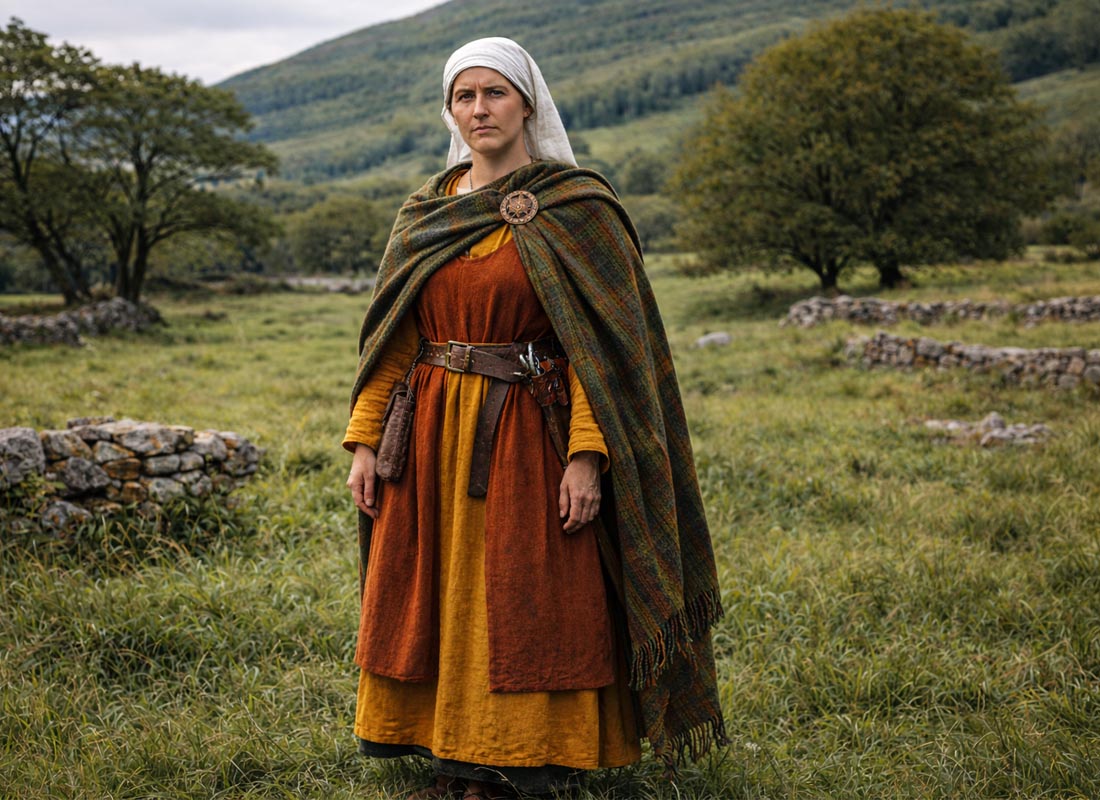
Women’s traditional Irish clothing also featured the léine as a base layer, but theirs extended to ankle length. Over this, women wore additional garments, including an overdress or gown that could be belted at the waist. Married women typically covered their hair with a piece of cloth or a more elaborate headdress, depending on their social standing. The Irish emphasis on wool and linen production meant that most clothing was locally made, with patterns and colors varying by region and the availability of natural dyes.
The Scottish Kilt Connection and Celtic Heritage
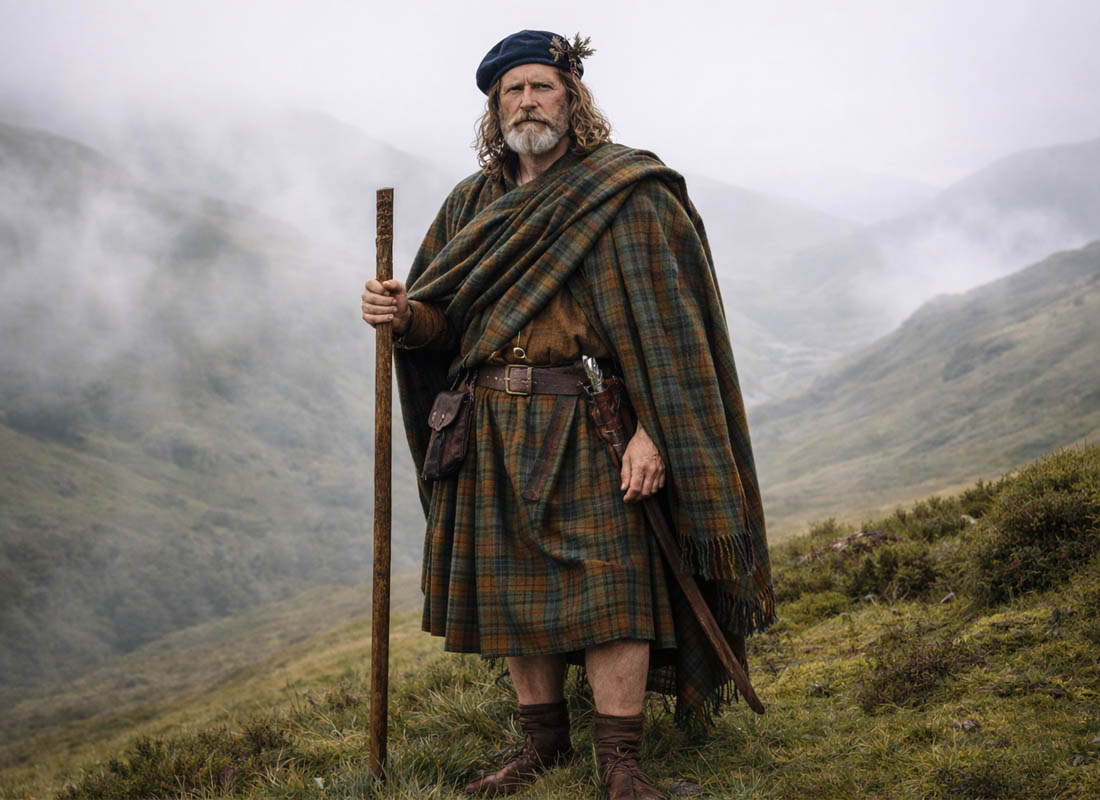
To understand why people ask whether the Irish wore kilts, we must examine the Scottish kilt’s history. The kilt as we recognize it today developed in Scotland during the 16th and 17th centuries. Originally, Highlanders wore the “féileadh mòr” or great kilt, which was a large piece of tartan fabric wrapped around the body and belted at the waist. This later evolved into the smaller “féileadh beag” or modern kilt during the 18th century. The transformation from great kilt to small kilt represented a practical adaptation for Highland life and work.
The Scottish kilt became strongly associated with Highland identity, especially after the Jacobite risings and the subsequent Highland clearances. The British government’s attempt to suppress Highland culture through the Dress Act of 1746 paradoxically made the kilt a powerful symbol of Scottish resistance and identity. When the act was repealed in 1782, the kilt experienced a romantic revival, particularly promoted by figures like Sir Walter Scott and even King George IV. This romanticization of Highland culture cemented the kilt’s place in Scottish national identity and spread awareness of the garment worldwide.
The shared Celtic heritage between Ireland and Scotland sometimes leads to assumptions that their traditional clothing was similar. However, the geographic separation, different historical trajectories, and distinct cultural developments meant that Irish and Scottish clothing traditions evolved separately. While both cultures valued wool production and intricate textile work, the specific garments and styles remained unique to each nation. This distinction is important when examining authentic Celtic clothing history versus modern interpretations.
Comparing Irish and Scottish Traditional Clothing
| Feature | Irish Traditional Dress | Scottish Traditional Dress |
|---|---|---|
| Primary Garment | Léine (long tunic) | Kilt (pleated skirt) |
| Outer Layer | Brat (woolen cloak) | Great Kilt or Jacket |
| Colors | Saffron yellow, solid colors | Tartan patterns |
| Pattern System | County-based (modern) | Clan-based (historical) |
| Time Period | Ancient to medieval | 16th century onwards |
| Modern Usage | Pipe bands, cultural events | Ceremonial and everyday wear |
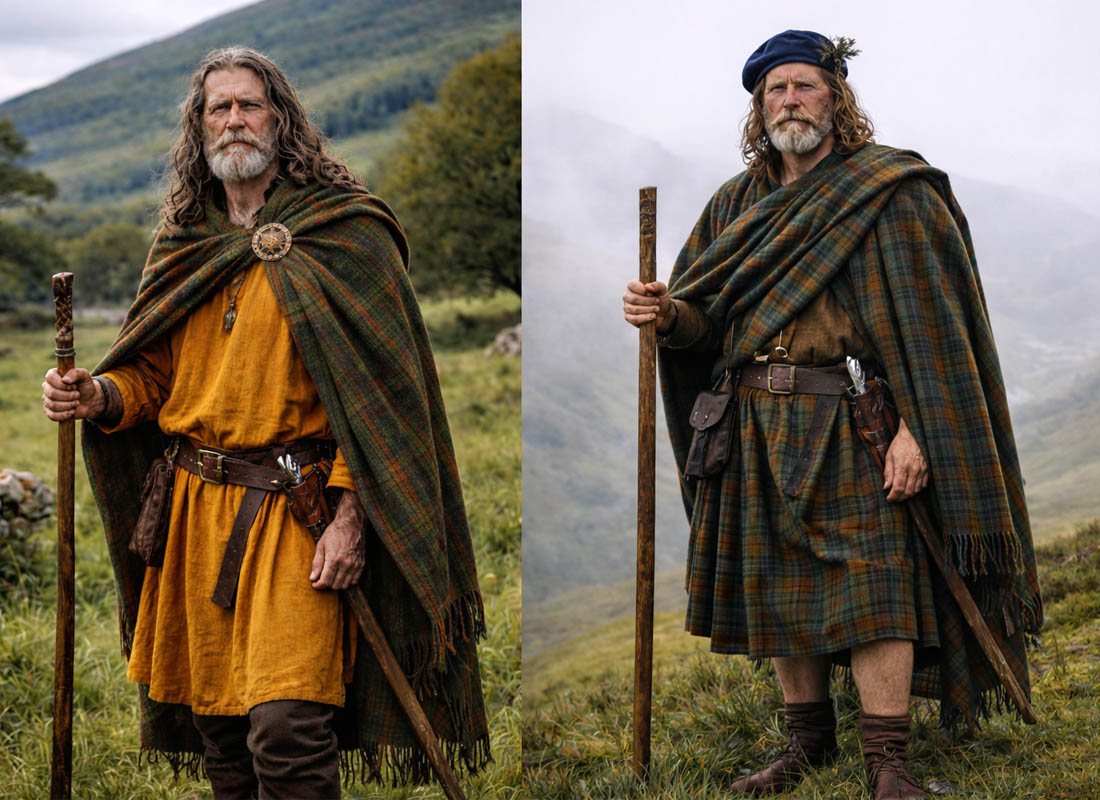
The differences between Irish and Scottish traditional clothing are significant and reflect each culture’s unique historical development. While both nations share Celtic roots, their clothing evolved independently based on different social structures, climates, and cultural practices. The table above illustrates these key distinctions clearly, showing how the Irish preference for tunics and cloaks contrasted with the Scottish development of the iconic kilt.
The Modern Irish Kilt: A Contemporary Celtic Tradition
When You’ll See Irish Kilts Today:
- Irish pipe bands and marching groups
- St. Patrick’s Day parades and celebrations
- Celtic weddings and formal ceremonies
- Cultural festivals and heritage events
- Irish dance competitions and performances
The Irish kilt as we know it today emerged primarily in the late 19th and early 20th centuries during the Celtic Revival movement. Nationalist movements in Ireland sought to distinguish Irish culture from British influence while simultaneously embracing Celtic heritage. Some Irish groups, particularly pipe bands and cultural organizations, adopted kilts as a way to express Celtic identity. However, they often modified the design to distinguish it from Scottish kilts. This period of cultural awakening saw a renewed interest in the Gaelic language, traditional music, and distinctly Irish symbols.
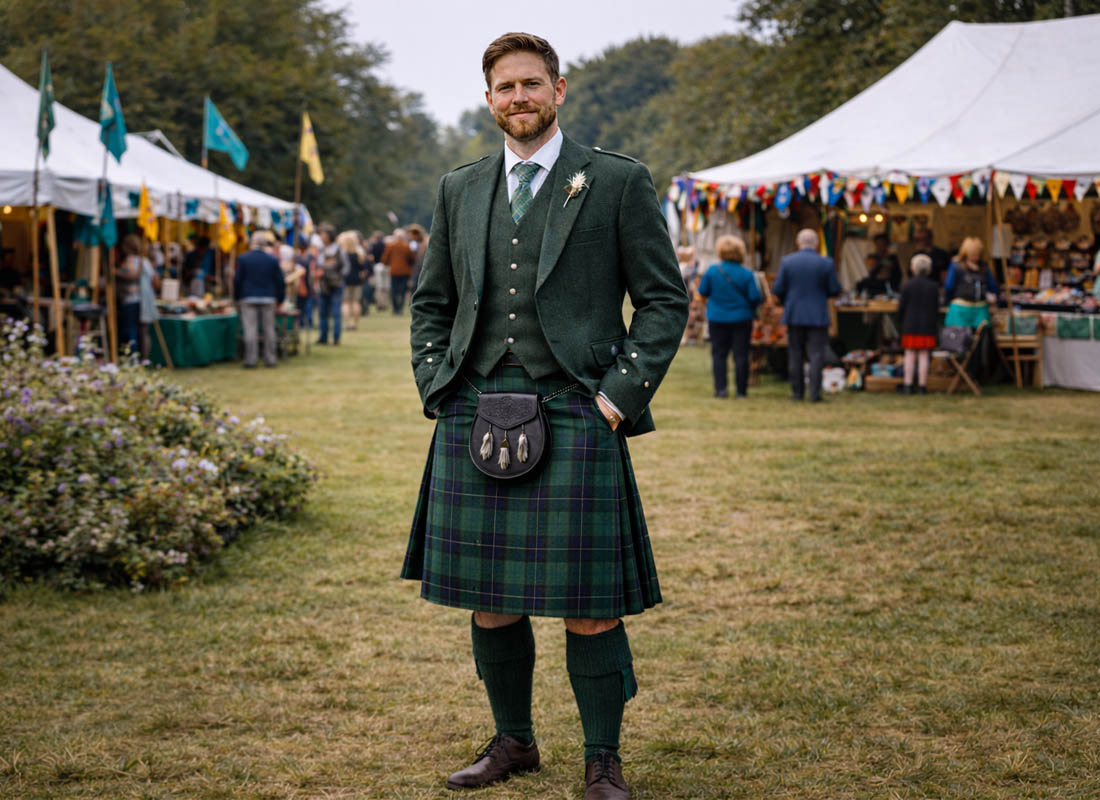
Modern Irish kilts typically feature solid colors, particularly saffron yellow or emerald green, rather than tartan patterns. This choice reflects the historical preference for solid-colored clothing in ancient Ireland, especially the famous saffron léine. Some Irish kilts do incorporate tartan patterns, but these are usually regional tartans representing Irish counties rather than family clans. The styling may also differ slightly, with some Irish kilts having fewer pleats or different pleating styles compared to their Scottish counterparts. The saffron kilt has become particularly associated with Irish pipe bands and represents a direct link to historical Irish clothing colors.
Today, Irish kilts are most commonly worn by Irish pipe bands, cultural dancers, and during special occasions like weddings or Celtic festivals. They have become an accepted part of modern Irish cultural expression, even though they lack the deep historical roots that Scottish kilts possess. Many Irish people embrace the kilt as a symbol of Celtic pride while acknowledging its relatively recent adoption into Irish tradition. The garment serves as a bridge between ancient Celtic heritage and contemporary Irish identity, allowing people to express their connection to Ireland’s past in a visible and meaningful way.
Irish Tartans and Their Significance in Modern Culture
The concept of Irish tartans is also a relatively modern development. Unlike Scotland, where specific tartan patterns have been associated with particular clans for generations, Irish tartans were largely created in the 20th century. Most Irish tartans represent counties or regions rather than family lineages. For example, there are official tartans for counties like Cork, Dublin, and Galway, each featuring distinct color combinations that reflect local heritage. These county tartans often incorporate colors from county flags, local landmarks, or historical associations with the area.
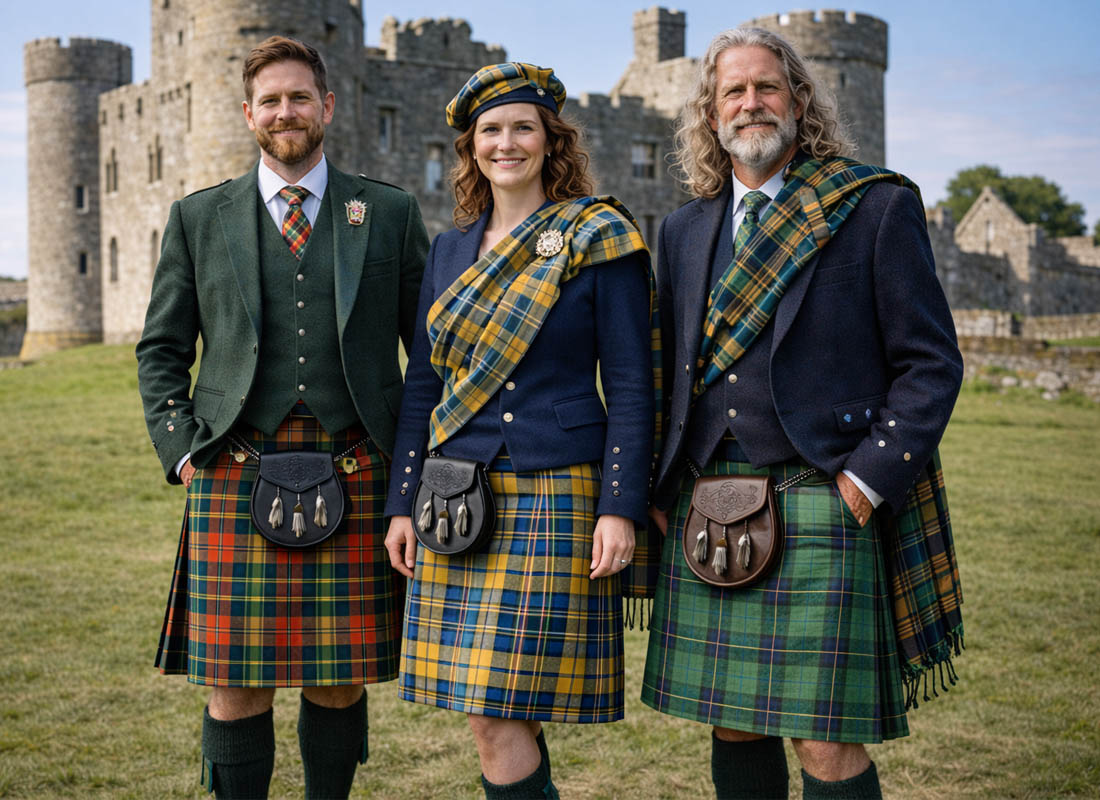
The creation of Irish tartans was partly inspired by the desire to have distinctly Irish symbols in a Celtic context. Organizations like the Irish Tartan Registry work to document and preserve these designs, ensuring that they maintain cultural authenticity. Some Irish families have also created their own tartans, particularly those with historical significance or noble lineages. However, these are exceptions rather than the rule, and most Irish people do not have a specific family tartan in the way many Scottish families do. The National Tartan of Ireland features colors representing the island’s landscape: green for the countryside, azure blue for the sea, and gold for the Irish harp.
Despite being modern creations, Irish tartans have gained acceptance and popularity both in Ireland and among the Irish diaspora. They provide a way for people to connect with specific regions of Ireland and display their heritage proudly. Manufacturers now produce Irish kilts in various tartan patterns, making it possible for people to choose designs that resonate with their family origins or personal preferences. This development shows how cultural traditions can evolve and create new meanings while still honoring historical connections.
What Did the Irish Actually Wear? A Deep Dive into Authentic Garments
To truly answer the question of Irish traditional clothing, we need to look at archaeological evidence and historical records. The ancient Irish wore clothing suited to their agrarian lifestyle and Ireland’s climate. Both men and women wore the léine as a base garment, though the length and style varied by gender and social class. Men’s léines were typically shorter, reaching to the knee or mid-thigh, while women’s versions extended to the ankle. The fabric was usually linen for undergarments and wool for outer layers, both materials being readily available through Irish agriculture.
Over the léine, people wore additional layers depending on the season and their occupation. The inar was a type of waistcoat or vest worn by men, while women might wear an overdress or additional layers of fabric. Footwear consisted of simple leather shoes or brogues, though many common people went barefoot during warmer months. Hair and grooming were important, with both men and women often wearing their hair long and sometimes braided or styled in elaborate ways. Historical accounts describe Irish warriors with distinctive hairstyles and elaborate grooming practices that distinguished them from other European peoples.
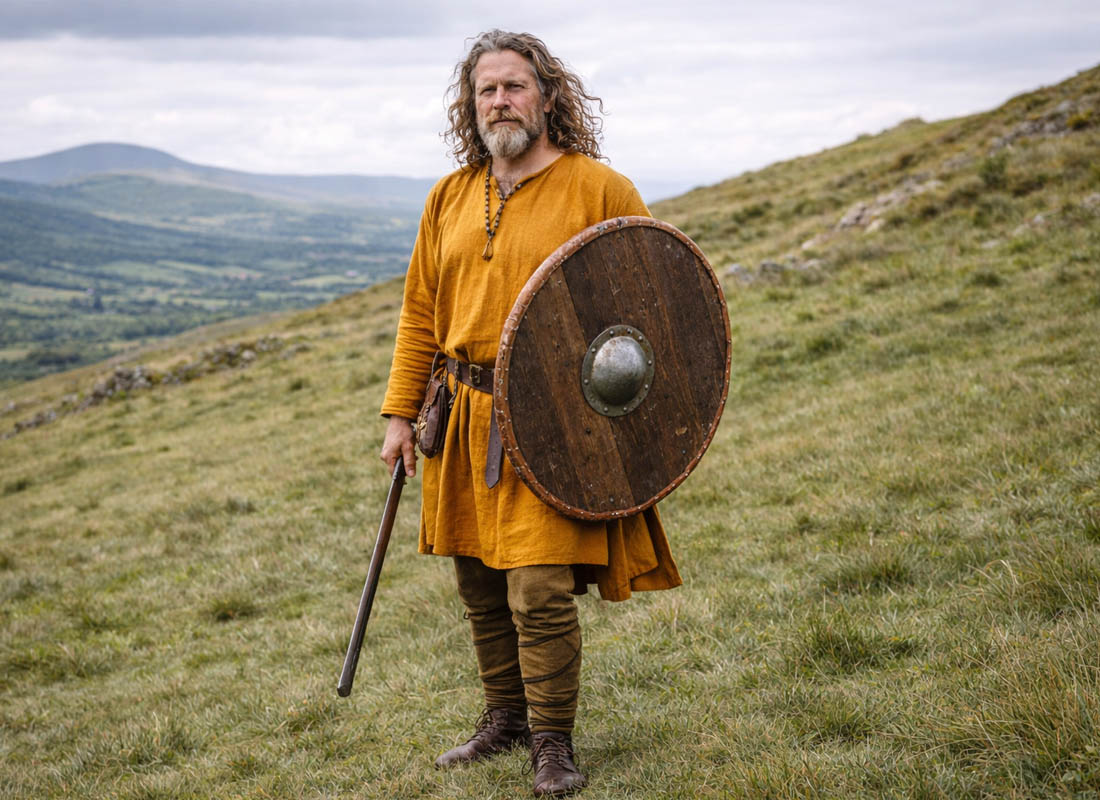
The materials and construction of Irish clothing reflected sophisticated textile traditions. Irish wool was renowned for its quality, and Irish weavers created intricate patterns and textures in their fabrics. Natural dyes produced a range of colors, with saffron yellow being particularly prized and expensive, which is why it became associated with nobility and wealth. Other colors included blues from woad, reds from madder root, and various browns and greens from local plants. The Irish also excelled at embroidery and decorative stitching, which adorned the clothing of wealthier individuals.
Cultural Revival and the Role of Kilts in Irish Identity
The adoption of kilts by some Irish groups reflects broader patterns of cultural revival and national identity formation. During the late 19th century, Ireland experienced a renaissance of interest in the Gaelic language, literature, music, and customs. This Celtic Revival sought to reclaim and celebrate Irish heritage that had been suppressed under British rule. In this context, adopting certain Celtic symbols, including kilts, became a way to express Irish identity. Organizations like the Gaelic Athletic Association, the Gaelic League, and various cultural societies promoted Irish traditions and sometimes incorporated kilts into their uniforms or ceremonial dress.
Organizations like the Gaelic League and later Irish pipe bands found that kilts provided a practical and symbolic uniform that connected them to Celtic traditions. While historically inaccurate as specifically Irish garments, kilts offered a visually distinctive way to present Irish culture on the world stage. Irish step dancers, pipe bands, and folk musicians often perform in kilts today, creating a modern tradition that, while not ancient, has become accepted as part of contemporary Irish cultural expression. The visual impact of kilts in performance contexts has helped popularize them among certain segments of Irish cultural practitioners.
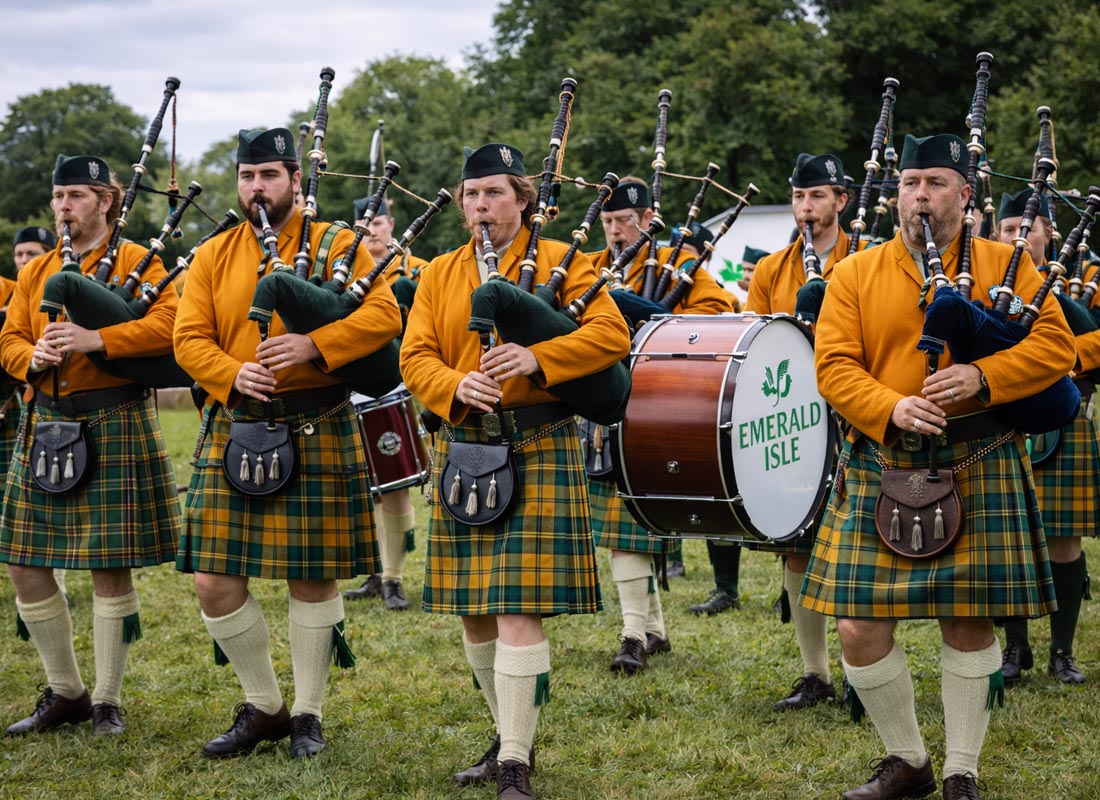
This cultural borrowing and adaptation is not unique to Ireland. Many cultures around the world have adopted or adapted elements from related cultures as part of identity formation or cultural revival movements. What matters is that modern Irish people who wear kilts do so with an understanding of the garment’s origins and meaning. The kilt has become a symbol of Celtic pride more broadly, transcending its specifically Scottish origins to represent a shared Celtic heritage that includes Ireland, Scotland, Wales, Cornwall, Brittany, and other Celtic regions.
Practical Considerations: When and Why Irish People Wear Kilts Today
In modern Ireland, kilts are not everyday wear but are reserved for specific occasions and contexts. Irish pipe bands regularly wear kilts as part of their performance uniforms, typically in saffron, green, or county tartans. Wedding parties sometimes choose kilts for groomsmen, particularly for couples wanting to emphasize their Celtic heritage. Cultural festivals, St. Patrick’s Day celebrations, and Irish dancing competitions are other contexts where you might see Irish kilts. The garment has found a niche in formal occasions where people want to express their Irish identity distinctively.
Some Irish people living abroad, particularly in countries with large Irish diaspora communities like the United States, Canada, and Australia, have embraced kilts more enthusiastically than those in Ireland itself. This reflects a desire to maintain and display Irish identity in multicultural contexts. However, it’s worth noting that many Irish people, both in Ireland and abroad, do not own or wear kilts and may view them primarily as Scottish rather than Irish garments. The wearing of kilts remains more common in specific cultural contexts rather than as general Irish traditional dress.

The practical aspects of wearing an Irish kilt today involve considerations similar to those of Scottish kilts. Proper kilt wearing includes specific accessories like a sporran (pouch worn at the front), kilt pin, special socks, and sometimes a jacket or vest. Irish versions may incorporate shamrocks, Celtic knots, or other Irish symbols in these accessories. The cost of a proper kilt outfit can be high, which limits its adoption to those seriously committed to wearing them for cultural or ceremonial purposes. Ready-made kilts are available at lower price points, making them accessible for occasional wear at festivals or special events.
Preserving Authentic Irish Clothing Heritage
While modern Irish kilts serve a cultural purpose, there’s also growing interest in preserving and recreating authentic historical Irish clothing. Historical reenactment groups, museums, and cultural heritage organizations work to accurately reproduce garments like the léine and brat based on archaeological evidence and historical descriptions. These efforts help educate people about what Irish ancestors actually wore and provide a counterbalance to modern innovations like kilts. Understanding authentic Irish clothing helps people appreciate the richness of Irish textile traditions and craftsmanship.
Several museums in Ireland feature collections of historical Irish clothing or reproductions that demonstrate traditional garment construction. The National Museum of Ireland, for example, houses artifacts and exhibits that showcase Irish costume history. These resources are invaluable for anyone interested in understanding the real history of Irish dress. Academic researchers continue to study historical texts, artwork, and archaeological finds to piece together a comprehensive picture of Irish clothing through different periods. This scholarship ensures that authentic Irish clothing history is preserved for future generations.

The revival of traditional Irish crafts, including weaving, natural dyeing, and traditional sewing techniques, also contributes to preserving Irish clothing heritage. Some artisans specialize in creating historically accurate reproductions of Irish garments, using traditional methods and materials. These pieces serve both educational and ceremonial purposes, appearing in historical demonstrations, cultural festivals, and private collections. The skills required to create these garments represent an important form of intangible cultural heritage that deserves recognition and support.
Conclusion: Separating Historical Fact from Modern Practice
So, did the Irish wear kilts? The historical answer is no—traditional Irish clothing consisted of léines, brats, and other garments distinct from the Scottish kilt. However, modern Irish people have adopted kilts as part of contemporary Celtic cultural expression, creating a new tradition that reflects Irish identity in the 20th and 21st centuries. Understanding this distinction allows us to appreciate both the authentic historical clothing of ancient Ireland and the evolving nature of cultural traditions. The adoption of kilts by some Irish groups represents cultural adaptation rather than historical continuity.
The story of Irish kilts reminds us that culture is not static but constantly evolving. While respecting historical accuracy is important, we should also recognize that communities adapt and create new traditions that serve their contemporary needs. Whether wearing a historically accurate léine or a modern Irish kilt, people today continue to celebrate and express their connection to Irish heritage in meaningful ways. The key is understanding the difference between ancient practice and modern adoption while appreciating the value of both in keeping Celtic culture alive and vibrant.
For those interested in Irish heritage, exploring both authentic historical clothing and modern cultural expressions provides a fuller picture of Irish identity. The Irish did not traditionally wear kilts, but the garment has found a place in modern Irish culture alongside other symbols of Celtic pride. This balance between historical authenticity and contemporary cultural needs reflects the dynamic nature of cultural identity in the modern world. Whether you choose to embrace Irish kilts as a modern tradition or focus on historically accurate garments like the léine, both approaches offer ways to connect with and honor Irish heritage.
Frequently Asked Questions About Irish Kilts
No, the Irish did not wear kilts. Ancient Irish people wore léines (long tunics) and brats (woolen cloaks). Kilts are originally Scottish garments. Irish people adopted kilts in the 20th century during the Celtic Revival movement.
Irish kilts feature solid colors like saffron or green, while Scottish kilts display clan tartan patterns. Irish tartans represent counties, whereas Scottish tartans represent family clans. Irish kilts are worn mainly at cultural events, and Scottish kilts are more common in daily ceremonial wear.
The Irish wore léines (long tunics), brats (woolen cloaks), and triubhas (tight trousers). The famous saffron-colored léine was worn by Irish nobility. These garments were designed for Ireland’s damp climate and reflected ancient textile traditions.
Irish people wear kilts at pipe band performances, St. Patrick’s Day celebrations, Celtic weddings, cultural festivals, and Irish dance competitions. Kilts are not everyday wear but are reserved for special cultural and ceremonial occasions.
Irish tartans are modern creations from the 20th century, unlike historical Scottish clan tartans. Most Irish tartans represent counties like Cork, Dublin, and Galway rather than families. They are accepted as legitimate expressions of Irish regional heritage.