
Blog
Traditional Garment for a Scottish Groom: Complete Wedding Attire Guide
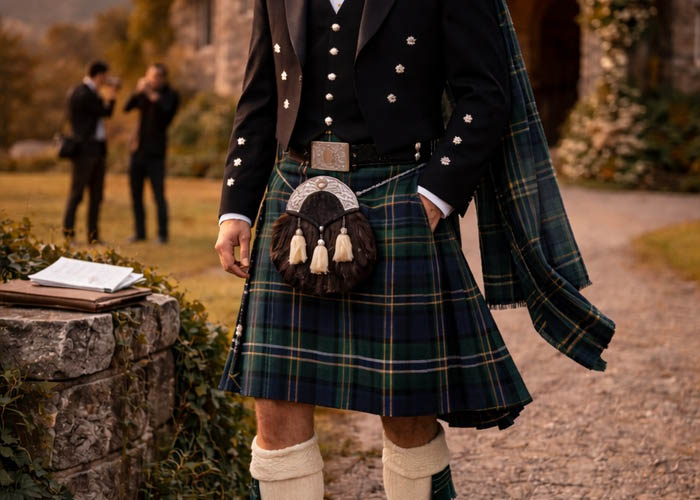
When planning a Scottish wedding, choosing the right attire for the groom is one of the most important decisions. The traditional garment for a Scottish groom is not just clothing; it’s a symbol of heritage, pride, and cultural identity. Whether you’re Scottish by birth or simply embracing the rich traditions of Scotland, understanding the elements of authentic Highland dress will help you look your best on your special day.
The Iconic Kilt: Heart of Scottish Wedding Attire
The kilt is the centerpiece of traditional Scottish groom attire and represents centuries of Highland culture. This distinctive pleated garment is wrapped around the waist and secured with straps and buckles, typically falling to just below the knee. For weddings, grooms usually choose a formal kilt made from high-quality tartan wool, which provides both elegance and authenticity. The tartan pattern itself holds special significance, as different designs represent various Scottish clans, regions, or families. Many grooms select a tartan that connects to their family lineage, while others choose patterns based on aesthetic preference or regional ties. The kilt’s construction requires skilled craftsmanship, with traditional kilts containing approximately eight yards of fabric carefully pleated at the back.
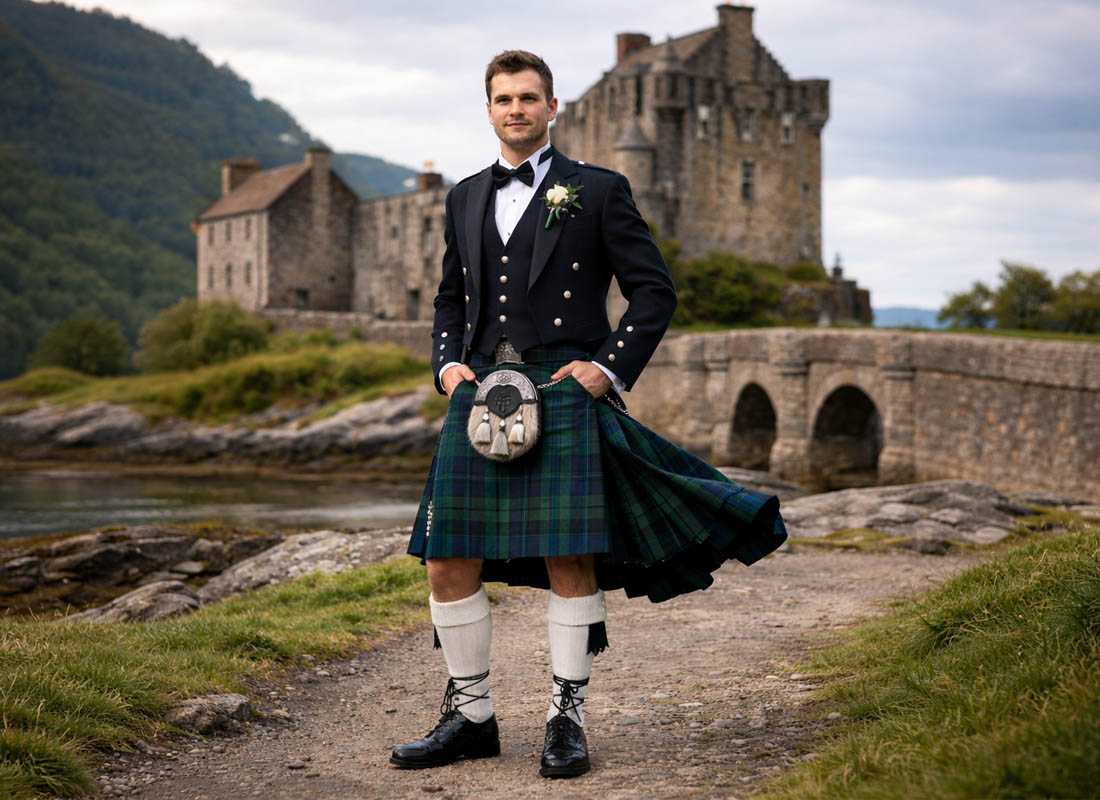
The selection of your kilt tartan should be done thoughtfully, considering both family connections and the overall wedding color scheme. Some couples coordinate the groom’s tartan with wedding colors, while others prefer to honor specific clan heritage. Modern grooms also have the option of contemporary tartans designed specifically for weddings, which blend traditional patterns with updated color palettes. The weight of the fabric matters too – heavier wool kilts are ideal for autumn and winter weddings, while lighter weights work better for spring and summer celebrations.
Essential Components of Highland Dress
Key Elements Every Scottish Groom Needs:
- Formal Prince Charlie jacket or Argyll jacket in black or tweed
- Waistcoat (vest) that complements the jacket and tartan
- Dress sporran (leather pouch) worn at the front
- Kilt hose (knee-high socks) in coordinating colors
- Ghillie brogues (traditional laced shoes)
- Sgian dubh (small ceremonial knife) tucked into the sock
A complete Highland dress outfit includes several important pieces beyond the kilt itself. The choice of jacket typically depends on the formality of the wedding and the time of day. The Prince Charlie jacket is the most formal option, featuring satin lapels and ornate silver buttons, perfect for evening receptions and black-tie weddings. This tailored jacket creates a sophisticated silhouette that pairs beautifully with the flowing lines of the kilt. The Argyll jacket provides a slightly less formal alternative, featuring a more structured design that suits daytime ceremonies and outdoor celebrations well.
The sporran serves both decorative and practical purposes in Highland dress. This traditional leather pouch hangs from a chain or strap around the waist, positioned at the front of the kilt. For weddings, grooms typically choose a formal dress sporran featuring fur, metalwork, or elaborate embellishments. The sporran provides a place to carry essentials like rings, phone, or wallet, since traditional kilts don’t have pockets. The style and decoration of the sporran should complement the overall formality of the outfit – from simple leather designs for casual weddings to elaborate silver-mounted versions for grand celebrations.
Choosing the Perfect Tartan Pattern
Selecting the right tartan pattern is a deeply personal decision that connects the groom to Scottish heritage. There are thousands of registered tartans, each with its own history and significance. Clan tartans represent specific Scottish families and are the most traditional choice for those with Scottish ancestry. If you know your family clan, wearing that tartan honors your heritage and connects you to generations past. However, not everyone has a direct clan connection, and that’s perfectly acceptable in modern Scottish weddings.
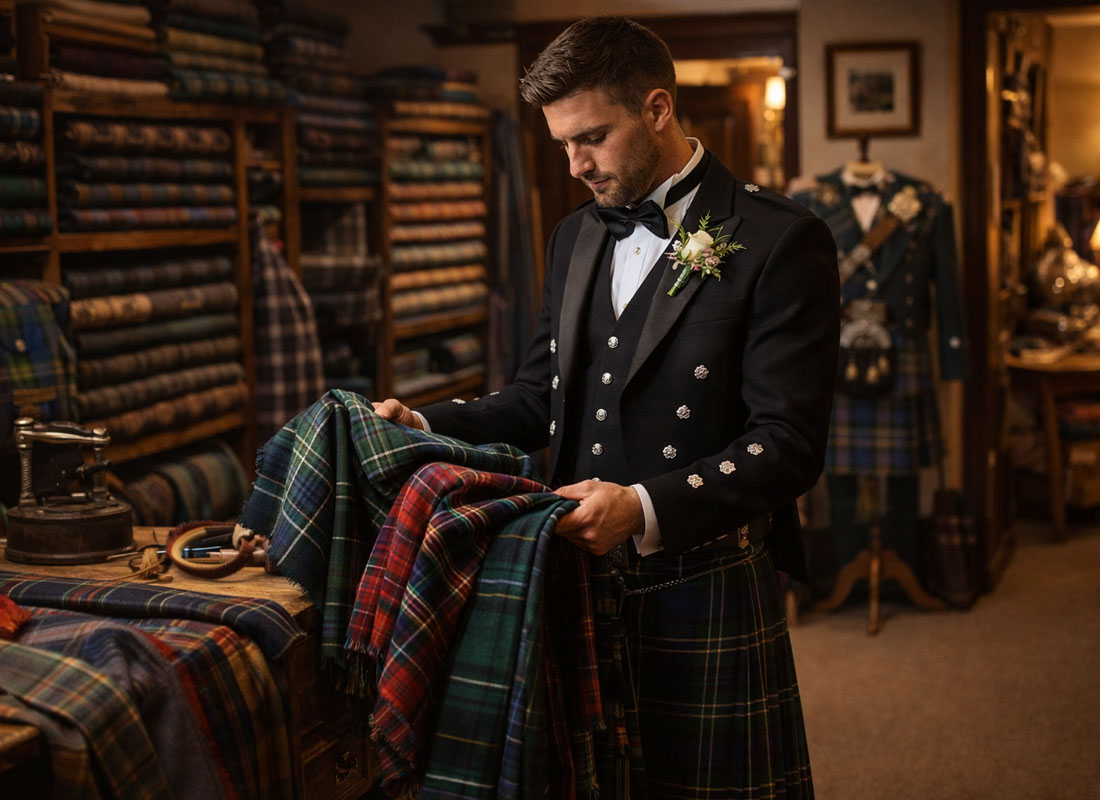
District and regional tartans offer another option for grooms without clan ties. These patterns represent specific areas of Scotland, from the Highlands to the Lowlands, and anyone can wear them regardless of family background. Popular choices include the Black Watch tartan, Royal Stewart, and Hunting Stewart, which are considered universal tartans suitable for anyone. Modern tartans designed specifically for weddings provide contemporary alternatives that maintain a traditional aesthetic while offering fresh color combinations. Some couples even commission custom tartans that incorporate their wedding colors or create a new family pattern for their union.
The colors within the tartan also carry meaning and set the tone for the wedding attire. Earth tones like greens, browns, and blues create a natural, outdoorsy feel perfect for rustic celebrations. Bold reds and blacks make dramatic statements suitable for formal evening affairs. Subtle grays and whites offer understated elegance for minimalist weddings. When selecting your tartan, consider how it will photograph, how it complements your partner’s attire, and whether it reflects your personal style while honoring tradition.
Accessorizing Your Scottish Wedding Outfit
The details make a Scottish groom’s outfit truly special, and accessories play a crucial role in achieving an authentic Highland look. The sgian dubh, a small ceremonial knife, is traditionally tucked into the top of the right sock with only the handle visible. This historical accessory adds authentic Highland flair and connects modern grooms to warrior traditions. Kilt pins serve both functional and decorative purposes, securing the outer apron of the kilt while adding a personalized touch through Celtic designs or family crests.
Neckwear options for Scottish grooms include traditional bow ties, standard ties, or cravats, depending on the formality level. A bow tie paired with a winged collar shirt creates the most formal appearance, ideal for evening ceremonies and black-tie receptions. Regular ties offer a slightly more relaxed alternative while maintaining elegance, and they come in solid colors or tartan patterns that can match or complement the kilt. Some grooms choose to wear a fly plaid – a length of tartan fabric draped over the shoulder and secured with a brooch – which adds drama and authenticity to the outfit. This accessory is particularly striking for formal portraits and creates movement in photographs.
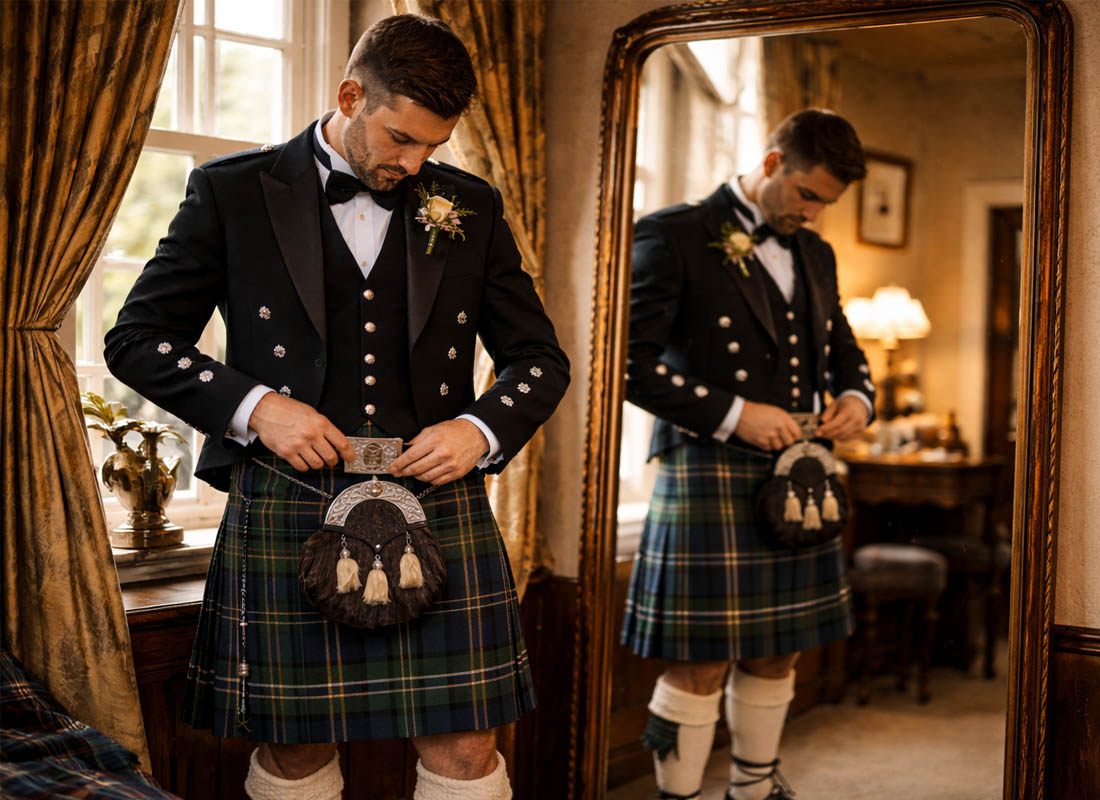
Belt buckles and kilt buckles provide opportunities for personalization through Celtic knotwork, clan crests, or custom engravings. These metallic details catch light in photographs and add finishing touches to the ensemble. Consider coordinating metal finishes across all accessories – silver, gold, or antique brass – for a cohesive appearance. Cufflinks featuring Celtic designs, clan symbols, or personal initials add subtle detail to jacket sleeves and create conversation pieces for wedding guests.
Modern Adaptations of Traditional Highland Dress
Contemporary Scottish Groom Style Options:
- Tweed jackets paired with kilts for rustic wedding themes
- Contemporary tartan designs in non-traditional color palettes
- Mixing formal Prince Charlie jackets with modern accessories
- Casual waistcoats for outdoor summer ceremonies
- Personalized sporrans with custom engravings or designs
Today’s Scottish grooms have more flexibility than ever in adapting traditional Highland dress to suit personal style and wedding themes. While maintaining respect for tradition, modern interpretations allow for creative expression and contemporary aesthetics. Tweed jackets have gained popularity as alternatives to formal Prince Charlie jackets, especially for autumn weddings and countryside venues. The textured fabric adds rustic charm while providing warmth for outdoor celebrations, and tweeds come in various colors and patterns that can complement any tartan choice.
Color experimentation has become increasingly acceptable in modern Scottish wedding attire. While traditional black jackets remain popular, some grooms choose navy, charcoal, or even colored jackets that coordinate with wedding themes. Contemporary tartan designs incorporate unexpected color combinations like purples, teals, or burnt oranges, creating unique looks while maintaining the classic tartan structure. These modern patterns work especially well for couples who want Scottish elements without feeling constrained by strict historical accuracy.
The formality level can be adjusted to match the overall wedding style without losing Scottish character. Beach weddings might feature kilts paired with casual linen shirts and no jacket, while formal ballroom receptions call for full Highland dress with all traditional accessories. Some grooms choose to wear the complete formal outfit for the ceremony and reception, then change into a more comfortable version for dancing – perhaps removing the jacket or switching to simpler accessories. This practical approach ensures comfort throughout the long wedding day while maintaining the important visual impact for photographs and key moments.
Practical Considerations for Wearing a Kilt
Comfort and proper fit are essential when wearing a kilt for extended periods during a wedding day. A well-fitted kilt should sit at the natural waist, not on the hips like modern trousers, and the bottom edge should fall to the middle of the kneecap. The kilt should be snug enough to stay in place without shifting, but not so tight that it restricts movement or breathing. Professional kilt fitters can ensure proper measurements and adjustments, which is especially important for grooms who are purchasing rather than renting their Highland dress.
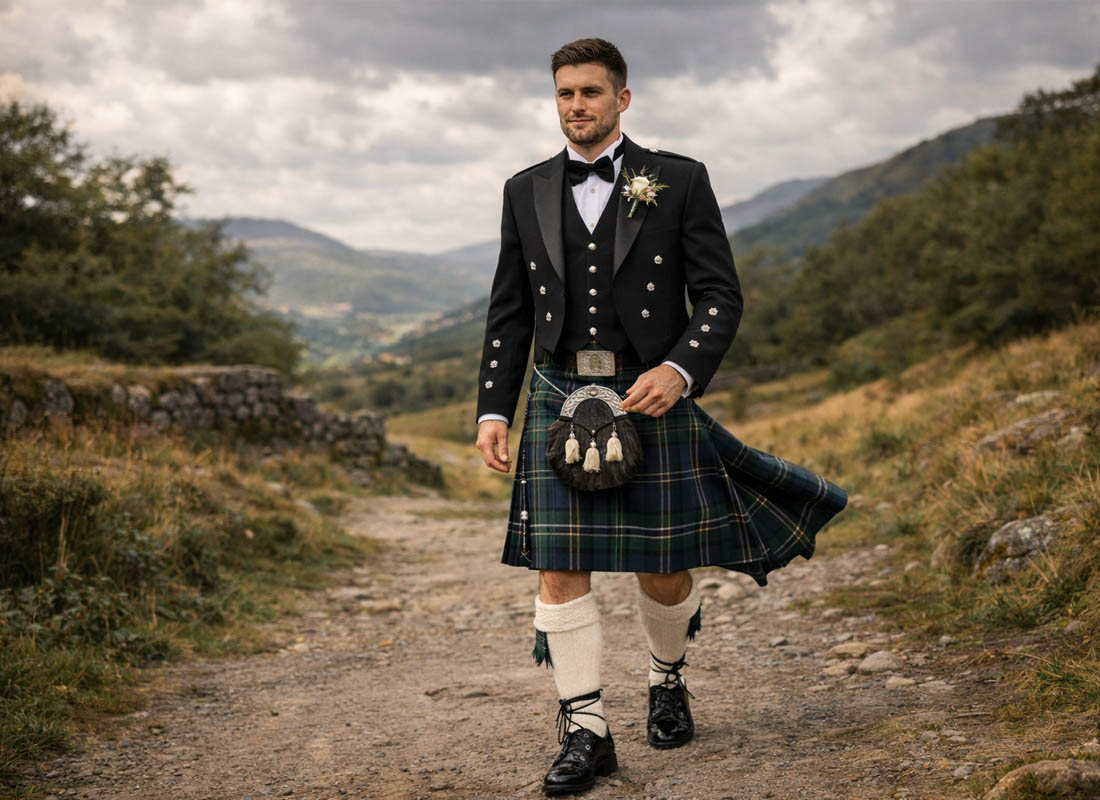
Understanding kilt etiquette helps grooms navigate their wedding day with confidence. The question of what to wear under a kilt is a personal choice, though traditional Highland regiments went “regimental” without undergarments. Modern grooms typically choose to wear something for comfort and practicality, especially during wedding festivities with dancing and movement. When sitting, the proper technique is to smooth the kilt underneath before sitting down, which prevents wrinkles and maintains the garment’s shape. Standing with good posture showcases the kilt’s lines and pleating, making for better photographs throughout the day.
Weather considerations matter when planning to wear a kilt, particularly for outdoor Scottish weddings where conditions can be unpredictable. Kilts are surprisingly warm due to the wool fabric and multiple layers, making them comfortable even in cooler temperatures. For summer weddings, choosing a lighter-weight tartan prevents overheating, and grooms might opt to skip the waistcoat for additional comfort. Rain protection is important for outdoor ceremonies – having a backup plan or covered area ensures the wool doesn’t become waterlogged. Wind can be a concern with kilts, so being mindful of positioning during outdoor photographs helps maintain dignity and decorum.
Where to Find Authentic Scottish Wedding Attire
Finding quality Highland dress requires research and planning, especially for grooms outside Scotland. Specialist kilt makers and Highland dress retailers like Scotland Kilt Collection offer the most authentic options, with expertise in proper fitting and traditional construction. Many cities with Scottish heritage communities have local shops that provide rental and purchase options, along with knowledgeable staff who can guide selection decisions. These retailers typically stock various tartan patterns and can order specific clan tartans not regularly available in inventory.
Online retailers have expanded access to Scottish wedding attire, allowing grooms worldwide to purchase or rent authentic Highland dress. Reputable online shops provide detailed measurement guides and customer service support to ensure proper fitting without in-person visits. However, if possible, visiting a physical location for an initial fitting helps determine the correct sizes and preferences before making final purchases. Many grooms find success renting complete Highland dress outfits for their wedding, which provides high-quality garments without the significant investment of purchasing, though buying offers the advantage of owning the outfit for future formal occasions.
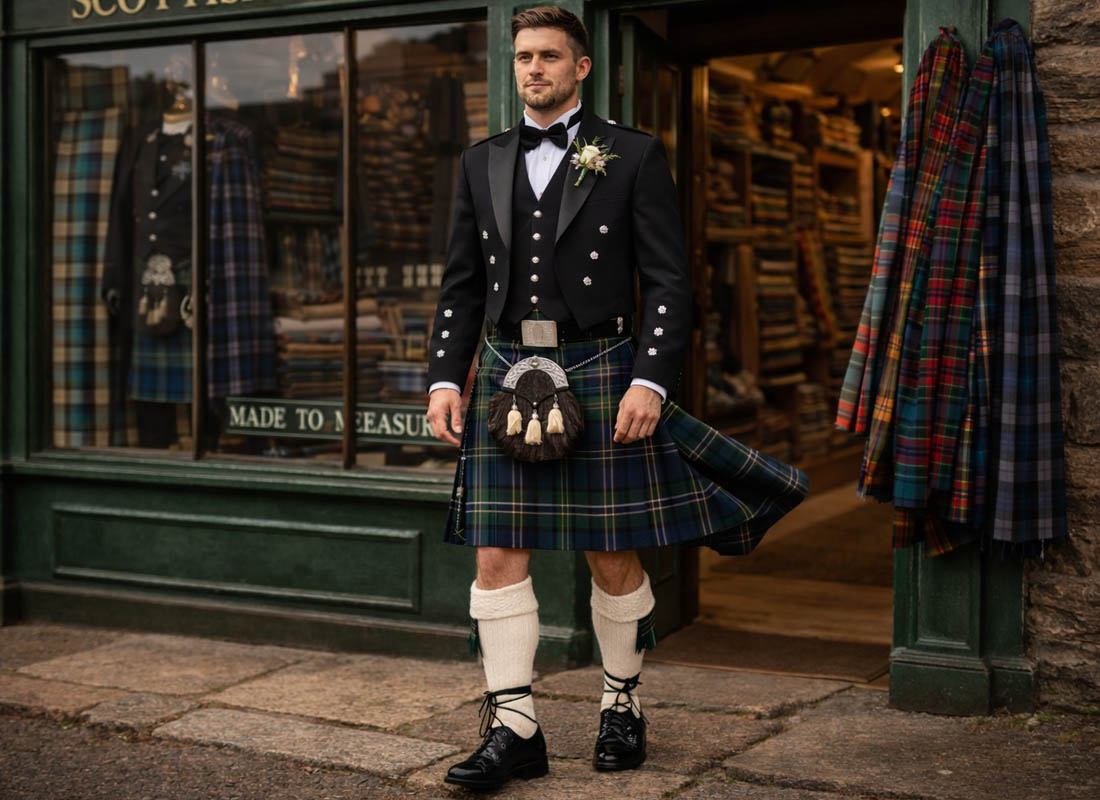
Lead time is crucial when sourcing Scottish wedding attire, as custom orders and specific tartans may require several months for production and delivery. Grooms should begin shopping at least six months before the wedding date, allowing time for fittings, alterations, and any necessary adjustments. If renting, booking early ensures availability of preferred sizes and styles, especially during peak wedding season. Some families pass down Highland dress through generations, and incorporating these heirloom pieces adds sentimental value while honoring family tradition.
Caring for Your Highland Dress Investment
Proper maintenance ensures your Scottish wedding attire looks impeccable on your special day and preserves it for future occasions. Wool kilts require special care to maintain their shape and appearance. Professional dry cleaning is recommended rather than home washing, as the pleating and structure need expert handling. Between wearings, kilts should be hung properly on specialized kilt hangers that support the weight without distorting the fabric. Storing kilts in breathable garment bags protects against moths and dust while allowing air circulation.
The leather sporran needs conditioning to prevent drying and cracking, especially if stored for extended periods between wearings. Using leather conditioner maintains suppleness and preserves the sporran’s appearance. Metal accessories like buckles, brooches, and sgian dubh handles should be polished before the wedding to ensure they shine in photographs. Gentle cleaning with appropriate metal polish restores luster without damaging decorative details or engravings.
Before the wedding day, a final pressing or steaming removes any wrinkles from the kilt and jacket, ensuring crisp lines for photographs. Many grooms schedule this service for the day before the wedding, allowing the outfit to hang properly overnight. Having a small repair kit on hand during the wedding day – including safety pins, a small sewing kit, and spare buttons – provides peace of mind for any minor emergencies. These simple preparations ensure you’ll look and feel your best throughout the celebration.
Coordinating with Your Wedding Party
Creating a cohesive look between the groom and groomsmen adds visual impact to wedding photographs and ceremonies. Many Scottish weddings feature the entire male wedding party in Highland dress, creating a striking unified appearance that celebrates Scottish heritage collectively. The groom can distinguish himself through subtle differences while maintaining harmony with his attendants. Common approaches include having the groom wear a different tartan from the groomsmen, choosing a more formal jacket style like the Prince Charlie while groomsmen wear Argyll jackets, or selecting unique sporran designs that set the groom apart.
When coordinating groomsmen attire, consider whether everyone will wear the same tartan or if mixing patterns creates visual interest. Some weddings feature groomsmen in a neutral tartan like Black Watch, while the groom wears his family clan tartan. Others coordinate all tartans within the same color family for subtle variation. The key is maintaining enough similarity that the group looks intentional and unified while allowing the groom to stand out as the focal point. Accessories offer another opportunity for coordination – matching tie colors, similar sporran styles, or coordinated kilt pins create cohesion without requiring identical outfits.

Budget considerations come into play when dressing multiple people in Highland attire. Rental options make it feasible to outfit an entire wedding party in quality Highland dress without significant individual investment from each groomsman. Some grooms choose to purchase their own outfit while renting for attendants, or they may gift kilts to their groomsmen as thank-you presents. Discussing costs openly with your wedding party early in planning prevents financial stress and allows everyone to budget appropriately. Remember that simpler versions of Highland dress – perhaps omitting certain accessories or choosing less formal jackets – can reduce costs while maintaining the Scottish aesthetic.
Seasonal Considerations for Scottish Wedding Attire
The time of year significantly impacts comfort and styling choices for Highland dress. Summer weddings require thoughtful fabric selection and layering decisions to prevent overheating during outdoor celebrations. Lightweight tartan wool or wool-blend kilts provide better breathability than heavy winter-weight fabrics. Many summer grooms skip the waistcoat entirely or choose lighter materials, and some opt for casual linen shirts instead of formal dress shirts. The traditional hose and ghillie brogues remain appropriate but ensure proper fit to prevent discomfort during extended wear in warmer temperatures.
Autumn weddings showcase Highland dress at its finest, as the heavier wool fabrics provide comfortable warmth while the rich colors of traditional tartans complement fall foliage and seasonal color palettes. This season allows for full formal Highland dress without temperature concerns, and the layered nature of the outfit creates visual depth perfect for autumn photography. Consider coordinating your tartan colors with fall wedding themes – burgundies, deep greens, and golden tones work beautifully with seasonal decorations. The weight of traditional kilts becomes an advantage rather than a burden during crisp autumn weather.
Winter Scottish weddings call for the heaviest-weight tartans and full formal layering. The natural insulation of wool kilts keeps grooms surprisingly warm even in cold conditions, though indoor venues provide welcome relief during receptions. Some winter grooms add subtle accessories like pocket squares or scarves in complementary colors for additional warmth and style. Spring weddings offer moderate temperatures ideal for standard Highland dress, though unpredictable weather requires backup plans for sudden rain or temperature changes. The versatility of Highland dress adapts well to spring conditions, and lighter color tartans suit the fresh, renewal-focused atmosphere of spring celebrations.
Photography Tips for Highland Dress
Highland dress photographs beautifully, but certain poses and angles showcase the outfit to best advantage. The pleating at the back of the kilt creates stunning visual texture in photographs, so ensure your photographer captures rear and side angles in addition to front-facing shots. Movement shots – walking, turning, or dancing – show how the kilt swings and flows, creating dynamic images that static poses cannot achieve. The sporran, sgian dubh, and other accessories deserve close-up detail shots that document the craftsmanship and personalization of your Highland attire.
Outdoor photography locations enhance Scottish wedding attire naturally, particularly settings with rugged landscapes, historic architecture, or natural beauty. Stone buildings, castle ruins, forest settings, and coastal scenes all complement the Highland aesthetic and create dramatic backdrops. Even non-Scottish locations can work beautifully – focusing on the groom and his attire with blurred backgrounds keeps attention on the Highland dress regardless of setting. Golden hour lighting enhances the rich colors of tartan and adds warmth to formal portraits, while dramatic overcast skies create moody, romantic atmospheres that suit the traditional nature of Highland dress.
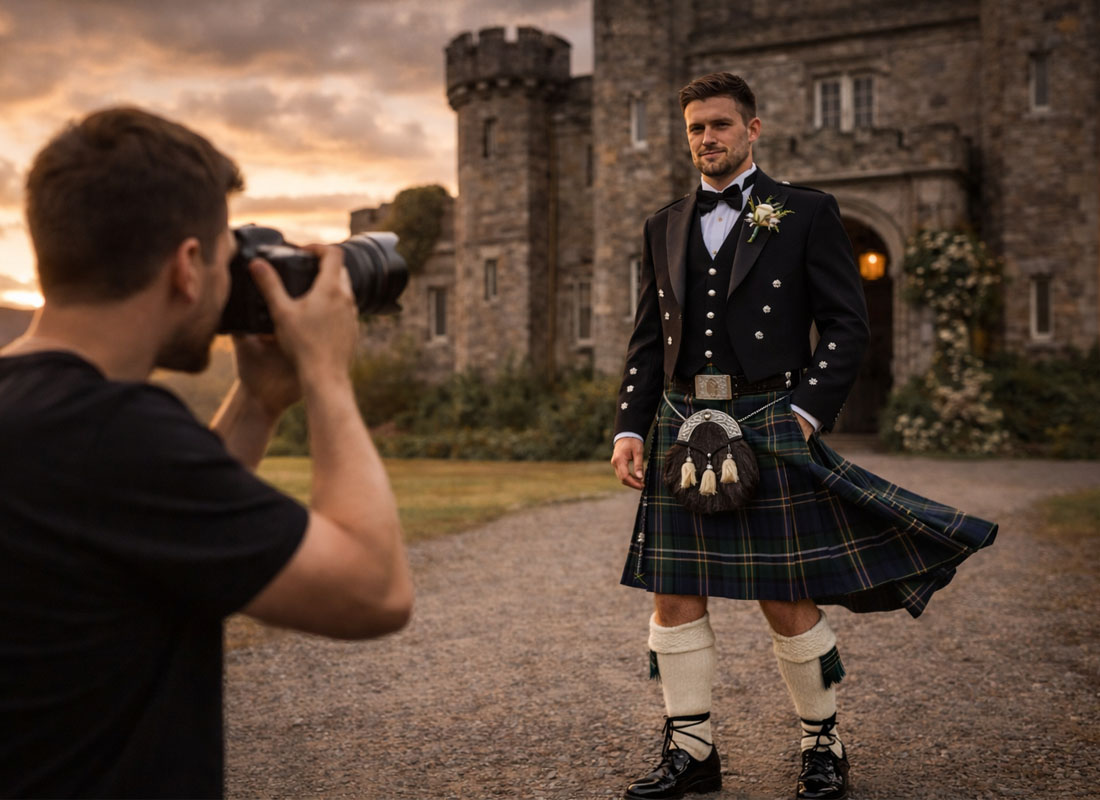
Posing guidance helps grooms look their best in Highland dress photographs. Standing with feet shoulder-width apart and weight slightly on one leg creates a natural, confident stance that displays the kilt’s lines properly. Hand placement matters – one hand resting naturally at the side while the other holds the lapel or is placed in a pocket creates asymmetrical interest. Avoid putting both hands in pockets or crossing arms tightly, which can look stiff or defensive. When seated, smooth the kilt underneath before sitting and angle your body slightly rather than facing directly forward, which creates more flattering lines and shows off the kilt’s pleating.
Budget Planning for Highland Wedding Attire
Understanding the costs associated with Scottish wedding attire helps grooms make informed decisions about purchasing versus renting. Complete Highland dress outfits can range significantly in price depending on quality, customization, and whether components are purchased or rented. Entry-level rental packages typically start around 100-150 pounds for basic Highland dress, while premium rentals with higher quality fabrics and accessories might cost 200-300 pounds. Purchasing a complete outfit represents a larger investment, with quality kilts alone ranging from 300 to 800 pounds, though ownership allows for future use at formal events.
Breaking down costs by component helps prioritize spending. The kilt itself represents the largest single expense, followed by the jacket and sporran. Some grooms choose to purchase certain pieces while renting others – buying the kilt and renting the jacket, for example, provides a good balance of investment and practicality. Accessories like belts, pins, and sgian dubhs can be purchased affordably and kept as keepsakes, while more expensive items are rented. This mixed approach allows grooms to own meaningful pieces without the full cost of purchasing everything.

Value considerations extend beyond initial price. A well-made kilt lasts decades with proper care, potentially serving for multiple formal occasions throughout life and even passing down to future generations. The cost per wear decreases significantly if you anticipate wearing Highland dress for other events like formal dinners, Burns Night celebrations, or family gatherings. Rental makes more sense for one-time use or if you’re uncertain about future occasions requiring formal Highland attire. Consider your long-term relationship with Scottish heritage and formal event attendance when deciding between purchase and rental options.
Conclusion: Embracing Scottish Wedding Tradition
Choosing traditional Highland dress for your wedding day creates an unforgettable visual impact while honoring centuries of Scottish heritage. The kilt, jacket, and accessories combine to form an outfit that’s both timeless and deeply meaningful, connecting you to cultural traditions that span generations. Whether you have direct Scottish ancestry or simply appreciate the elegance and symbolism of Highland dress, wearing these traditional garments adds significance and personality to your wedding celebration. The attention to detail required in selecting and wearing Highland dress demonstrates respect for tradition while allowing personal expression through tartan choice, accessory selection, and styling decisions.
The journey of selecting your Scottish wedding attire should be enjoyable and meaningful, reflecting both personal style and respect for tradition. Take time to research tartan options, visit specialists who can guide your choices, and ensure proper fitting for comfort throughout your wedding day. Remember that while tradition provides the framework, modern interpretations allow for personal expression and creativity. Your Highland dress should make you feel confident, comfortable, and connected to the rich cultural heritage you’re celebrating. Working with knowledgeable retailers and taking measurements seriously ensures you’ll look impeccable in photographs and feel comfortable during hours of celebration.
Planning makes the process smoother and less stressful. Start shopping early, allow time for fittings and adjustments, and don’t hesitate to ask questions of Highland dress specialists who can share their expertise. Consider the practical aspects like weather, venue, and length of wear time when making selections. Coordinate with your wedding party for a cohesive look that highlights your role as groom while creating striking group photographs. Most importantly, wear your Highland dress with pride and confidence, knowing you’re participating in a tradition that connects millions of people to Scottish culture and heritage.
With thoughtful planning and attention to detail, your traditional Scottish groom’s attire will create lasting memories and stunning photographs that honor both past and present. The investment in quality Highland dress pays dividends in the joy of wearing something truly special on your wedding day and in the timeless elegance captured in photographs you’ll treasure forever. Whether you’re continuing family traditions or starting new ones, embracing Highland dress for your wedding celebrates the enduring appeal of Scottish culture and creates a distinctive, memorable aesthetic that sets your celebration apart.
Frequently Asked Questions About Traditional Scottish Groom Attire
The traditional garment is the kilt, worn as part of Highland dress. It includes a tartan kilt, formal jacket, sporran, kilt hose, and ghillie brogues, representing Scottish heritage and culture.
Renting Highland dress costs 100-300 pounds, while purchasing ranges from 500-1500 pounds. Many grooms rent for one-time use or buy kilts while renting jackets to balance cost and value.
Yes! Universal tartans like Black Watch and Royal Stewart are available for anyone. Many non-Scottish grooms wear Highland dress because of its elegance and unique wedding aesthetic.
Choose clan tartans if you have Scottish ancestry, district tartans for regional connections, or universal patterns like Royal Stewart. You can also select modern wedding tartans that match your color scheme.
Purchase from specialist retailers like Scotland Kilt Collection, local Highland dress shops, or reputable online stores. Order 6 months before your wedding for custom tartans and proper fitting.